

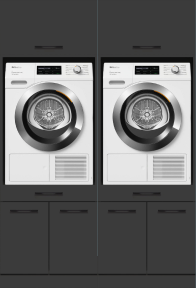
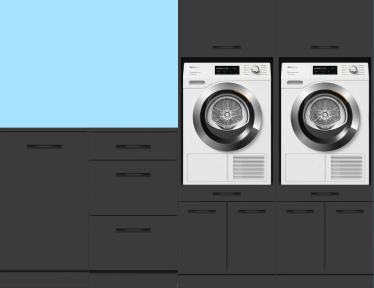
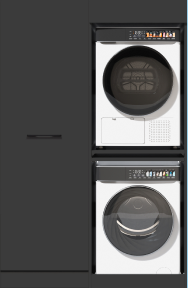
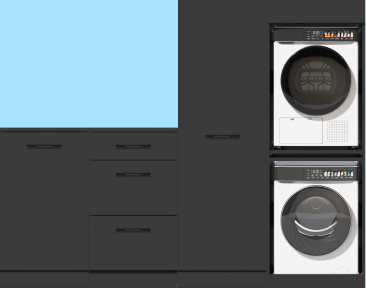
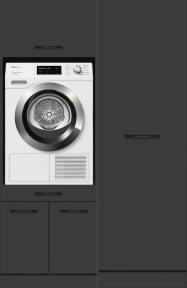
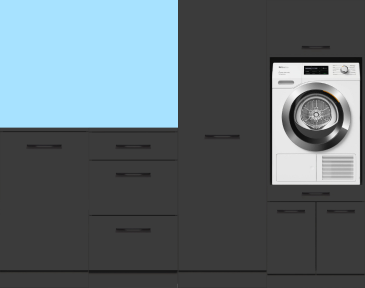
A washing machine cabinet not only determines the look of your laundry space but also the ease of use and the lifespan of your setup. In this guide, you’ll discover when a black or wooden washing machine cabinet fits best, what dimensions you need, and what to consider for a safe, quiet, and low-maintenance installation. Tip for those considering black: Wasdroom offers sleek cabinets in white and anthracite, with TÜV certification, a 10-year warranty, and a load capacity of up to 240 kg (Double) or 120 kg (Single and Stack). Still exploring? Read the washing machine cabinet buying guide.
When should you choose a black washing machine cabinet?
A black washing machine cabinet gives a modern, hotel-chic look and visually blends your appliances into a dark niche. Black works especially well in spaces with plenty of daylight or good LED lighting, combined with light tiles, white paint, or a light countertop for contrast. It’s a strong choice if you want to create an industrial or minimalist style with clean lines and minimal visual noise. Want to see models right away? Check out the black washing machine cabinets.
Practical note: on fully black fronts, dust and fingerprints show up more quickly than on lighter shades. Therefore, choose a matte finish and integrate the handles smartly to limit touch spots. In smaller or darker laundry rooms, black can make the space feel more compact. Consider a dark gray tone instead of deep black. Wasdroom’s anthracite approaches the tough black look but is more forgiving in maintenance and reflection.
When should you choose a wooden washing machine cabinet or wood look?
A wooden look brings warmth and calm to the laundry room. Think of Scandinavian light oak for a fresh and spacious feel, or a deeper wood tone for a cozy, natural atmosphere. It pairs nicely with white walls, soft greige tones, and black accents like taps or handles. Wood look is also timeless and can easily be carried through the rest of your interior. Looking for options? Check out the wooden washing machine cabinets.
For the humid environment around the washing machine and dryer, solid wood is less practical. Prefer a washing machine enclosure made of foil-coated wood fiberboard with a water-resistant top layer and neatly sealed edges. This prevents warping and keeps the cabinet’s clean lines. Ensure sufficient ventilation around appliances and consider a splash-resistant countertop if you often work above the machine or handle wet laundry. If you want a sleek, closed look, choose closed washing machine cabinets. Unsure whether to go for built-in or enclosure? See Built-in vs enclosure: differences.
Dimensions and layout: how to measure correctly
Measure your appliances including hoses and plugs. For the free niche width, usually allow 64 to 68 cm per appliance, giving 2 to 4 cm clearance for placement and ventilation. The depth of many machines ranges between 56 and 65 cm. Take 65 to 70 cm internal depth for safe margins and cable management. Leave 3 to 5 cm behind the machine for hoses and air circulation. Want to know more about sizing and clearance? Read dimensions of a washing machine cabinet.
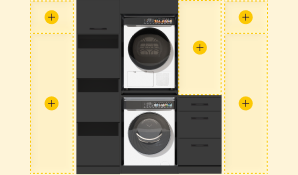
The height of a single setup is around countertop height, 90 to 100 cm. If you stack your washing machine and dryer, you’ll end up between about 180 and 200 cm, depending on your brand and model. For ergonomics, place the washing machine below and the dryer above. Consider the door swing direction, the desired spot for the laundry basket, and a sturdy top board as a folding or sorting space. Check per brand if your desired setup fits the chosen finish.
Construction and safety considerations
Stability is essential. A sturdy cabinet construction with high load capacity prevents sagging and better absorbs vibrations. Wasdroom’s cabinets are TÜV-certified, easy to assemble, and support up to 240 kg (Double) or 120 kg (Single and Stack), which is reassuring for intensive use or heavier appliances. Make sure to level the cabinet and anchor it to the wall when the manufacturer recommends it, especially when stacking.
A moisture-resistant, foil-coated wood fiberboard is low-maintenance and suitable for the laundry room, as long as edges are well finished. Anti-slip and anti-vibration pads under the legs or under the machine reduce resonance and noise. Leave enough ventilation space around, especially with heat pump dryers, and check that cables and hoses are routed without kinks. A neat cable pass-through at the back of the cabinet helps with safety and serviceability.
Frequently Asked Questions
Is a black washing machine practical?
Performance-wise, the color makes no difference. Aesthetically, black can make appliances blend into a dark cabinet and looks luxurious. However, watch maintenance, as dust and smudges show up faster. An anthracite cabinet offers a similar but more forgiving look.
Is a wooden floor suitable for a washing machine?
Yes, if well protected. Place a drip tray or waterproof mat, ensure the floor is stable, and level the machine. Dampening feet help against vibrations. For real wood floors, quick leak detection and good ventilation are extra important to prevent swelling.
How big should a cabinet be for a washing machine?
Allow 64 to 68 cm niche width and 65 to 70 cm depth to have clearance for placement and hoses. For a stacked setup, count on about 180 to 200 cm height. Leave a few centimeters free behind and beside the machine for ventilation.
Do I need to fix my washing machine cabinet to the wall?
For stacked setups and according to many manufacturer recommendations, yes. Wall anchoring increases safety and reduces vibrations. Use suitable plugs and fixing points, level the cabinet, and check stability after the first wash cycle.
Smart choices for your laundry space
Choose black for sleek and statement, wood look for warm and timeless. In a smaller or darker space, anthracite often works best. Measure carefully, ensure stability and ventilation, and choose moisture-resistant materials. If you want a luxurious look with minimal maintenance, check out Wasdroom’s white and anthracite washing machine cabinets for the Netherlands and Belgium, with a 10-year warranty and load capacity up to 240 kg (Double) or 120 kg (Single and Stack).
Leave a comment
This site is protected by hCaptcha and the hCaptcha Privacy Policy and Terms of Service apply.