

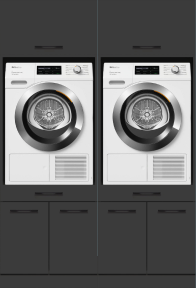
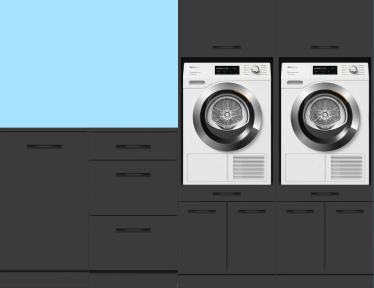
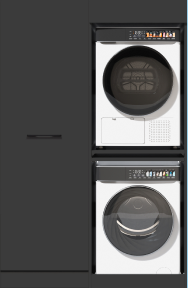
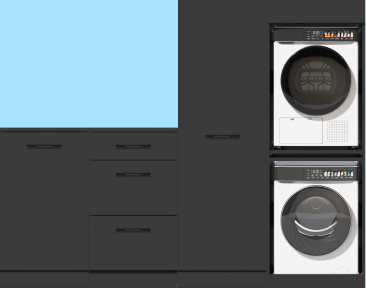
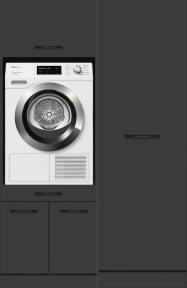
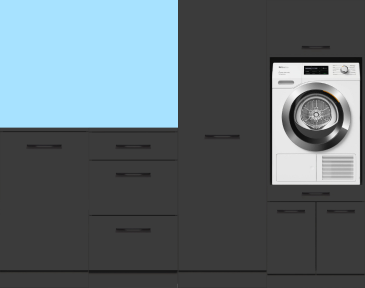
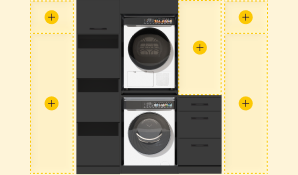

A closed washing machine cabinet looks neat and keeps your laundry area tidy but requires extra attention to ventilation, safety, and sizing. With proper air circulation, sufficient free space, and a stable setup, you prevent overheating, moisture problems, noise nuisance, and warranty issues. In this guide, you’ll learn exactly what to consider when placing a washing machine or heat pump dryer in a closed cabinet with doors.
Why ventilation is crucial in a closed washing machine cabinet
Washing machines and dryers produce heat and moisture. In a closed cabinet, this heat can build up and moisture can condense, risking malfunctions, shorter lifespan, and in extreme cases, fire hazards. Ventilation ensures balanced air intake and exhaust so that electronics, motor, and cooling can operate safely. This is especially important for heat pump dryers, as the heat exchanger releases heat and requires clean air. Want to get practical? See how to install ventilation in a washing machine cabinet.
Ensure natural airflow: air flows from bottom to top. Therefore, provide low intake and high exhaust, for example via ventilation grilles at the bottom and top or through slots in the door and an open back panel. Avoid airtight sealing of seams. Check during use for signs of poor ventilation, such as warm air flowing out when opening the door, musty odors, or condensation on walls. For intensive programs or prolonged drying, leave the door slightly ajar as an extra precaution. Always consult your appliance manual for minimum ventilation requirements per model. Read the ventilation requirements for a washing machine cabinet.
Dimensions and free space around the appliance
Sufficient free space prevents resonance, allows air circulation, and gives hoses and cables freedom of movement. Take into account the varying depths of modern machines and clearance for opening the door and pulling out for maintenance. The guidelines below will help you get started, but always follow the device specifications. See also the required space around the washing machine.
| Component | Minimum size/space | Explanation |
|---|---|---|
| Clearance behind | 3 - 5 cm | For plug, water hose, and airflow |
| Clearance on the side | 2 - 3 cm per side | Prevents vibration against cabinet walls |
| Clearance above | 5 cm | Warm air exhaust |
| Ventilation openings below | ≥ 100 cm² | Cool air intake |
| Ventilation openings above | ≥ 150 cm² | Warm air exhaust |
| Door opening | Full swivel range | Note front thickness and hinge angle |
For details on cables, hoses, and heat dissipation see the space behind the washing machine in a cabinet.
Damping vibrations and reducing noise in a closed cabinet
In a closed cabinet, the cabinet walls can act as a sounding board. Focus first on stability: level the machine, adjust the feet correctly, and use a stiff, flat floor or a solid base. Connect or anchor the cabinet to the wall to limit movement.
- Use an anti-vibration mat or vibration dampers under the machine for peak loads during spinning.
- Avoid tight enclosure. A few centimeters of clearance around reduces resonance.
- Keep cables and hoses clear of cabinet panels so they do not rub against wood or metal.
- Consider acoustic panels on the inside, but do not block ventilation openings.
Water supply, drainage, and leak protection
Water management is just as important as ventilation. Ensure an easily accessible double or single shut-off valve, secure the supply hose, and replace old hoses in time. Place a drip tray under the washing machine in a cabinet with drainage or sensors for early leak detection, especially in a cabinet with a plinth. Keep the siphon and drain hose free of kinks and check for drips and condensation around connections after installation.
Electrical and load capacity of the cabinet
Use a grounded outlet on a separate circuit and avoid extension cords or power strips behind the machine. Route the cable without tension away from moving parts and moisture. Ensure the cabinet can support the total weight of the machine and laundry, including dynamic loads during spinning. Choose waterproof panel material and sturdy mounting points, and anchor to the wall where possible. When stacking a washer and dryer, use a suitable spacer or platform from the manufacturer and check the maximum load capacity of the structure. Read more about a safe outlet and electrical setup in the cabinet.
Practical step-by-step plan for a safe enclosed washing machine cabinet
- Measure and plan: note appliance dimensions, rotation range, and ventilation requirements from the manual.
- Provide ventilation: design intake at the bottom and exhaust at the top with sufficient open surface area.
- Make connections: ensure water, drain, and grounded outlet are easily accessible.
- Installation: build the cabinet square and stiff, anchor it to the wall, and place a drip tray.
- Placement and adjustment: level the machine, dampen vibrations, and keep hoses free.
- Test run: run a wash cycle at high spin speed and check for heat, noise, and leaks.
Frequently Asked Questions
Can a washing machine be placed in an enclosed cabinet?
Yes, provided you ensure sufficient ventilation, free space, and a stable, load-bearing structure. Pay attention to a grounded outlet, an accessible tap, and leak protection. Follow the ventilation and installation guidelines from your appliance’s manual. Unsure? Is it wise to put a washing machine in an enclosed cabinet?
How do I ventilate a washing machine cabinet?
Combine intake at the bottom and exhaust at the top with grilles or slots and leave the back partially open. Keep 3 - 5 cm of space behind, 2 - 3 cm on the sides, and about 5 cm above free. For long drying cycles, it helps to leave the door slightly ajar.
Do washing machines need ventilation in a cabinet with doors?
Absolutely. The motor and electronics generate heat and need air to dissipate it. Without air circulation, the temperature rises and the risk of malfunctions increases. Ensure constant air intake and exhaust according to the minimum openings.
How do you make a washing machine cabinet soundproof?
Completely soundproofing is undesirable due to the necessary ventilation. Reduce noise by stiffening the cabinet, leveling the machine, using dampers or an anti-vibration mat, and smartly placing acoustic panels without blocking ventilation.
Do you want to set up your enclosed washing machine cabinet safely and quietly but don’t know where to start? The guidelines in this guide will help you a lot. If you have specific dimensions or requirements, contact Wasdroom for personal advice.

