

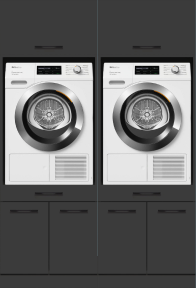
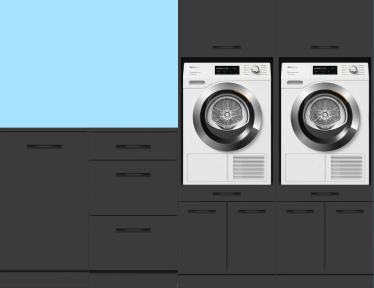
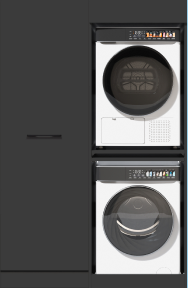
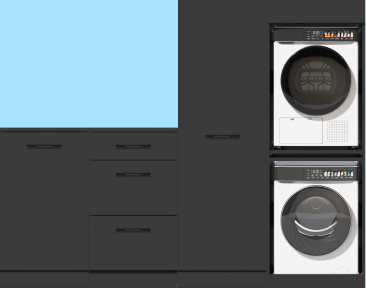
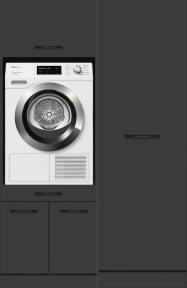
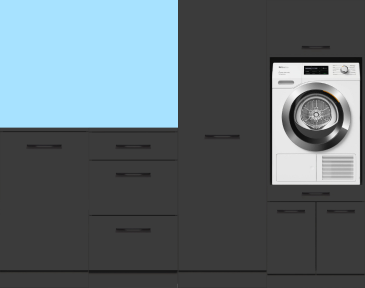
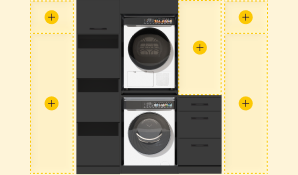

The short version: for the depth of a washing machine cabinet, almost always calculate 67-70 cm. This gives you space for the plug, hoses, and sufficient ventilation without the doors jamming. Always measure your niche, leave 5-7 cm free behind the machines, and keep 2-3 cm clearance around. Whether you place just a washing machine, a side-by-side set, or stacked, this rule of thumb helps you quickly choose the right size.
Start measuring: this is how you determine your niche depth
An accurate measurement prevents a too-tight cabinet and unnecessary returns. This is how you determine the washing machine cabinet depth in your situation:
- Measure the depth at multiple points from the back wall to the front of the floor or baseboard.
- Check for obstacles: baseboards, pipes, siphons, heating pipes, or a drain in the corner.
- Add 5-7 cm extra depth to your machine depth for plug, hoses, and bends.
- Plan 2-3 cm clearance around the machine for vibration-free placement and door opening.
- Check the floor flatness – height differences can reduce effective depth.
- Also note the door clearance: ensure cabinet doors can open fully without jamming.
Want to measure with certainty? Check the step-by-step how-to measure yourself for a washing machine cabinet.
Tip: check the machine specifications and the standard built-in depth of a washing machine. Manufacturers often specify a bare depth without hoses. In practice, with hoses and plug, you almost always end up above 60-62 cm.
Rear space, ventilation, and connections
A washing machine and dryer need breathing room and space for connections. Therefore, allow 5-7 cm of free space behind the appliances for the plug, drain, and water hose. This margin prevents kinked hoses and ensures your equipment remains vibration-free. Leave about 2-3 cm clearance around so vibrations are not transferred to the furniture. Read more about the space behind the washing machine in a cabinet.
Ventilation is crucial, especially for condenser and heat pump dryers. Ensure air intake and exhaust via vents or an open back. Guideline: provide sufficient ventilation openings - think of intake and outlet together offering about 200 cm² of free surface. For stacked sets, extra ventilation at the top is desirable, and a small height skirting board at the front helps draw in air.
Finally: route cables and hoses along the side or through pass-through holes. This prevents them from pressing behind the machine and requiring extra depth.
Quick overview: recommended depth per setup
| Setup | Recommended cabinet depth | Explanation |
|---|---|---|
| Washing machine only | 67-70 cm | Enough space for plug and hoses, door can open freely. |
| Washing machine + dryer side by side | 67-70 cm | Standard worktop depth, easy hose pass-through at the back. |
| Stacked | 67-70 cm | Extra attention to rear space and top ventilation. |
| With worktop and skirting board | 67-70 cm | Front aligns nicely, space for cables under the worktop. |
| Shallow niche | 60-65 cm + front margin | Choose a shallow cabinet and let appliances protrude slightly if necessary. |
For exact guidelines per size see the standard built-in dimensions for a washing machine cabinet.
Common mistakes when choosing the depth
- Measuring only the machine depth and not allowing 5-7 cm for hoses and plug.
- Ignoring skirting boards and pipes, reducing the effective depth.
- Too little ventilation, resulting in heat buildup and increased wear.
- Leaving no clearance around, causing vibrations to hit the furniture.
- Forgetting door and walking space, resulting in clamping or bumping against walls.
When to choose extra deep or shallow
Choose extra deep - around 70 cm - if you have thick water drains, angled couplings, or a worktop with a back edge. Extra space is also useful for dryers with thick air exhaust hoses. Go shallower - 60-65 cm - if your niche does not allow it. Then plan a cabinet with a shallow body, place pass-throughs smartly, and possibly align the machine fronts a few centimeters forward of the front. This way you maintain ventilation and functionality without compromising appearance.
Unsure about a set? Read more about the depth of washing machine and dryer: which cabinet fits?.
Example dimensions of Wasdroom cabinets
At Wasdroom you’ll find configurations that match these guidelines. For example, the popular Dubbel 8.0 has a depth of 67.5 cm – perfect within the 67-70 cm rule of thumb. All cabinets are developed for a load capacity up to 240 kg (Double) or 120 kg (Single and Stack) per cabinet and designed to absorb vibrations. Assemble your set in the online configurator: single, side by side, or stacked, with suitable depth, ventilation grilles, and pass-throughs for your situation.
Want all dimensions clearly? Check the dimensions of a washing machine cabinet (width/height/depth).
Frequently Asked Questions
How deep should a cabinet for the washing machine be?
Count on 67-70 cm. This gives you enough space for plug, hoses, and ventilation, and prevents cabinet doors from jamming. Only in a tight niche can you go down to 60-65 cm, provided you solve the rear space cleverly and possibly let the front protrude slightly.
How deep is a washing machine cabinet on average?
On average 67-70 cm. This matches the depth of common machines including connections. Many modular cabinets – like those from Wasdroom – follow this standard to keep placement and air circulation simple.
How much space should I leave behind the machine?
Leave 5-7 cm free for the plug, drain hose, and bends in hoses. This margin prevents kinked pipes, reduces vibrations, and improves ventilation. Combine this with 2-3 cm clearance around the machine.
Does a washing machine fit in a 60 cm deep cabinet?
Only with custom solutions. Choose a shallow cabinet body, route hoses sideways, and if necessary, let the front protrude 1-3 cm. Always check the machine specifications and test the door swing before final installation.
Is it allowed for the machine to stick out a bit forward?
Yes, as long as the feet are fully on the base plate and the door opens freely. A small front test strip can be functional in a shallow niche and visually disappears if the cabinet front is neatly aligned.

