

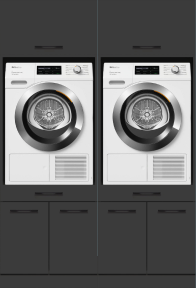
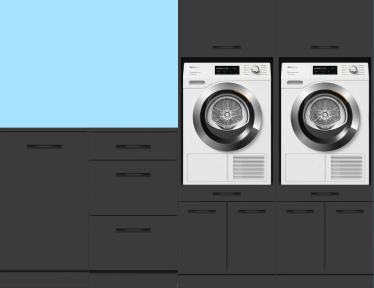
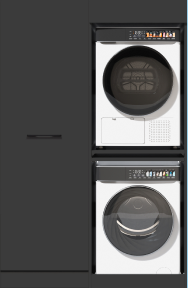
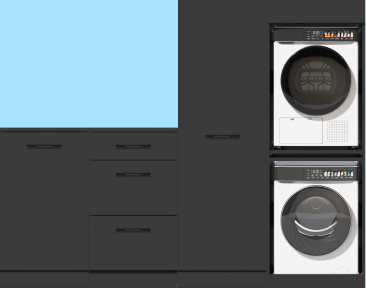
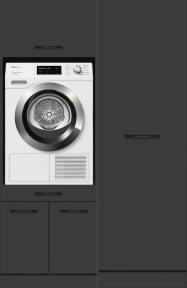
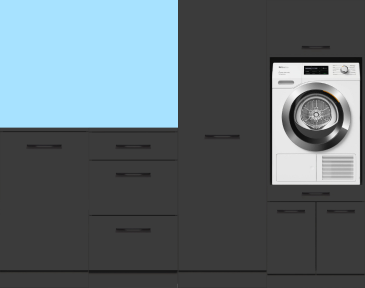
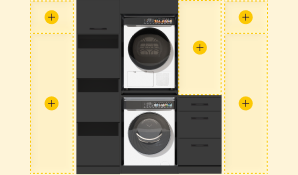

A well-placed washing machine cabinet is safe, quiet, and practical. It starts with correct connection points for water, drainage, and electricity. Below you will find the essential requirements and practical dimensions to install without surprises – whether you are placing a Single, Double, or Stacked solution. Wasdroom cabinets are TÜV-certified and loadable up to 240 kg (Double) or 120 kg (Single and Stack), but the installation quality of your connections determines daily ease of use and safety.
Safe connection points: heights, distances, and accessibility
Keep connections accessible next to or behind the cabinet and ensure sufficient feed-through space for hoses and cables. The guidelines below will help you get started:
Want to arrange the laundry room smartly and position connection points logically? Read Setting up a laundry room for practical tips.
| Connection | Recommended height relative to floor | Distance to water point | Explanation |
|---|---|---|---|
| Cold water tap | 110 - 120 cm | n.a. | Place next to or behind the cabinet and always maintain direct access. Consider an angle stop valve with a check valve. |
| Drain (standpipe/siphon) | 60 - 90 cm | n.a. | Ø 40 mm, odor trap present. Secure the hose in the standpipe and ensure a slight slope. |
| Washing machine outlet | 110 - 120 cm | Min. 30 cm horizontal from tap/drain | Grounded, behind a 30 mA residual current device. Preferably on a separate 16A circuit. |
| Dryer outlet | 110 - 120 cm | Min. 30 cm horizontal from tap/drain | Dedicated 16A circuit recommended. Keep ventilation space free, especially for heat pump or condenser dryers. |
| Feed-through space behind cabinet | n.a. | n.a. | Leave about 5 cm free for hoses and cables. Use smooth feed-through openings to prevent wear. |
Electrical requirements in laundry and bathrooms according to NEN 1010
If your washing machine cabinet is in a separate laundry room, the general rules apply: grounded outlet, behind a 30 mA residual current device, and preferably a dedicated 16A circuit per appliance. In a bathroom, zone requirements apply. Place outlets only outside the zones around the bath or shower. If you still place equipment near wet zones, pay attention to the IP rating: zone 0 requires at least IPX7, zone 1 IPX5, and zone 2 IPX4. Washing machines and dryers should not be in the zones themselves; keep at least 60 cm distance from the shower or bath and ensure the outlet is outside the zones. Always install cables and sockets splash-proof and use only suitable, grounded wall outlets. If you are unsure about the interpretation of the standard in your situation, consult a certified installer. Are water or electrical points inconveniently located? Put together your own combination in the configurator.
Preparation and installation of the cabinet
- Level the floor and set the cabinet perfectly horizontal using the adjustable feet. Check width and depth.
- Securely anchor the cabinet to the wall with suitable plugs and brackets for your wall type.
- Connect water and drain before sliding in the machines. Test for leaks and secure hoses.
- Place the washing machine first, with leveling feet fully screwed in. Check for vibration and clearance on cables and hoses.
- For the dryer: keep ventilation space free, drain condensate water where possible, and use an anti-tip safety device.
View the installation manuals per model for exact steps and dimensions: Washing machine cabinet installation manuals.
Choose the setup that fits your situation:
- Single washing machine cabinet – points of attention for setup with one appliance.
- Double washing machine cabinet – requirements for two appliances (power circuits, water supply/drainage).
- Stacked washing machine cabinets – accessibility and safety of connections when stacking.
Checklist for installer or DIYer
- Separate circuits for washing machine and dryer present
- 30 mA residual current device check performed
- Tap accessible without dismantling the cabinet
- Drain with trap and secured hose
- Outlets outside wet zones and at the correct height
- 5 cm clearance behind the cabinet for passage
- Cabinet anchored to the wall, leveled
- Ventilation and heat dissipation for the dryer ensured
Frequently Asked Questions
Can you build in a regular washing machine?
Yes, a standard freestanding washing machine can be placed in a washing machine cabinet as long as the size, weight, and ventilation space are correct. Ensure access to the tap and outlet, and keep the drain hose free of kinks.
What should you pay attention to when installing a washing machine?
Place level, secure hoses properly, drain height 60 - 90 cm, grounded outlet on a separate circuit, and accessible tap. Test a trial wash for leaks and vibrations before closing the fronts.
Is it allowed to place a washing machine in the meter cupboard?
In most cases, this is not allowed or recommended due to ventilation, moisture, space, and safety regulations. Consult local regulations and your network operator. It is better to choose a separate laundry room or cabinet with sufficient ventilation.
Can a washing machine be plugged into a normal outlet?
Yes, provided it is grounded, behind a 30 mA residual current device, and preferably on its own 16A circuit. Do not share the circuit with heavy consumers. A dryer usually also requires its own 16A circuit.
Note: inspections and adjustments to the electrical installation should preferably be carried out by a certified installer. For product-specific dimensions and installation, please refer to the manual of your Wasdroom model.

