

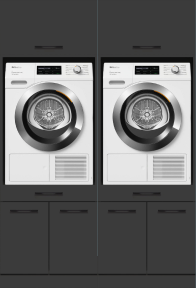
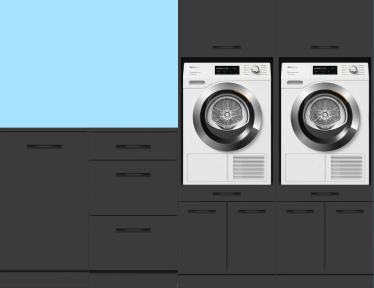
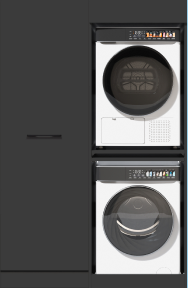
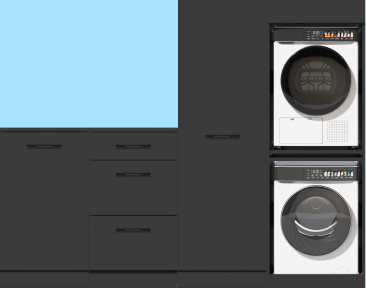
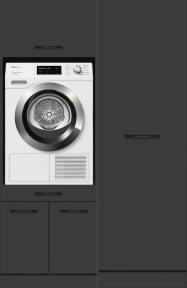
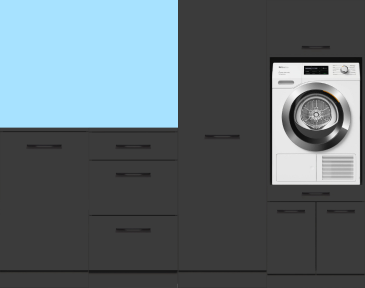
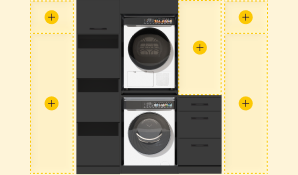

A washing machine quickly weighs between 60 and 85 kilos and has a shifting drum. Therefore, never lift it alone, prepare your route well, and ensure the cabinet is secure. With the right posture, tools, and a well-thought-out step-by-step plan: placing a washing machine in a cabinet, you can position your machine in a way that is easier on your back, without damage or extra vibrations.
Before you start: requirements for the cabinet and space
A washing machine in a cabinet works fine, provided the cabinet and surroundings are suitable. Choose a sturdy cabinet with a load capacity well above the machine’s weight, preferably at least 120 to 150 kilos including a safety margin. Anchor the cabinet to the wall and level it to reduce wobbling and vibrations. Also determine the safe working and lifting height. Allow enough clearance around for placement, cooling, and vibrations. Guideline: about 2 cm on each side and 5 cm at the back for hoses and plug. See also space around the washing machine in a cabinet for minimum margins and ventilation. Ensure ventilation through an open back panel, vents, or free space above and below the doors. Plan the connection points logically and accessibly: water tap with aquastop, drain at 60 to 90 cm height, and a grounded wall socket on a separate circuit. A base cabinet for the washing machine can help create the ideal (lifting) height. A drip tray with drainage and vibration dampers under the feet increase safety and comfort. Use the washing machine cabinet installation checklist to prepare everything before lifting (space, connection points, route).
Preparation: measuring, route, and getting the machine ready
Measure the niche, door widths, corners, and stairs accurately and compare with the machine dimensions. Protect floors, thresholds, and cabinet edges with sturdy cardboard or felt strips. Make the base or bottom of the cabinet flat and rigid and check the anchoring. Have lifting straps, gloves, and scratch-resistant pads ready. Unsure about exact measurements and route? Follow the guide to measure yourself for a washing machine cabinet.
Disconnect the washing machine. Turn off the tap, disconnect the hose, and drain residual water via the filter or emergency drain hose. Empty the lint filter and detach the drain hose without kinks. Unplug the power cord and bundle hoses and cord so nothing catches. If you plan to tilt the machine significantly or move it over stairs, reinstall the transport bolts according to the manual to prevent drum damage.
Very detailed step-by-step plan: lifting your washing machine into the cabinet
1. Check and protect the setup
Check that the cabinet is level and firmly anchored. Remove obstacles from the route. Protect the floor and cabinet edges with sturdy pads. Discuss commands with your lifting partner and decide who takes which side.
2. Lifting posture and tools
Always lift with two people. Use lifting straps or carrying belts for grip and a straight posture. Wear gloves and closed shoes. Keep your back straight, bend your knees, and hold the machine close to your body. Never lift by the door, knobs, or hoses.
3. Lifting and moving
Tilt the machine slightly towards you and hold the bottom. Count down and lift simultaneously a few centimeters. Take small steps, communicate continuously, and rest when needed. On stairs, the person below carries most of the weight; go step by step and keep the machine as vertical as possible.
4. Sliding into the cabinet
Place scratch-resistant pads or sliders in front of the cabinet. Guide hoses and cords into the niche first so they don’t get pinched. Lower the machine carefully onto the base or platform and slide it slowly backward without prying at the front. Read what you place under a washing machine in a cabinet to prevent damage and facilitate positioning.
5. Leveling and connecting
Set the machine exactly level using the adjustable feet and check that it doesn’t wobble (see also how to make a washing machine stable and level). Connect the water supply with a gasket, place the drain hose at the correct height without kinks, and plug into a grounded outlet. Leave enough slack in hoses and cords.
6. Testing and damping vibrations
Run a short program and check for leaks. Test for movement and noise during spinning. Adjust the feet until the cabinet and machine remain stable. Place vibration dampers under the feet if it still resonates and ensure the cabinet doors don’t touch the machine anywhere.
Cabinet setups and height options
Side-by-side is the most stable and ergonomic if your workspace is wide enough. Stacking is possible with an official spacer and anchoring; pay extra attention to leveling and center of gravity. A riser of 30 to 40 cm improves working height, but make the base rigid, flat, and firmly anchored. Want to do this ergonomically? Here’s how to safely place a washing machine on a riser in a cabinet.
Common mistakes with a washing machine in a cabinet
Lifting alone or working without tools carries a high risk of injury. Too little clearance around presses hoses and increases vibrations. No ventilation causes moisture problems. Not leveling causes the machine to walk. Forgetting to install transport bolts during heavy moves can cause drum damage. Sloppy hose and cable routing leads to leaks or malfunctions.
Frequently asked questions
How can I lift my washing machine into the cabinet?
Two people, lifting straps, straight back, and bending knees. Protect the route and cabinet edges, guide hoses first, slide carefully into the niche, level, and test for leaks and vibrations. Take your time and communicate continuously.
Can you put a washing machine in a cabinet?
Yes, provided the cabinet is strong, well anchored, level, and offers enough clearance and ventilation. Ensure proper connection points, a drip tray, and vibration damping. Maintain at least 2 cm on the sides and 5 cm at the back.
What is the best way to lift a washing machine?
Always with two people, use lifting straps, keep the load close to your body, lift with your legs, and keep your back straight. Work calmly, step by step on stairs, and set the machine down safely if you need to adjust.
Can you lift a washing machine alone?
Not recommended. At 60 to 85 kilos and with a loose drum, the risk of back injury and damage is high. Arrange help or use professional tools like a stair climber or furniture dolly. When in doubt, call a professional.

