


Connecting a washing machine inside a cabinet saves space and keeps your laundry area neat and quiet. You can do it yourself as long as the water, drainage, and electricity are correct and you securely anchor the cabinet. This guide provides practical preparation and a clear step-by-step plan to safely install your machine level and vibration-free inside a washing machine cabinet. If you have doubts about a connection or standard, consult a professional for water or electricity.
Preparation: water, drainage, and electricity in the right place
Before installing the cabinet, check that all connection points are accessible and placed according to guidelines. A few rules of thumb for a neat and safe setup inside the cabinet:
- Water – Use an accessible shut-off valve, preferably next to or above the cabinet. Where possible, install a double valve for washing machine and dryer with condensate drainage. Consider an aquastop or water lock.
- Drainage – Provide a standpipe or siphon about 60-90 cm above the floor. Let the drain hose hang freely inside the pipe without kinks or airtight sealing.
- Electricity – Use a grounded outlet on its own 16A circuit with residual current device (RCD) protection. Place the outlet accessible, preferably next to the cabinet. Do not use extension reels or power strips.
- Clearance behind the cabinet – Reserve 5-7 cm for hoses and cables to prevent kinks and resonance against the wall.
- Floor and drip tray – Ensure a flat, sturdy floor. Consider a drip tray with drainage on risk-prone floors.
Want to dive deeper into connection points, ventilation, and layout? Read our guide on setting up your laundry space.
Step-by-step: connecting a washing machine inside a cabinet
Step 1 – Level the cabinet and fix the base
Place the cabinet in its final position and fully level it using the adjustable feet. Check front-to-back and side-to-side. A level cabinet prevents the machine from moving and vibrating and is essential for its lifespan. If the floor is uneven, use suitable leveling plates under the feet.
Step 2 – Securely anchor to the wall
Attach the cabinet to a load-bearing wall with appropriate wall brackets. Use plugs and screws suitable for your wall type. Solid anchoring prevents tipping when loading and unloading and dampens vibrations. If you doubt the wall quality, choose extra fixing points or consult a specialist.
Step 3 – Connect water and drainage
Turn off the washing machine tap. Mount the supply hose on the tap and the machine, using flat rubber washers. Hand-tight plus a quarter turn is usually sufficient—avoid over-tightening. Lead the drain hose without kinks to the standpipe or siphon at 60-90 cm height. Secure the hose with the supplied bracket so it cannot slip out of the pipe.
Step 4 – Place the washing machine and connect electricity
Lift the machine with two people and carefully slide it into the cabinet. Leave enough slack on hoses and cables. Plug into the grounded outlet without an extension cord. Adjust all machine feet individually until it is completely level. Check by gently pressing diagonally on the machine—it should not wobble.
Step 5 – Test, reduce vibrations, and finish neatly
Open the tap and check for leaks. Run a short spin cycle to test vibrations. If you hear resonance, place rubber vibration dampers under the machine or fine-tune the feet. Bundle cables and hoses loosely with clamps so nothing kinks or rattles. Keep the tap and outlet accessible for maintenance and emergencies.
Choose the right washing machine cabinet for your setup
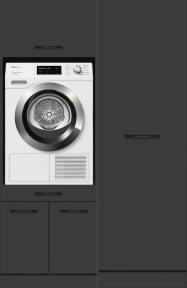
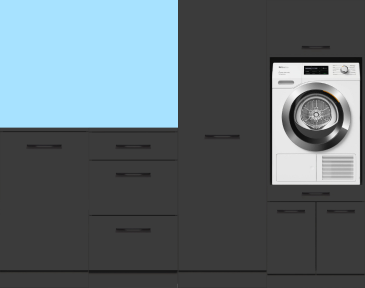
The right cabinet ensures a perfect connection in one go. At Wasdroom, you can choose from three series with high load capacity up to 240 kg (Double) or 120 kg (Single and Stack), TÜV certification, and plug-and-play installation with a 10-year warranty:
- Single Series – One machine, compact and neatly concealed.
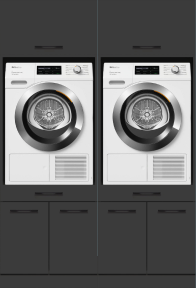
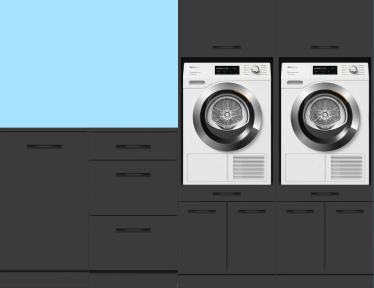
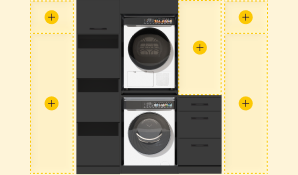
- Double Series – Washing machine and dryer side by side, ideal for ergonomics.
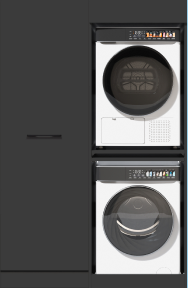
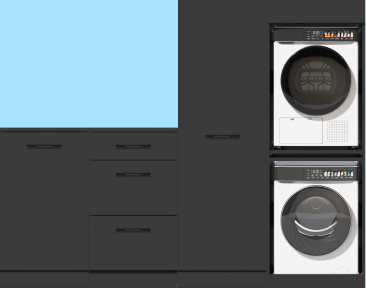
- Stacked Series – Machine and dryer stacked for maximum space saving.
Put together your ideal cabinet with the online configurator and choose the combination and layout that fits your connection points. Visit wasdroom.com - My Configurator.
Does a standard setup not fit due to unusual connection points or dimensions? Check out our tips for combining separate cabinets into the setup that fits your space.
Frequently Asked Questions
What is the ideal height for the washing machine drain inside a cabinet?
Aim for 60-90 cm above the floor. This prevents backflow and keeps the pump load normal. Use a standpipe or siphon and let the hose hang freely inside the pipe without airtight sealing.
Can I use a power strip for the washing machine and dryer inside the cabinet?
Not recommended. Use a grounded outlet per appliance on its own 16A circuit with RCD protection. This prevents overload and keeps the installation safe and compliant with guidelines.
How do I reduce noise and vibrations in a washing machine cabinet?
Make sure the cabinet and machine are perfectly level, anchor the cabinet to the wall, and use rubber vibration dampers. Leave 5-7 cm clearance behind the cabinet and prevent hoses or cables from resonating against panels.
Can I place a dryer in the same cabinet?
Yes, choose a Double or Stacked configuration. Ensure sufficient ventilation, use a condenser or heat pump dryer, and keep plugs separated on appropriate circuits according to installation requirements.
Connecting it yourself is doable with the right preparation. Have questions about dimensions or cabinet choice? Our manuals and support will guide you. See the manuals or contact our customer service at wasdroom.com.

