

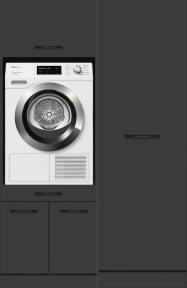
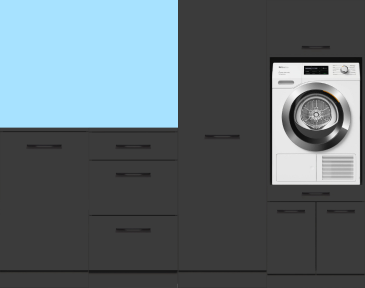
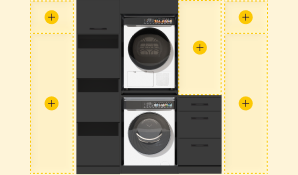

How much space do you really need above a washing machine in a cabinet? As a practical guideline, allow 2 to 3 cm above the machine, 1 to 2 cm on each side, and 5 to 10 cm at the back for hoses and cables. Combine this with good ventilation and a stable construction, and your cabinet will be safe, quiet, and user-friendly. In this guide, you’ll find concrete measurements, ventilation tips, and ergonomic advice that align with manufacturer guidelines. Always check the manual of your machine and the specifications of your cabinet. See also: Space behind washing machine in cabinet.
Ventilation and safety: how to prevent moisture and heat
A washing machine produces heat and moisture. In a cabinet, that heat can build up and moisture can linger if there is insufficient air circulation. This increases the risk of malfunctions, mold growth, and in extreme cases, overheating. The solution is an open or semi-open cabinet design with controlled airflow.
Practically, this works as follows: provide air intake at the bottom and exhaust at the top. Cold air enters the cabinet at the bottom, warm and moist air rises and can exit at the top. Therefore, preferably choose an open back panel or place ventilation grilles high in the cabinet. If you prefer a closed look, use louvered doors or doors with ventilation grilles to ensure sufficient airflow. Want to know more? Washing machine in a closed cabinet.
Also consider accessibility and safety. The plug, water tap, and drain hose must remain easily accessible, even when the machines are running. Do not place flammable materials directly above or behind the machine. Do not fit a work or shelf board tightly against the machine; leave space above so heat can escape. When stacking with a dryer, use an official stacking kit for stability and air circulation between the appliances. On wooden floors or in older homes, additional wall anchoring is advisable to control vibrations.
In summary: combine a semi-open cabinet design with grilles or louvers, reserve free space around, and keep connections accessible. This keeps your laundry area safe, fresh, and quiet in use.
Measurements and measuring: the clearance you need
Accurate measuring prevents hassle later. Measure the width, depth, and height of your niche, check the door swing and clearance, and note the position of the outlet, tap, siphon, and drain. Account for any baseboard, plinth, or drip tray and the thickness of the back panel or grilles. For a complete overview of dimensions and clearances: Dimensions of a washing machine cabinet.
Use the minimum clearances below as a practical guideline. Always check your appliance’s manual for specific requirements. See also the guidelines in Standard built-in dimensions for a washing machine cabinet.
| Position | Free space | Explanation |
|---|---|---|
| Above washing machine | 2 - 3 cm | For heat dissipation and vibration clearance |
| Back side | 5 - 10 cm | For hoses, cables, and drain hose bend |
| Left/right | 1 - 2 cm per side | Prevents resonance and rubbing |
| Door clearance | Min. 3 - 5 cm | For free turning circle and handle |
Stacking? Make sure the total height of cabinet and machines stays well below the ceiling, and that you still have ventilation at the top. Always place a stacking kit between washing machine and dryer for safety and clearance. Do not let the drain and outlet get stuck behind the machine; position them sideways or in a recess so you can reach them.
Placement: side by side or stacked
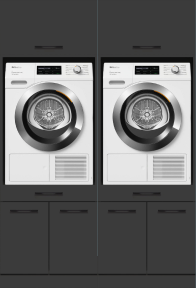
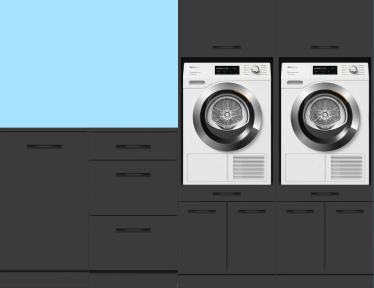
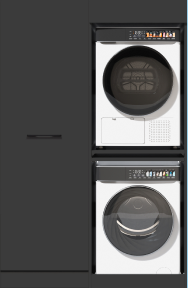
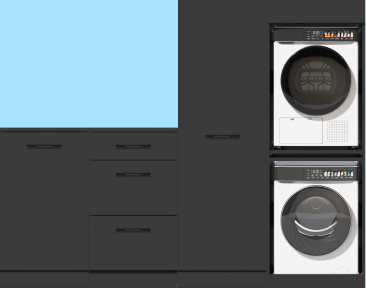
Both layouts can be ergonomic and safe if done properly. Side by side offers overview, extra worktop space, and less vibration load per position. It requires more width. Stacking saves floor space and brings the dryer to reach height but requires extra attention to stability and ventilation.
- Side by side – Advantages: low center of gravity, wide worktop possible, easy maintenance. Watch niche width and door clearance.
- Stacked – Advantages: compact, short walking distances. Use an official stacking kit, anchor the cabinet, and check floor load and ventilation options.
Materials, load capacity, and vibrations
A loaded washing machine can vibrate significantly. Therefore, choose thick, moisture-resistant panel material with solid fasteners. Melamine-coated panels are practical and easy to clean. A stiff, square construction with a back panel and attachment to the wall or side panels limits deformation and resonance.
Pay attention to load capacity: a good washing machine cabinet should easily support the weight of the machine and contents. Solutions with a specified load capacity up to 240 kg per cabinet offer a safe margin. Vibration dampers or feet and a level installation also help reduce noise levels.
Connections and practical layout
Ensure a grounded and accessible outlet, a closable water tap within reach, and a drain with the correct height and slope. A drip tray with raised edges is recommended, preferably with the option to drain toward a siphon or floor drain.
For ease of use, you can work with pull-out trays for laundry baskets, a shallow shelf for detergents at chest height, and compartments for ironing supplies. Do not place these tightly against the machine to avoid vibrations and heat buildup. Keep the space above the washing machine free according to the measurements, especially with a closed front with doors.
Smart use of the space above the washing machine
If you want to use the space above the machine, do so with airy solutions that do not block ventilation. Think of a shallow shelf with 2 to 3 cm clearance above the machine, a pull-out tray for laundry baskets, or narrow compartments for detergents. Use adjustable feet to level the cabinet perfectly; this prevents resonance and increases stability. Make sure each element remains easy to remove for maintenance and that grilles or louvers at the top stay free.
Frequently asked questions
How much space above the washing machine?
As a guideline, allow 2 to 3 cm of free space above the washing machine. This clearance is needed for heat dissipation and to accommodate slight movement of the appliance. Combine this with 1 to 2 cm per side and 5 to 10 cm at the back for hoses and cables. Always consult your model’s manual for exact values.
How high should I place my washing machine in the cabinet?
For comfortable loading, the ideal height of the loading opening is around 90 to 100 cm above the floor. Depending on door and hinge position, this often means a plinth of about 20 to 40 cm under the machine. Check the working height in your situation, including drip tray and floor construction, before permanently installing the cabinet. Read step-by-step: How high should a washing machine be in a cabinet?.
Can I put my washing machine in a cabinet?
Yes, provided you meet three conditions: sufficient ventilation, correct free space around, and a stable, load-bearing construction. Choose an open back panel or ventilation grilles, ensure plug and tap remain accessible, and anchor the cabinet where needed. Use an official stacking kit when stacking.
What is the ergonomic height of a washing machine?
Ergonomically, the loading opening at chest to elbow height is most comfortable, often around 90 to 100 cm from the floor. This minimizes bending and allows you to lift laundry baskets closer to your body. Adjust the plinth height and the position of any shelves accordingly and test the height with an empty laundry basket before final installation.
Are you working on a new laundry space or replacing your cabinet? Wasdroom supplies high-quality washing machine cabinets with moisture-resistant melamine finish, soft-close, and plug-and-play assembly, with a 10-year warranty. Check out the Built-in cabinets for washing machine and dryer. This way, you combine safe dimensions with a neat, durable finish that lasts for years.

