

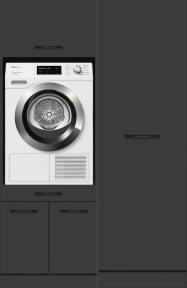
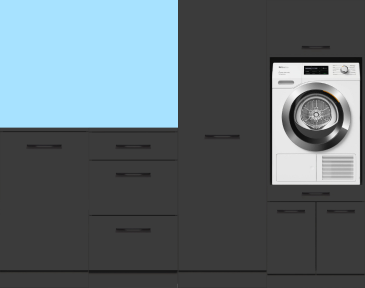
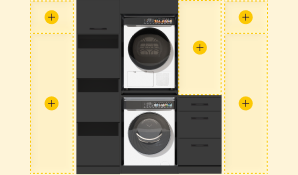

Are you looking for a sleek laundry space without visible appliances but unsure whether to choose a true built-in solution or a washing machine cabinet enclosure? In this guide, you’ll read in clear steps what the difference is, which sizes and conditions apply for built-in, and when a washing machine cabinet is actually smarter, quieter, and more practical for your situation. Meanwhile, explore our washing machine enclosure cabinets to get a feel for style and placement.
The difference between built-in, under-counter, and enclosure explained
A built-in washing machine is designed to be hidden behind a door panel and fixed in a cabinet or kitchen front. The appliance is tailored to niche dimensions and has hinge points and fastenings to support the door and cabinet structure. Under-counter means an appliance is placed under a countertop without a front door; it is visible but part of the kitchen line. An enclosure or washing machine cabinet is a standalone cabinet that aesthetically and functionally houses a freestanding washing machine or dryer, including shelves, doors, and often vibration and stability solutions.
Because the range of true built-in washing machines is limited and installation can be demanding, many households opt for a washing machine cabinet enclosure. This way, you retain the freedom to choose from the wide range of freestanding appliances while still achieving a neat, uniform look in your laundry room or kitchen. Want to know more about the requirements and differences? Check out the explanation and requirements of a built-in washing machine cabinet.
When do you choose built-in?
Choose built-in if you want a completely continuous kitchen front line and are willing to invest in a suitable appliance, professional installation, and precise measurements. Built-in works especially well in a stable, low-vibration setup with sufficient ventilation and load-bearing capacity. Keep in mind higher costs, fewer model choices, and more difficult maintenance in case of malfunctions due to the fixed installation. Explore built-in washing machine cabinets to compare options and niche sizes.
Is flexibility important, do you want to be able to replace quickly or make maintenance easier, or is the washing machine located in a place where vibrations need to be well dampened? Then a washing machine cabinet enclosure is often more practical. You combine the aesthetics of built-in with the freedom of choice and performance of freestanding appliances, without compromising accessibility.
Built-in dimensions and installation requirements
Successful installation starts with correct niche dimensions and conditions. These are the main points to watch:
- Niche dimensions and tolerance: generally allow 60 cm width, 56-60 cm depth, and a height that fits your cabinet or countertop height for a built-in washing machine. Leave a few millimeters of clearance around for installation and vibrations. See the standard built-in dimensions for a washing machine cabinet.
- Ventilation: provide at least a few centimeters of free space behind and above the appliance for heat dissipation and air circulation. Avoid completely closed shafts without airflow. See also the ventilation requirements for a washing machine cabinet.
- Accessibility: ensure the tap, siphon, drain, and plug remain reachable. If possible, install a service panel or removable plinth for quick access.
- Stability and load capacity: check the load capacity of the base and plinth. A loaded washing machine can weigh over 100 kg; the structure must safely support this and prevent the appliance from “walking.”
- Vibration control: level the appliance perfectly and allow space for vibration dampers. Secure the cabinet to the wall or side panels where needed to limit resonance.
- Door overlay: match hinges, front door, and handle to the machine and cabinet. Watch the opening angle and front thickness so the drum door can move freely.
Always check the installation manual of your specific model. Deviations in depth or hinge position may require custom work. Combining your washer and dryer in one front? Then pay attention to extra points such as total load, ventilation, and hinge direction.
Built-in, freestanding, or conversion cabinet: quick comparison
The comparison below helps you overview the main differences.
| Aspect | Built-in | Detached | Conversion cabinet |
|---|---|---|---|
| Appearance | Completely concealed behind front panel | Visible appliance | Sleek cabinet with doors and storage space |
| Choice and price | Limited selection, higher priced | Wide selection, more competitively priced | Free choice of appliance, separate cabinet |
| Installation | Precise custom work, more complex | Easy to install | Simple assembly of cabinet and appliance |
| Noise and vibrations | Requires extra damping and ventilation | Depends on floor and leveling feet | Cabinet can help dampen vibrations |
| Maintenance | More difficult to access | Very accessible | Doors open, directly at the appliance |
| Future-proof | Less flexible when replacing | Maximum flexibility | Freely switch appliances within the cabinet |
Want to neatly hide both appliances in one piece of furniture? Then choose a solution with sufficient load capacity, ventilation, and stability, suited to your space.
Smart alternative: the Wasdroom washing machine cabinet
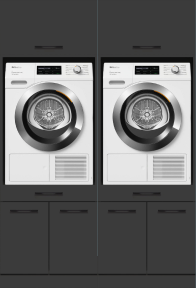
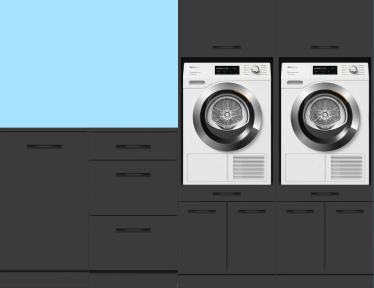
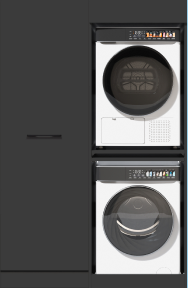
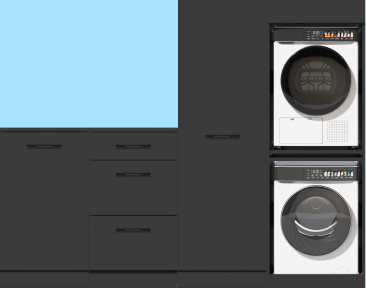
Want the look of built-in with the freedom of freestanding? Wasdroom’s washing machine cabinets stylishly hide your appliances and improve the functionality of your laundry space. You can choose from three series that fit your space and family setup: the Single Series for one appliance, the Double Series for side-by-side placement and extra storage, or the Stack Series for space-saving stacking.
Each cabinet is made of high-quality wood fiberboard with a wear-resistant melamine coating, so you benefit from a moisture-resistant and easy-to-maintain surface. The construction is TÜV-certified and supports up to 240 kg (Double) or 120 kg (Single and Stack) per cabinet. Adjustable feet make precise leveling easy, even on uneven floors, which limits vibrations and reduces noise levels. Thanks to the thoughtful plug-in mounting system and clear instructions, self-assembly is quite doable. You retain full freedom of choice in freestanding washing machines and dryers and can replace them later without having to adjust your furniture. Wasdroom delivers in the Netherlands and Belgium and offers a 10-year warranty on all cabinets.
Frequently Asked Questions
What are the disadvantages of built-in washing machines?
The selection is limited, the price is often higher, and installation requires precision and time. Due to the fixed fitting, maintenance is more difficult and there is a higher chance of resonance if ventilation, load capacity, or leveling are not perfect. Replacing or upgrading usually requires extra work.
What is better: a freestanding or a built-in washing machine?
That depends on your priorities. If you want a sleek front line and fixed setup, built-in is suitable. If you want maximum choice, lower purchase cost, and easy accessibility, freestanding is better. With a washing machine cabinet, you combine the sleek look with the flexibility of freestanding.
Can you install a regular washing machine as a built-in?
It is not recommended to fully install a standard freestanding washing machine as a built-in unit. These machines lack mounting points and ventilation solutions for front installation. If you want to neatly conceal the machine, choose a washing machine cabinet or a setup under a countertop with sufficient ventilation and access. Want to know more? Can you install a regular washing machine as a built-in?

