

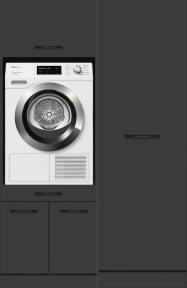
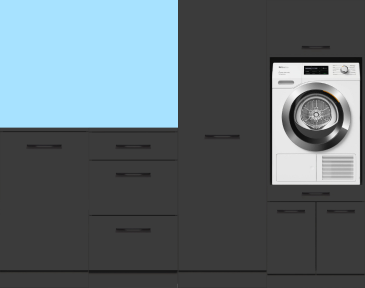

A washing machine in a wardrobe closet looks sleek and saves space but requires the right enclosure. A standard wardrobe often lacks load capacity, ventilation, and vibration damping. With a suitable washing machine cabinet or reinforced enclosure, you create a safe, quiet, and durable solution. Below you’ll find the technical requirements, smart setups, and practical steps to perfectly equip your closet for washing machine and dryer. Unsure about the basics? First, read the key points.
Technical requirements and safety
Washing machines generate dynamic forces, heat, and moisture. A good enclosure absorbs these forces, remains water-resistant, and ensures proper ventilation. Start with a sturdy construction anchored to the wall, moisture-resistant materials, and a stable bottom plate or base. Preferably choose a washing machine cabinet with proven load capacity and vibration absorption. This keeps the machine level, prevents resonance in the cabinet, and reduces noise.
| Requirement | Guideline | Practical tip |
|---|---|---|
| Load capacity | At least 150 kg static per appliance, preferably 240 kg per cabinet | Choose reinforced panels and a load-bearing bottom plate |
| Vibration damping | Anti-vibration base or cabinet-in-cabinet construction | Use rubber dampers and adjust feet precisely |
| Clearance | 2-3 cm per side, 5-10 cm behind, 2-5 cm above | Also check bend radii of hoses and plugs |
| Ventilation | Inlet and outlet grilles, approx. 200 cm² per side | Grilles in door or side panels, keep air path clear |
| Confirmation | Anchoring with wall brackets | Mount on a solid wall or use chemical anchors |
| Water safety | Drip tray, water trap, and shut-off valve | Seal seams to be splash-proof with PU glue or sealant |
| Electrical | Grounded 16A outlet, separate circuit recommended | Provide sufficient cable routing and cord passage |
| Material | Moisture-resistant MDF or plywood with waterproof finish | Avoid untreated particleboard |
| Accessibility | Access for faucet, filter, and siphon | Create a service hatch or removable panel |
Not sure if you have enough clearance around the machine? Check: Required space around a washing machine in a closet
Unsure if built-in installation is possible for you? Read: Can I install a washing machine in a closet?
Setups that work in a wardrobe closet
The best setup depends on your cabinet space, door type, and maintenance access.
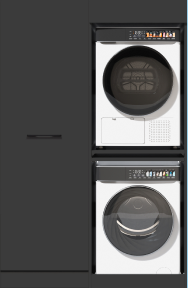
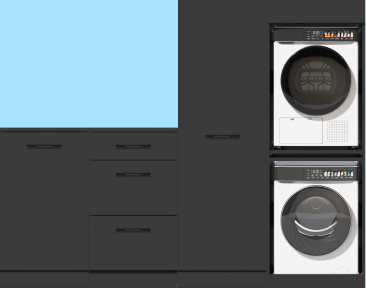
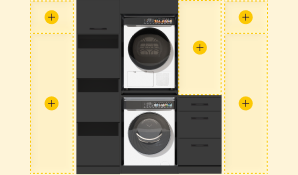
- Stacked - Washing machine below, dryer above saves floor space. Pay attention to extra anchoring and sufficient height for vibration-free mounting and ergonomic operation.
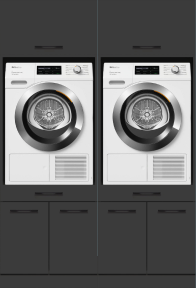
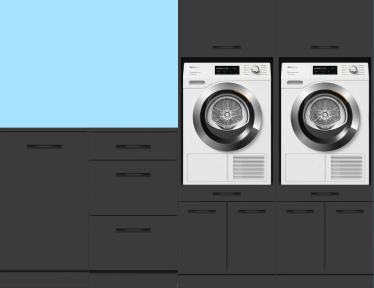
- Side by side - Quiet operation, less vibration transfer, and space for a worktop. Requires a wider cabinet and good cable and hose management.
- Washer-dryer combo - Compact and easy to install. Check ventilation and heat exhaust especially well in a closed cabinet.
Make sure the door can open fully and you can easily reach the soap drawer, lint filter, and drum edge. Extra lateral free space is handy for sliding doors.
Ventilation and noise reduction
Good air circulation prevents moisture buildup and overheating. Provide intake at the bottom and exhaust at the top of the cabinet. See also Ventilation for a washing machine cabinet. A heat pump dryer needs extra space behind and above because the condenser generates heat. Reduce noise with a sturdy, flat base plate, rubber dampers under the machine, and by choosing a cabinet construction that prevents resonance. A cabinet door with air slots dampens sound while still allowing enough airflow. If you place the washing machine in a fully enclosed cabinet, pay extra attention to risks and proper solutions.
Build yourself or ready-made washing machine cabinet
You can build it yourself if you are handy and use the right materials and fasteners. Use moisture-resistant boards, PU glue, sturdy screw connections, and wall brackets. A ready-made washing machine cabinet saves time and ensures load capacity, stability, and fit. Pay attention to specifications like up to 240 kg load capacity, splash-proof finished panels, and adjustable feet. Choose dimensions that fit your machines and the wardrobe cabinet opening.
Height and ergonomics
A plinth of 20-40 cm raises the drum opening to reach height, so you have to bend less. For stacked setups, do not go higher than about 60 cm to keep the top controls accessible. Check the hinge side and opening angle of cabinet doors and appliance doors beforehand to avoid collisions.
Installation steps in brief
- Meet the wardrobe cabinet internal dimensions, door type, and opening direction.
- Determine the setup - stacked, side by side, or a washer-dryer combo.
- Make or place a load-bearing base plate and level the feet.
- Mount wall brackets and anchor the cabinet.
- Provide ventilation grilles at the bottom and top and finish cable and hose passages.
- Place a drip tray, connect water with a water lock, and test for leaks; also check the correct drain height.
- Slide the machine(s) into position, adjust vibration dampers and feet.
- Test at 1400-1600 rpm whether the cabinet remains stable and free of resonance.
Want to handle it completely and step by step? Check the Step-by-step plan: installing a washing machine in a cabinet.
Frequently Asked Questions
Can you install a regular washing machine in a wardrobe closet?
Yes, provided the cabinet is reinforced and meets requirements for load capacity, ventilation, and anchoring. A standard wardrobe is rarely suitable without modifications. A specific washing machine enclosure or ready-made washing machine cabinet is safer and quieter.
How much space do you need behind the washing machine?
Allow 5-10 cm of space behind for plugs, hoses, and air circulation. Heat pump dryers may require extra space due to heat exhaust and hose bend radii.
Can the cabinet door be closed during operation?
That is allowed if the cabinet ventilates sufficiently. Provide vents or slots and keep the airflow path clear. If you notice heat buildup or condensation, add extra ventilation or leave the door slightly open.
How do you prevent vibrations and a walking machine?
Ensure a rigid base plate, anchor the cabinet with wall brackets, level all feet, and use rubber dampers. Do not place heavy items loosely on shelves that can resonate.
Is a heat pump dryer suitable in a closed cabinet?
Yes, but it needs air supply and heat exhaust. Combine intake at the bottom and exhaust at the top of the cabinet, keep free space around the machine, and clean filters regularly for optimal cooling.
Want to be sure your wardrobe closet works safely and quietly with your washing machine and dryer? Choose an enclosure with proven load capacity, good ventilation, and a sleek finish. Consider Built-in cabinets for washing machines or a Washing machine enclosure for a neat look and worry-free use every laundry day.

