

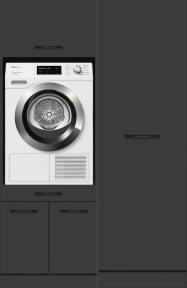
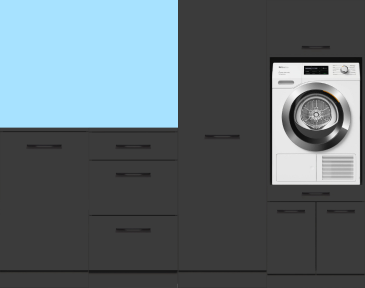
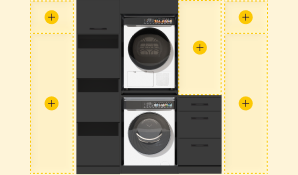

Placing a washing machine cabinet in a cold space requires more than just the right dimensions. Cold, condensation, and limited ventilation can cause malfunctions, rust damage, and even freezing risks in pipes and pumps. In this guide, you will learn what to watch out for to keep your washing machine and dryer running safely, quietly, and efficiently in a shed, attic, or garage.
Main risks in cold spaces and how to tackle them
In unheated or poorly insulated spaces, water in hoses, pumps, and siphons can freeze. Temperature differences also quickly cause condensation, which damages electronics and cabinet materials. Therefore, besides insulation, you almost always need active measures to maintain temperature and air quality.
| Risk | Approach |
|---|---|
| Freezing in pipes and machine | Use a frost protector or thermostat heater set to 5-8°C, insulate water pipes, and provide a drain option during prolonged frost. |
| Condensation and rust damage | Keep sufficient ventilation openings free, prevent cold bridges, and allow appliances to breathe with an open or well-ventilated cabinet. |
| Unsafe electricity in damp cold | Install a grounded outlet with a residual current device in a dry spot, avoid extension cords, and protect connections against splashing water. |
Suitable locations and points of attention
Shed or garage
A shed or garage is often the coldest place. Insulating a compartment in the space helps, but without a minimum base temperature of 5-8°C, the risk of freezing remains. Install a small frost protector with thermostat, insulate supply pipes, and give the drain a short, frost-free route. Ensure air intake at the bottom and exhaust at the top of the cabinet. Preferably choose an open front or generous ventilation grilles. Mount a drip tray with drain and water detector, and level the cabinet with vibration dampers. Check if the floor can support the weight and that you have a logical route for supply, drainage, and power without couplings that can leak in the cold.
Attic or under a sloped roof
In an unheated attic, accessibility plays a role besides cold. Create a stable, flat platform and anchor the washing machine cabinet to prevent sliding. Place appliances at a comfortable height, but watch the total height under the sloped roof and keep 3-5 cm clearance behind and beside the machines for airflow. Route water and drainage as straight as possible and insulate pipes running along cold walls. Provide basic heating or set a frost protector to attic mode, especially during severe frost. Actively ventilate if you use a heat pump dryer, as it also releases moisture into the space.
Other spaces: utility room, bathroom, niche
- Utility room/laundry room – Often the most practical spot. Ensure a grounded outlet on its own circuit, short water and drainage routes, a drip tray, and good ventilation. Read more: washing machine cabinet in the utility or storage room.
- Bathroom – Place only outside spray zones, with splash-proof electricals and mechanical ventilation. Use moisture-resistant materials and keep vents clear.
- Hallway/niche/built-in cabinet – Check depth and door swing. Integrate ventilation grilles above and below and dampen vibrations to reduce contact noise in the home.
Conditions and safety
Connections and power
Use a grounded outlet on a dedicated 16A circuit with residual current device. Avoid power strips and extension cords. Install a double non-return valve with metal fittings and preferably a water trap on the supply. Connect the drain preferably with 40 mm diameter, above siphon height, and with sufficient venting to prevent backflow. Limit hose lengths and couplings that can leak in cold spaces and check annually for drying cracks. Also read: safe outlet in a washing machine cabinet.
Floor, load capacity, and drip tray
The floor must be flat, rigid, and water-resistant. Account for >150 kg load for cabinet and appliances combined. Always place a drip tray—ideally with a drain—and consider a water detector for extra security. Read why a drip tray under your washing machine in a cabinet is recommended.
Ventilation and moisture control
Allow air to flow in and out: air in at the bottom of the cabinet, out at the top. Keep 3-5 cm free space around the appliances and avoid closed fronts without vents. In case of condensation, a dehumidifier or raising the base temperature helps. For vented dryers, connect the duct short and straight and prevent drafts in winter. Heat pump dryers emit less heat but do release moisture—so ventilate actively here as well. See washing machine cabinet ventilation for guidelines. Want to add ventilation yourself? Follow the step-by-step plan installing ventilation in a washing machine cabinet.
Reducing noise and vibrations
Level the washing machine and fix the adjustable feet. Use vibration dampers and a stiff subfloor or platform. Anchor the cabinet to the wall and ensure no loose panels can rattle during spinning.
Layout of your washing machine cabinet
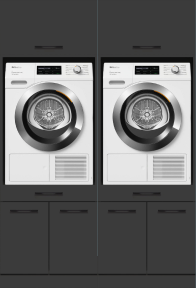
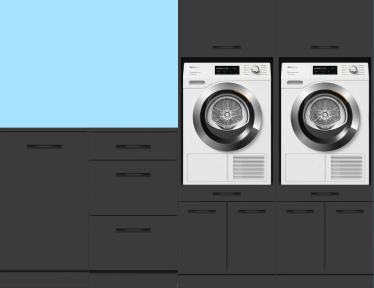
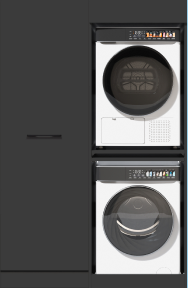
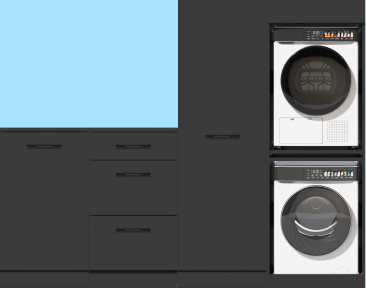
Stack your dryer on the washing machine if you have limited floor space and a stiff subfloor. Side-by-side is more ergonomic and quieter but requires more space. In cold spaces, an open or ventilated front works best to reduce condensation and dissipate heat from the appliances. Plan shelves or pull-out trays for detergents and baskets, but do not block vents or air holes. In draftier spaces, closed washing machine cabinets can help reduce drafts; always combine this with proper ventilation. If you are unsure whether your current cabinet design suits your space and climate, contact Wasdroom for tailored advice.
Checklist: quick measuring and installation
- Temperature – Can you guarantee a base temperature of 5-8°C with frost protection?
- Dimensions – Internal cabinet size, door opening, and bends in the route inside.
- Ventilation – Vents at bottom and top, 3-5 cm clearance around.
- Water and drainage – Short, frost-free route, non-return valve, water trap, drain at height.
- Electricity – Grounded outlet on dedicated circuit, no extension cords.
- Floor and load capacity – Flat, rigid, water-resistant, drip tray with drain.
- Vibrations – Leveling, dampers, cabinet anchoring.
Frequently asked questions
Can a washing machine be placed in a cold space?
Yes, provided you prevent frost and ventilate well. Keep the environment at 5-8°C with a frost protector, insulate pipes, and give the machine enough air. Without these measures, you risk freezing, malfunctions, and condensation damage.
Can a washing machine be placed in the shed?
Yes, but only with frost protection, short frost-free water and drainage routes, a drip tray, and good ventilation. Preferably choose an open or well-ventilated cabinet and check if the floor can handle the weight and vibrations.
Can a washing machine handle cold?
Not well. Most manufacturers recommend use above about 5°C. Below freezing, water left in pumps and hoses can freeze. Always consult your model’s manual for recommended operating temperatures.
How cold can a washing machine be placed?
Aim for at least 5°C in the operating environment and avoid any chance of frost. Use a thermostat-controlled frost protector and insulate pipes if you place the washing machine in a shed, garage, or unheated attic.

