

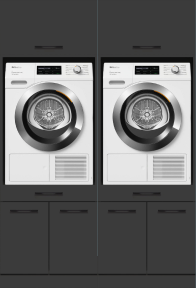
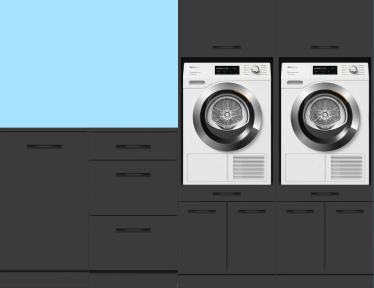
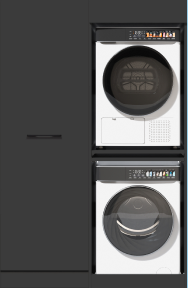
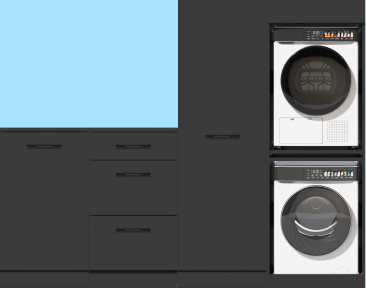
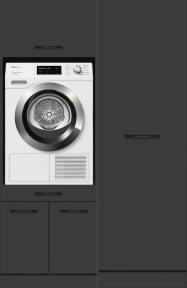
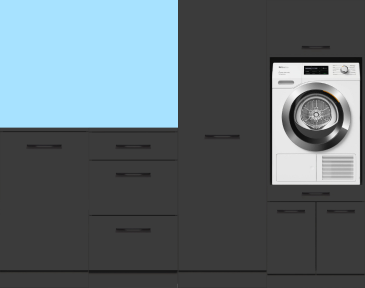
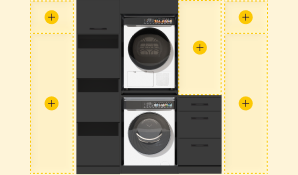

A washing machine in a cabinet looks sleek and saves space. But what if water leaks? With a drip tray under your washing machine, you prevent water damage to wooden floors and furniture, direct leaks in a controlled way, and keep the cabinet structure dry. In this article, you’ll discover when a drip tray is needed, what options you have, and how to install it safely without hassle. Also read: Is a drip tray necessary under a washing machine in a cabinet?.
Why a drip tray in a washing machine cabinet can be indispensable
Washing machines can leak due to a burst hose, porous cuff, clogged drain, or a loose connection. In a closed cabinet, you often notice this later, and moisture can accumulate in baseboards, bottom panels, or MDF. A drip tray catches the first water, directs it forward or to a drain, and prevents moisture from seeping into cabinet joints. Especially with wooden floors, laminate, or moisture-resistant MDF panels, this is a smart safeguard. If you also place a dryer on top, extra protection is advisable because condensation or spills when swapping laundry baskets occur more often.
Your options: separate drip tray, integrated cabinet, or DIY enclosure
There are roughly three routes, each with its own advantages:
- Separate drip tray: a plastic or metal tray that you slide under the machine. Pros: affordable and quick to install. Watch for raised edges, a front opening, and preferably a connection for a hose to a siphon or floor drain. Check size and load capacity.
- Cabinet or riser with integrated drip tray: ready-made washing machine cabinets often come with a metal bottom plate with rounded edges that functions as a drip tray. Advantages: neat integration, stability, ergonomic working height, and sometimes TÜV-certified load capacity. Handy if you also want a drawer or storage compartment. See the category Washing machine base cabinets.
- DIY enclosure with drip tray: conceal a separate tray behind a front or between moisture-resistant MDF side panels. Ensure sufficient support (possibly a center leg), splash-proof finishing of saw edges, and a free path for water to flow forward or to a drain. Advantage: custom fit and nicely concealed; requires precision.
In all cases, choose a solution with clear water drainage (slope or drain connection) that can handle the weight and vibrations of the machine.
Safety, ventilation, and load capacity
Safe stacking and enclosing starts with a sturdy, water-resistant base. Pay attention to the maximum load capacity of the bottom plate and the subfloor, and use vibration dampers to prevent sliding. Ventilation in a cabinet is crucial: provide sufficient inlet and outlet openings so motor heat can escape and moisture does not get trapped. Electrical connections must remain splash-proof and accessible. A TÜV-certified cabinet or riser offers extra assurance regarding stability and safety under heavy loads and stacked setups. More requirements and tips can be found in What a washing machine cabinet must comply with.
- Always check hoses, connections, and taps for leaks and aging.
- Keep the front of the drip tray visible or accessible for inspection.
- Test with a little water whether the tray drains properly and does not leak at the edges.
Placement: step-by-step summary
Want the full overview with all steps and points of attention? See Placing a washing machine in a cabinet: step-by-step plan.
- Measure your niche: width, depth, height, and door swing. Check space for hose and plug. Verify dimensions with Standard built-in dimensions for a washing machine cabinet.
- Choose the drip tray: appropriate size, raised edges, opening or drain connection, sufficient rigidity.
- Make the subfloor level and water-resistant; seal joints with sealant where needed.
- Place the drip tray level with a slight slope forward or towards a drain point.
- Set the machine on vibration dampers inside the tray and adjust the feet precisely level.
- Connect: water, drain, and power. Avoid kinks and ensure drip-free connections. See also How to connect a washing machine in a cabinet.
Common mistakes and quick tips
Too small trays, no slope, sealed fronts, and trapped ventilation are classics. Also, MDF without edge sealing absorbs water and swells. Keep the tray inspectable and make sure you see spilled water immediately. Finish saw edges of moisture-resistant MDF with suitable paint or edge sealer and avoid overly long drain hoses that cause backflow. Always test with a bucket of water whether the tray and drain do what they should.
Frequently asked questions
Is a drip tray necessary under the washing machine?
It’s not always necessary, but strongly recommended in a cabinet. You detect leaks later, and wood or panel materials are sensitive to water damage. A drip tray gives you valuable time in case of a leak and can direct water forward or to a drain in a controlled way. If you live above a vulnerable floor (wood, laminate) or have a stacked setup, a drip tray is a wise, relatively inexpensive precaution.
What should you do if the washing machine leaks from the bottom?
Turn off the water supply and unplug the machine. Catch water in the drip tray or with towels. Then check the supply hose, drain hose, cuff, and filter for cracks, loose connections, or blockages. Clean the siphon and replace worn hoses. Only restart when everything is dry and properly connected. If it keeps leaking, call a technician to check the pump, bearings, or internal hoses.
Is it safe to put a washing machine in a cabinet?
Yes, provided you have the basics in order: sufficient ventilation, a stable and load-bearing bottom plate, a drip tray with drainage or slope, and correct installation of water and electricity. Use a cabinet or riser certified for load capacity and stability where possible, and secure the machine against sliding with dampers. Ensure quick access to the tap, plug, and filter so you can act immediately in case of malfunction.

