

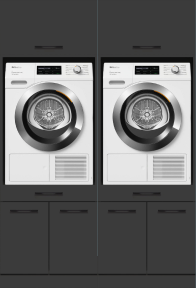
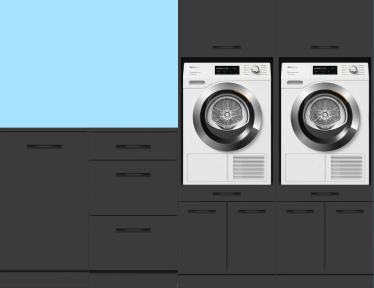
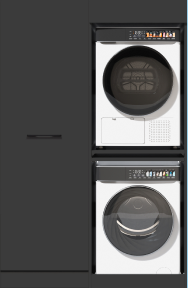
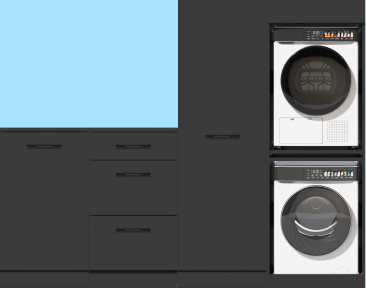
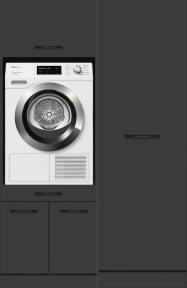
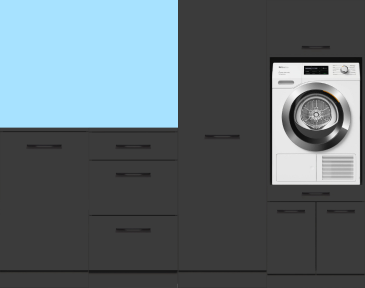
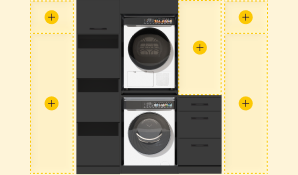

A nice washing machine cabinet keeps your laundry room neat, but without good ventilation, heat and moisture build up. This increases the chance of malfunctions, mold, and unpleasant odors, and can even be unsafe. With proper airflow, free space, and smart design, your equipment runs efficiently, quietly, and safely.
Risks of insufficient airflow around your appliances
Without ventilation, warm, humid air lingers in the cabinet. With a dryer, the cabinet temperature rises quickly, putting extra strain on electronics and aging plastic parts. Your washing machine also benefits from airflow: after a wash, residual moisture must escape, or mold and musty smells develop in the gasket and detergent drawer.
In addition, warm, trapped air causes condensation on cold surfaces. That moisture seeps into seams and wooden panels, causing swelling or peeling foil. Noise also increases: appliances resonate more in a tight, enclosed cabinet. Thoughtful ventilation lowers temperature, removes moisture, and reduces vibrations and resonance. More tips on layout and moisture control can be found at setting up laundry space.
This ensures effective ventilation in a washing machine cabinet
Create an intake and exhaust
Put an intake opening at the bottom of the cabinet and an exhaust opening at the top. This encourages natural draft: cool air enters low, warm air rises and exits at the top.
Place ventilation grilles in the right spots
- Bottom: plinth vent or side vent, preferably 150-200 cm² free airflow.
- Top: vent in the top panel or upper board with similar airflow.
- Side: extra vent next to the dryer if the front is mostly closed.
Keep free space around
- Back: 5-10 cm for hoses, cables, and air circulation.
- Sides: 1-2 cm per side prevents contact noise and promotes airflow.
- Top: 1-3 cm to allow warm air to rise.
Limit obstacles
Route cables and hoses neatly along the side and choose flexible hose connections with wide bends. Avoid taped seams that block airflow.
Note: always check the manuals of your washing machine and dryer for minimum distances and ventilation requirements. These take precedence over general guidelines.
Open or closed washing machine cabinet: what’s smart?
A fully closed washing machine cabinet looks neat but promotes heat buildup. Especially with condenser and heat pump dryers, an open front or generously ventilated doors are strongly recommended. Vents only in the back panel are often insufficient when the front is hermetically sealed; air must be able to flow freely in and out.
A semi-open design is often the best compromise: open niches for the appliances, closed cabinets around for detergents and baskets. Combine that with a plinth vent and a vent at the top of the cabinet. If you do place doors in front of the appliances, choose perforated panels or louvered doors with sufficient airflow and a gap at the plinth and top.
Free space and dimensions
With the right clearance, you prevent malfunctions and simplify maintenance. The guidelines below will help you get started. Always consult your appliance’s specifications for exact values. Do you have a tricky corner or specific requirements? Then check out our tips for combining separate cabinets for suitable ventilation solutions.
| Appliance | Free space around | Recommended vents (each) | Tip |
|---|---|---|---|
| Washing machine | 5-10 cm at the back, 1-2 cm at the side, 1-3 cm at the top | 100-150 cm² at the bottom + 100-150 cm² at the top | Leave door/soap tray open after use for drying |
| Heat pump dryer | 5-10 cm at the back, 1-2 cm at the side, 2-4 cm at the top | 150-200 cm² at the bottom + 150-200 cm² at the top | Extra side vent next to the dryer with closed front |
| Dryer exhaust | As above, plus drain hose to the outside | Open front or very generous vents | Keep the drain hose short and as straight as possible |
Materials and details that help
- Moisture-resistant boards: choose waterproof MDF or plywood with HPL/plastic top layer.
- Anti-vibration: use a vibration mat and level the feet to reduce resonance.
- Wall mounting: anchor the cabinet against tipping, especially with stacked washer-dryers.
- Access: provide a service hatch or removable panels for siphon, tap, and socket.
Washing machine cabinet ventilation checklist
- Inlet low and outlet high present
- Grilles with sufficient free airflow installed
- Free space: 5-10 cm at the back, 1-2 cm on the sides, 1-3 cm above
- Cables and hoses without kinks, airflow not blocked
- Cabinet firmly anchored, appliances leveled, and anti-vibration mat under washing machine
- Manufacturer’s manual consulted and followed
Frequently Asked Questions
How do I ventilate my washing machine cabinet?
Provide an air inlet at the bottom and an outlet at the top of the cabinet. Install grilles with sufficient airflow, keep free space around, and avoid a hermetically sealed front. For a dryer, extra ventilation on the appliance side is often needed. Always check the minimum requirements in the manual. For a complete overview of guidelines, see our advice on washing machine cabinets and ventilation.
How do I ventilate a washing machine myself?
After washing, leave the door and detergent drawer open for a while to let residual moisture evaporate. Keep the filter and door seal clean. In a cabinet, a low grille and some free space behind and above the machine help vent moist air.
What should you put under a washing machine?
An anti-vibration mat dampens contact noise and helps the machine stand more stably. Level the feet and ensure the floor is flat and sturdy. Preferably use a solid base or concrete floor and anchor the cabinet to reduce resonance.
How much space do I need behind my washing machine?
Allow 5-10 cm of space at the back for hoses, cables, and air circulation. This prevents hoses from kinking and allows warm, moist air to escape. Leave 1-2 cm clearance on the sides and 1-3 cm above. Always follow your appliance’s specifications for exact measurements.

