


Vibrating washing machines and springy wooden attic floors cause noise, footstep sounds, and sometimes malfunctions. With the right combination of stiffness, mass, and decoupling, you can specifically address this. Below you’ll find the best methods to reinforce your floor, when to add extra mass, and when a vibration-damping washing machine cabinet is a smart addition.
First check: can your attic floor handle it?
Start with the basics. Check the beam size, center-to-center distance, and span. See if planks or underlayment are loose and screw or replace where needed. A sagging floor will always resonate more with the centrifuge frequency of your washing machine. If you’re unsure about load capacity or want to use concrete or Lewis plates, have a structural engineer take a look. Only use rubber mats if the subfloor is sufficiently stiff; otherwise, you actually increase the swinging motion. If you place the machine in a cabinet and doubt the usefulness of a mat, first read Vibration mat under washing machine: yes or no?.
Solution 1: solid panel directly on the beams
A commonly used and effective approach is adding a solid panel that spans multiple beams. Preferably place a plywood or underlayment panel about 40 mm thick directly on the beams, without intermediate rubber. Screw the panel down with chipboard screws every 10 cm along the beams and stagger the joints if you build up from multiple panels. The larger the support area over multiple beams, the better the pressure distribution and the lower the chance of local springiness. If you’re unsure which materials or accessories to place under the machine, see What to put under a washing machine for more stability?.
Make the platform at least larger than the machine’s footprint and let it overhang the beams by 10 to 15 cm on multiple sides. Finish the top surface flat so you can perfectly level the machine. This solution increases the stiffness of the floor area under the washing machine and shifts the natural frequency away from the centrifuge speed, resulting in noticeably less vibration and footstep noise.
Solution 2: add beams or connect into a torsion box
If the span is large or the beams are far apart, connect or densify the structure. Place an extra beam between existing beams or create a torsion box: two layers of underlayment laid crosswise, glued and screwed, which together act as a stiff plate. Add cross ribs where possible and attach them with cleats or angle brackets. By creating stiffness in two directions, you limit sagging and twisting, reducing floor resonance during spinning. If you also have a dryer, consider point load versus distribution.
Solution 3: extra mass with Lewis plates or concrete
Extra mass dampens and shifts resonance. In the attic, this can be done with Lewis plates (dovetail) with a thin cement layer or a concrete base that spans multiple beams. Pay attention to the weight and load capacity of the structure. A single concrete tile or block rarely helps if the subfloor is soft; mass only works well combined with stiffness and a solid connection to the beams. Do not use soft intermediate layers under the mass layer, as they cause wobbling.
Finish water-resistant around the machine and consider pipes. A drip tray under the washing machine in the attic can limit damage, but avoid gaps along the wall and lay cables and hoses so they do not transmit contact noise to the structure.
Alternative or addition: stabilize with a washing machine cabinet
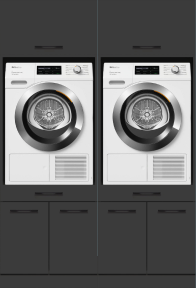
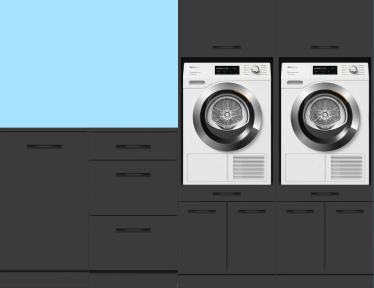
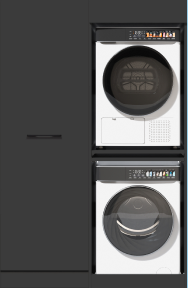
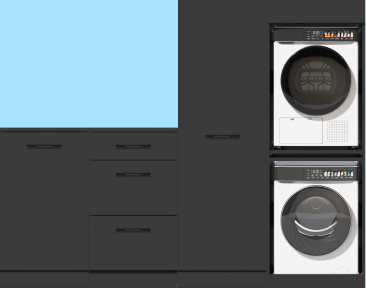
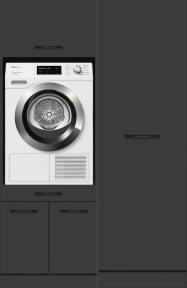
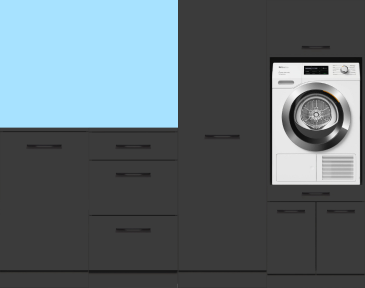
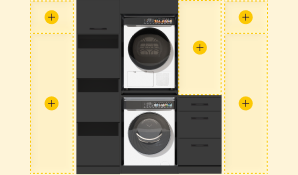
If the floor is in order but you want extra stability and less vibration, consider a washing machine cabinet. Wasdroom cabinets are made of strong chipboard with melamine coating and are designed to absorb vibrations. They have adjustable anti-vibration feet and a special anti-tip lock that prevents shifting and tipping over. Thanks to the high load capacity up to 240 kg (Double) or 120 kg (Single and Stack) and TÜV certification, your washing machine and dryer stand stable and you can level the machine precisely. A cabinet does not replace necessary floor improvements but is an effective addition to a sufficiently stiff floor. If you specifically experience that the washing machine vibrates in the cabinet, check causes and solutions.
Frequently Asked Questions
How do you reinforce an attic floor for a washing machine?
First increase stiffness: screw down loose parts, place a solid panel about 40 mm thick directly on the beams, and consider extra beams or a torsion box. Tailor the solution to span and load capacity and avoid soft intermediate layers under the machine.
How do you stabilize a washing machine on an uneven floor?
Adjust the feet individually until the machine is level, use a stiff base, and check for sagging. Anti-vibration feet only work on a sufficiently stiff floor. A washing machine cabinet with adjustable feet helps with alignment and dampens vibrations. For extra working height and stability, you can also consider washing machine risers. See also Leveling and stabilizing a washing machine.
What is the best floor under a washing machine?
A stiff, solid floor with a good connection to the supporting structure. On the ground floor, a concrete floor is ideal. In the attic, a solid panel on beams or a Lewis plate-cement solution works well, provided the load capacity is correct and everything is firmly fixed. See also Best floor under a washing machine for a complete assessment.
In summary: locally stiffen the floor, add mass where possible, and stabilize the machine. This reduces resonance, noise, and movement, keeping your attic laundry area safe and pleasant to use.

