

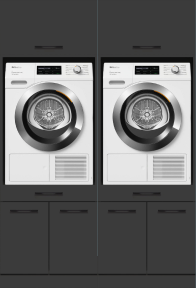
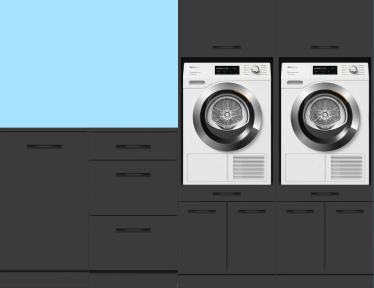
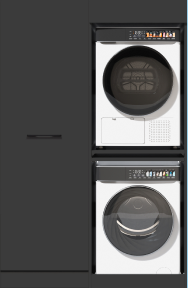
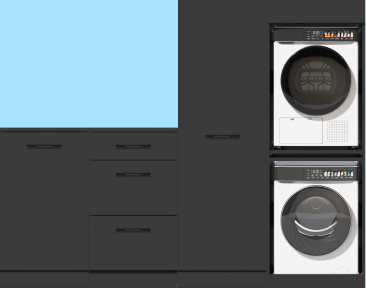

If your washing machine vibrates inside the cabinet, you won’t just hear more noise; the machine can also shift and damage the cabinet, floor, or the appliance itself. Good news: with a few targeted checks and simple adjustments, you can quickly and safely reduce vibrations without major renovations. Want to work specifically on placement and stability? Follow How to stabilize a washing machine in a cabinet.
Why does a washing machine vibrate more inside a cabinet?
During spinning, imbalance occurs when the laundry is unevenly distributed. Think of a heavy, wet towel that gathers on one side of the drum. The machine compensates with greater forces, which you feel as vibrations. In a cabinet, stiff walls amplify these vibrations by resonating along. Also, too little or very fine laundry, a fitted sheet that forms a bundle, or insufficient load increase the chance of imbalance. Wear and tear doesn’t help either. Worn shock absorbers, dried-out rubber feet, or play in the bearings make it harder to dampen these forces, causing the washing machine to vibrate even more noticeably inside the cabinet. You can read more about resonance and reducing noise in a cabinet in Noise reduction for washing machines in a cabinet.
Surface and leveling
A stable, hard, and flat surface is the foundation. Concrete or a sturdy tiled floor works best; a floating laminate or wooden floor flexes and amplifies vibrations. What truly counts as a stable surface and what to watch for is explained in Best floor under a washing machine. If the machine stands on a soft or springy floor, you can spread the load with a sturdy board that doesn’t bend. If you place the machine in the attic and notice sagging, check out Reinforcing the floor for a washing machine (in the attic). Avoid drip trays at high spin speeds, as they can actually move more.
Level the washing machine exactly using the adjustable feet, both widthwise and depthwise. Test by gently pushing diagonally. If the cabinet or machine wobbles, adjust until everything is stable and lock the feet with the locknuts. Also check immediately if any transport bolts remain in the machine, as these cause strong vibrations if not removed according to the manual.
Vibration dampers, mats, and clamping inside the cabinet
Rubber vibration dampers or anti-vibration mats under the feet reduce contact noise and prevent scratches. They work well on hard floors but have limited effect on soft or springy floors. A solid anti-vibration mat made of solid rubber can help, provided the surface is flat and sturdy and the feet stand firmly on it. If you’re unsure whether a mat is useful in your situation, see Is a damping mat necessary for a washing machine in a cabinet?. If you want extra working height and more mass, consider washing machine risers for added stability and height.
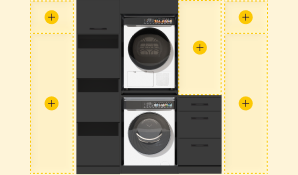
Inside a cabinet, you can gain extra benefit by controlled clamping and decoupling. Leave a few millimeters of clearance around the machine and use damping material at contact points, such as thin rubber or felt on side walls or the countertop. This prevents the cabinet walls from resonating. Adding weight also helps. For example, place a dryer on top of the washing machine with a suitable spacer plate and locking set, so the whole acts as one mass and “dances” less. Always ensure sufficient ventilation in the cabinet and keep cables and hoses free from pinch points.
Frequently Asked Questions
How do you recognize broken shock absorbers in a washing machine?
With broken shock absorbers, you get hard knocks during spinning, the drum bounces for a long time if you press it by hand, and the machine vibrates strongly despite being leveled. Sometimes you see leaking oil near the dampers. If this behavior continues after proper loading and leveling, have the shock absorbers checked and replaced if necessary.
What does a washing machine with worn bearings sound like?
Worn bearings produce a growling or grinding noise that increases with spin speed. Often you also hear it when turning the drum by hand, and there is noticeable play. In such cases, don’t keep washing to avoid further damage and call a technician for diagnosis and repair.
What do you put under a washing machine in a cabinet?
Preferably place sturdy rubber vibration dampers or a solid anti-vibration mat that supports the feet stably. On springy floors, a strong, stiff board under the machine can help spread the forces. Avoid soft foam layers or drip trays that flex at high spin speeds. More tips and examples can be found in What to put under a washing machine in a cabinet.

