

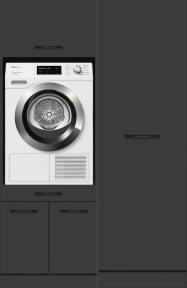
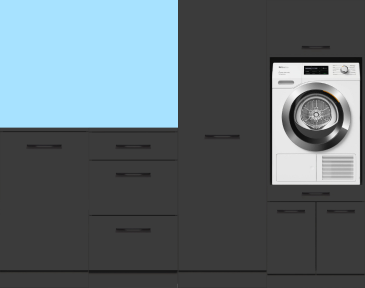

Do you want to place your washing machine and dryer side by side in a cabinet without hassle from vibrations, moisture, or lack of space? With the right dimensions, ventilation, and a stable cabinet, you can create a quiet, neat, and ergonomic laundry area. In this guide, you’ll find short checklists, practical measurements, and examples from Wasdroom’s Dubbel Series, plus configuration tips to assemble your ideal setup.
Side by side or stacked?
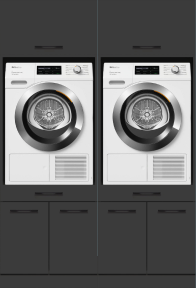
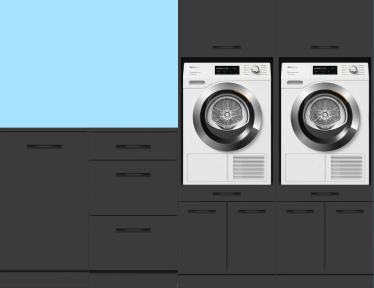
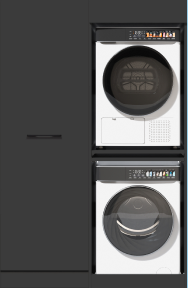
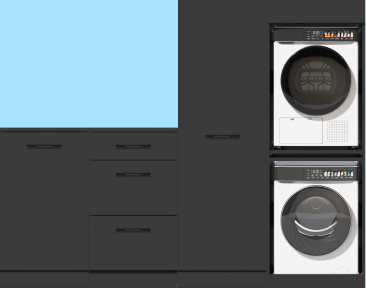
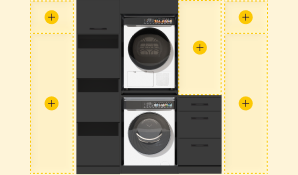
Both setups save space, but side by side in a cabinet offers extra work comfort and overview. You can place a long worktop, slide baskets, and close doors for a tidy look. Stacking is especially useful when width is tight but limits your worktop and often requires a spacer.
- Side by side – Pros: worktop, better sorting, simultaneous access. Cons: requires more width.
- Stacked – Pros: narrow floor space. Cons: lifting higher, less worktop, extra stabilization needed.
Unsure? Measure your niche width and consider door openings, connections, and walkways. If you have 135 cm or more, side by side in a cabinet is often the most comfortable choice. More practical considerations can be found in Setting up a laundry space: the side-by-side setup explained.
Choosing the right cabinet and layout
Measuring is knowing
- Niche width – Calculate device width x 2 plus 2-4 cm clearance per side. Many households manage with 135 cm.
- Depth – Devices are often 56-66 cm deep. Add 5-7 cm extra for hoses and plugs.
- Height – Choose a cabinet with a worktop around 90 cm for ergonomics.
- Load capacity – Opt for a cabinet that can handle total weight and vibrations. The Dubbel Series is designed for up to 240 kg load capacity.
Want step-by-step measuring and installation? See Guides: measuring and installing washing machine cabinets.
Storage and work comfort
A well-thought-out cabinet makes washing faster and calmer. Choose a continuous worktop for folding, a tall drawer for laundry baskets, and compartments for detergent. Tip: Design a cabinet for washing machine and dryer side by side and put together your own combination that fits your space. Anti-slip mats under the appliances dampen vibrations and keep feet in place. Tip: plan one outlet per appliance and keep shut-off valves accessible. Extra ideas for smart layout can be found in Creating storage space around washing machine and dryer.
Ventilation, water, and electricity
Good air circulation prevents heat and moisture buildup in the cabinet. Leave a few centimeters of space around each appliance and ventilate through openings at the top or bottom of the cabinet. Heat pump dryers emit less heat but still require air intake and exhaust within the cabinet.
- Ventilation – Provide ventilation grilles or a gap at the back. Avoid fully closed enclosures without air holes.
- Water – Place faucet and drain at work height or in an accessible compartment. Consider a drip tray with drain and a water trap.
- Electricity – Use separate grounded outlets. Route cables and hoses neatly but not kinked behind the appliances.
Do you have unusual dimensions or specific wishes? Put together your own combination in the configurator.
Stability and vibration damping
A quiet laundry area starts with leveling. Level both appliances, place them tightly side by side, and use anti-slip mats. Screw the cabinet firmly to the wall and check if the floor is flat. Remove transport bolts from the washing machine and run a calibration or empty spin cycle to reduce imbalance.
Choose your Dubbel Series model
Wasdroom offers stylish, functional cabinets for a washing machine and dryer side by side. You can choose anthracite or white and several sizes with extra storage space. Examples:
- Dubbel 1.0 – 135 x 162 cm (W x H). Compact, ideal for standard appliances and a worktop.
- Dubbel 2.0 – 135 x 200 cm (W x H). More height for cabinets or extra shelves.
- Dubbel 3.0 – 185 x 162 cm (W x H). Extra width for generous storage and sorting compartments.
View all washing machine cabinets and configure your cabinet with the configurator. You benefit from a 10-year factory warranty, 30-day return period, and free returns within the Netherlands.
Frequently Asked Questions
How wide should my cabinet be for a washing machine and dryer side by side?
Allow about 120 cm for two 60 cm wide appliances plus clearance. Practically, 130-135 cm is ideal because you then have space for cabling, vibration dampers, and a slight margin when placing.
Can a heat pump dryer be placed in a closed cabinet?
Yes, provided there is sufficient ventilation. Provide grilles or a gap so air can flow in and out. Do not place a dryer in a completely airtight enclosure and keep filters and condenser accessible for maintenance.
How do I prevent the cabinet from vibrating with the washing machine?
Level the machine, use anti-slip mats, secure the cabinet to the wall, and check if the floor is flat. A sturdy cabinet construction with good connections and sufficient mass helps absorb vibrations.

