

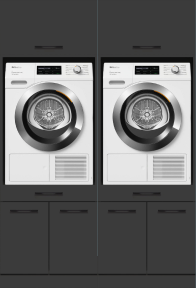
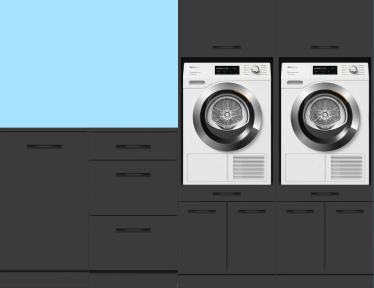
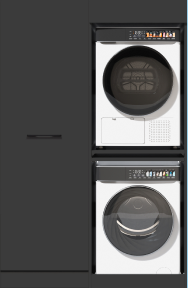
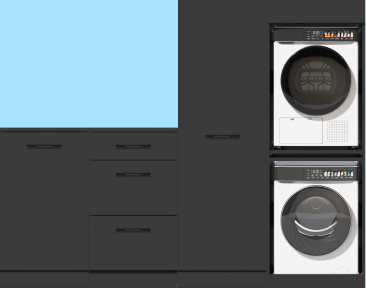
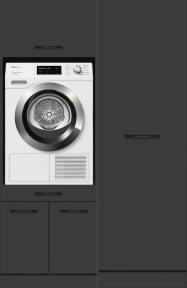
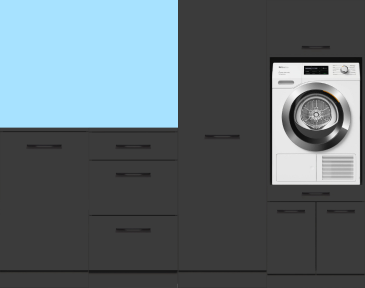

Yes, you can connect a washing machine and dryer to the same drain. With a dual drain via a Y-piece or T-piece, you let both hoses safely drain into one outlet. It is important that the drain has sufficient capacity, a siphon is present to prevent sewer odor, and you prevent backflow with the correct fittings. Below you will find what you need, the best coupling piece, a clear step-by-step plan, and practical requirements for height and distance. Are you placing the appliances side by side in a cabinet? Then see washing machine and dryer side by side in a cabinet for planning drainage and connection points.
What you need for a dual drain
- Y-piece or T-piece fitting your drain (usually 40 mm pipe diameter)
- Connectors/hose tails for washing machine and dryer hoses (19-22 mm)
- Rubber insert or check valve per connection to prevent backflow and odor
- Siphon in the drain pipe for water seal against sewer odor
- Hose clamps and sealing rings for leak-free connections
- Teflon tape or sealing paste for screw connections where needed
- Basic tools: screwdriver, water pump pliers, bucket, and cloth
T-piece or Y-piece: which to choose?
| Feature | Y-piece | T-piece |
|---|---|---|
| Flow | Smooth convergence with less turbulence | Right-angle inflow can cause more resistance |
| Risk of backflow | Lower, especially with check valves | Slightly higher, check valves strongly recommended |
| Space | Requires slightly more depth | Often fits in more compact setups |
| Application | Preferred for simultaneous draining | Suitable if appliances rarely drain simultaneously |
Are you placing both appliances in a cabinet? Then layout, ventilation, and door sizes also matter; see placing washing machine and dryer in a cabinet for all considerations.
Step-by-step plan: connecting washing machine and dryer to one drain
- Check the drain: ensure a clean 40 mm drain with siphon. Flush if necessary and remove blockages.
- Place the Y- or T-piece on the existing connection or standpipe, preferably above the siphon to maintain the water seal.
- Install a check valve (rubber insert or non-return valve) on each branch to prevent backflow and sewer odors.
- Keep the hoses short and without kinks. Maintain the drain height in a cabinet between 60 and 100 cm measured from the floor.
- Attach the hoses with appropriate ferrules and hose clamps. Tighten clamps firmly but do not pinch the hose.
- Ensure ventilation: prevent the hose end from sealing airtight. A little slack prevents vacuum and gurgling noises.
- Test for leaks: first let only the washing machine pump, then the dryer, and then both together. Check all connections.
- Finish safely: secure hoses against slipping off and ensure the Y- or T-piece is not under tension.
Are you working inside a cabinet and want to go through all the steps? Then follow connecting a washing machine in a cabinet for practical connection and drainage tips.
Height, distance, and capacity: these are the practical requirements
- Drain height: guideline 60-100 cm. This prevents backflow and keeps the siphon effective.
- Distance: preferably place the washing machine no more than 1.5 meters from the drain (see maximum distance washing machine to drain). Shorter is better to reduce back pressure.
- Pipe diameter: 40 mm is standard in homes and usually sufficient for a duo drain, provided it is free of blockages.
- Hose routing: avoid kinks, sharp bends, and unnecessary extensions. Give the hose a slight downward slope towards the drain.
- Regular maintenance: remove lint and detergent residues at the connection to maintain flow.
Heat pump dryer and drainage: necessary or not?
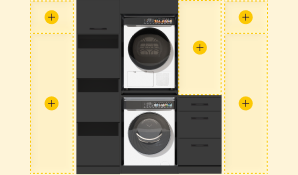
A heat pump dryer usually drains condensate water into a reservoir. You can often also connect it directly to the drain with a drain set. This saves emptying and is more hygienic if you dry a lot. A condenser dryer can also be connected to the drain. Then connect the dryer hose to the Y- or T-piece of your duo drain and secure it with a hose clamp. Always check if your model supports an external drain connection and use the corresponding couplings. Are you working in a stacked setup inside a cabinet? Use a adapter piece (stacking kit) for installation and extra safety.
Safety and regulations
- Prevent siphoning: use a siphon and ensure each branch has a rubber insert or check valve.
- Ventilation: avoid airtight sealing of the standpipe. Insufficient ventilation causes bubbling and backflow.
- Electricity - circuits: for heavy appliances like washing machines and dryers, a dedicated final circuit per device is recommended. Sharing a circuit risks overload and shutdown.
- Unsure about drain or electrical capacity? Consult an installer or electrician.
Mistakes you want to avoid
- Drain placed too low - increased risk of siphoning and leaks
- Not using backflow prevention - risk of backflow and odor
- Extending and kinking hoses - more back pressure and clogging risk
- Loose clamp connections - hoses coming off pumps
- Pinched standpipe - causes vacuum and bubbling noises
Frequently Asked Questions
Can I connect a washing machine and dryer to the same drain?
Yes. Use a dual drain with a Y-piece or T-piece, keep the drain 60-100 cm high, install a siphon, and prevent backflow with rubber inserts or check valves.
Do you need a drain for a heat pump dryer?
Not necessarily. A heat pump dryer typically drains into a reservoir. With a drain set, you can direct the condensate water straight to the drain.
How high should the drain be?
Aim for 60-100 cm from the floor. This is a safe range to prevent siphoning and maintain a good water seal.
How far can the washing machine be from the drain?
Preferably a maximum of 1.5 meters. Shorter hose lengths create less back pressure and reduce the chance of leaks.
Can the washing machine and dryer be on the same circuit?
That is not recommended. Heavy appliances are best placed on their own final circuit per device to prevent overload and shutdown.
What if the drain smells or bubbles?
Check if the siphon contains water, clean the drain, ensure sufficient ventilation, and use backflow prevention. If the problem persists, have the drain inspected.
Get started quickly: short checklist
- Drain clean, 40 mm, and with a siphon
- Y- or T-piece with backflow prevention
- Hoses short, without kinks, and at 60-100 cm height
- All connections secured with clamps
- Test separately and simultaneously for leaks
- Washing machine and dryer preferably on their own circuit
With this approach, you connect the dryer and washing machine safely and practically to the same drain. This way, you work leak-free, odor-free, and without unnecessary malfunctions.

