



Is your washing machine vibrating, sliding, or literally walking during spinning? Good news: with the right surface, level placement, and smart loading, you can prevent your washing machine from moving. In this guide, you'll get direct, practical steps and pro tips that you can immediately apply in your laundry room.
The main causes in 1 minute
Usually, "walking away" is the result of imbalance during spinning. These are the most common causes:
- Transport bolts not removed after installation.
- Washing machine is not level or adjustable feet are loose.
- Uneven or springy floor (wood, old laminate) or slippery tiles.
- Incorrect loading: too little laundry, one heavy item, or overloaded.
- Dryer on top of the washing machine without a stable connection.
- Worn shock absorbers, suspension, or worn motor belt.
Surface and placement: the foundation for stability
The surface determines how much vibration your machine transmits. On a stiff, flat floor (concrete), a washing machine stays in place more easily than on a resilient floor (wood) or very smooth tiles. First, check if the floor is even and free of dust or detergent residues, as these act like lubricants. Want to be sure you choose the right base? Read about the best floor under the washing machine.
Are you placing the washing machine in the attic and notice floor sagging? Then consider reinforcing the floor for a washing machine in the attic to reduce vibrations and walking.
Here’s how to adjust your approach per floor type:
| Floor | Approach to prevent walking |
|---|---|
| Concrete | Level the machine, tighten adjustable feet firmly, do not place the machine on edges. |
| Wood or laminate | Absorb vibrations with a stable base; check load capacity and add anti-vibration feet or a damping mat. |
| Tiles | Clean grease-free; apply anti-slip solution to prevent sliding. |
Unsure what to put under your washing machine for extra grip and damping? Check what to put under a washing machine and compare anti-slip feet, vibration dampers, and mats.
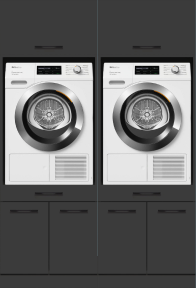
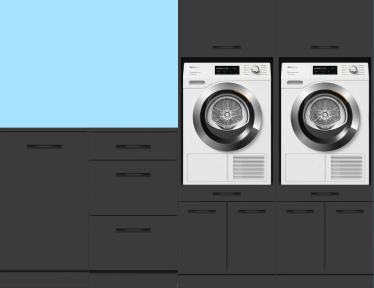
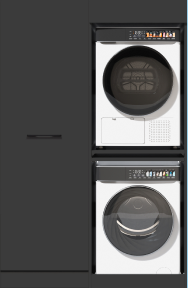
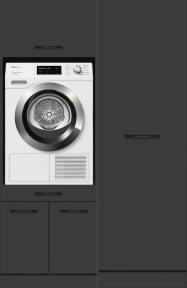
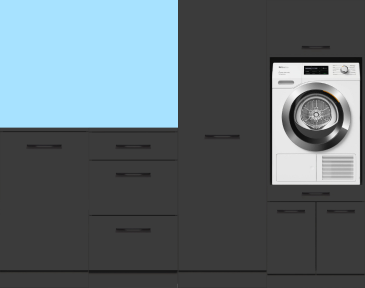
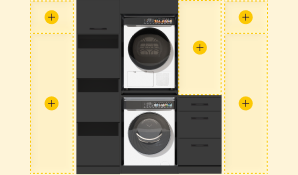
If you stack a dryer on the washing machine, always use a suitable stacking kit that rigidly connects the two appliances. A loose or poorly connected dryer increases the chance of imbalance. Want to stabilize and organize your laundry room right away? Choose a sturdy washing machine cabinet with high load capacity and integrated anti-slip and anti-vibration elements. Wasdroom cabinets are TÜV-certified, support up to 240 kg (Double) or 120 kg (Single and Stack), and come with anti-slip mats and anti-vibration feet for extra grip and damping. If you place the machine in a cabinet, ensure enough clearance around it and consider the space behind the washing machine for hoses and cords. Is your washing machine vibrating in the cabinet? Discover the causes and solutions.
Leveling and smart loading
Correct adjustment and loading prevent imbalance and vibrations.
- Remove transport bolts and filling plugs according to the manual.
- Level the machine using a spirit level on top and diagonally.
- Tighten all adjustable feet firmly against the floor and lock them if possible.
- Load: fill the drum about 75-80% and spread heavy laundry evenly.
- Combine large items with smaller towels to distribute weight.
- Reduce spin speed for very heavy or small loads to limit peak vibrations.
Find more details and checks in leveling and stabilizing your washing machine.
What can go wrong if you do nothing
- Damage to hoses or connections causing leaks.
- Damage to machine feet, bearings, or housing.
- Damage to a stacked dryer or loose items.
- Damage to walls, baseboards, or floor finishes due to shifting.
Frequently asked questions
How do you prevent the washing machine from walking?
Start by removing transport bolts, leveling the machine, and securing the adjustable feet. Load smartly and reduce spin speed if needed. Adjust your approach based on the floor and use anti-slip or anti-vibration solutions. Preferably place it on a stable base, such as a sturdy washing machine cabinet.
Why does my washing machine walk away?
Imbalance during spinning is the main reason. This arises from incorrect loading, an uneven surface, loose adjustable feet, or forgotten transport bolts. Technical causes like worn shock absorbers or a worn belt can worsen the problem.
Why does my washing machine move during washing?
Vibrations are transmitted through the surface. On resilient floors or smooth tiles, the machine is more likely to shift. Leveling, anti-vibration measures, and a stable base reduce vibration transfer and keep the machine in place.

