

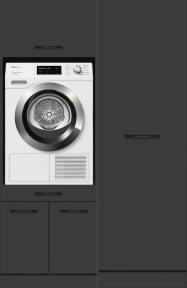
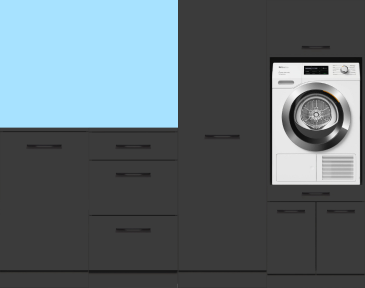

Placing a washing machine in a closed cabinet can bring style and calm to your interior, as long as you consider ventilation, safety, and vibration damping. In this guide, you’ll learn what to look for in a closed washing machine cabinet, how to minimize noise, and which setup suits your space. We also show how Wasdroom cabinets solve this practically, from anti-slip mats to TÜV-certified stability. Also, check out the overview of closed washing machine cabinets.
Ventilation and fire safety in a closed cabinet
Airflow is crucial in a closed cabinet for a washing machine. During spinning and especially drying, heat and moisture are released. If that heat cannot escape, the risk of overheating increases and condensation can cause damage. Therefore, ensure continuous air intake at the bottom of the cabinet and exhaust at the top, plus free space around the machine for cooling and cables.
- Openings high and low: ventilation grilles or slots for natural airflow.
- Free space around: keep space on the sides and back for air and pipes.
- Access to water and power: always accessible and not behind fixed panels.
- Dryer attention: a heat pump dryer requires extra airflow for the condenser.
Tip: during intensive programs, leave the doors slightly ajar or open for extra airflow. Preferably choose cabinets with integrated ventilation solutions, so form and function blend nicely.
Open or closed washing machine cabinet – impact on warranty and use
Manufacturers require that a washing machine stands stable, receives sufficient air, and is freely accessible for maintenance. In a closed cabinet for washing machine and dryer, you meet these requirements by ensuring ventilation, damping vibrations, and keeping connection points accessible. Insurers also look at installation quality and preventing tipping or leaks.
Wasdroom helps you guarantee this with TÜV-certified cabinets, high load capacity up to 240 kg (Double) or 120 kg (Single and Stack), and a plug-in mounting system for sturdy, repeatable installation. Anti-slip mats limit micro-movements, reducing strain on hoses and plugs. For practical use, an elevated setup is handy: you lift less high, have space for baskets, and prevent water or detergent splashes on the floor.
Important: always check your machine’s manual for minimum clearance and placement requirements. A good closed washing machine cabinet is designed around these conditions, so you combine style and safety without risking your warranty.
Vibrations, load capacity, and installation
Vibrations cause noise, move the machine, and can make panels resonate. You limit this by a rigid cabinet construction, damping materials, and solid wall mounting.
- Anti-slip and damping: anti-slip mats and vibration dampers absorb vibrations.
- Wall mounting: anchor the cabinet to prevent tipping and resonance.
- Leveling: adjust the machine’s feet exactly level for stable spinning.
- High load capacity: choose a cabinet that easily supports the weight of the machine and contents.
Wasdroom cabinets are designed for stiffness and ease of installation, so you quickly achieve a solid, quiet setup.
Layout and sizing: stacking or side by side?
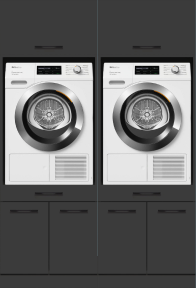
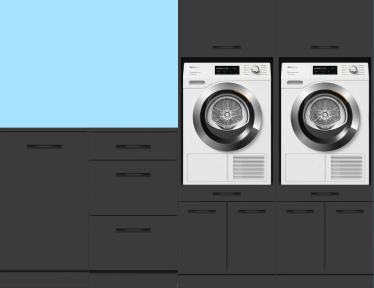
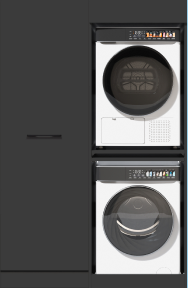
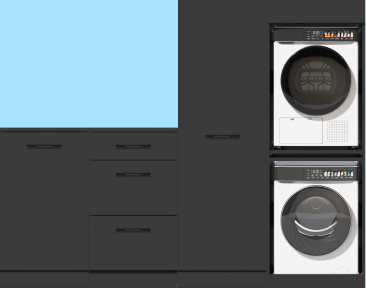
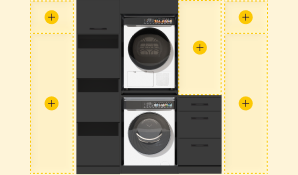
If you have limited floor space, stacking is ideal. The Wasdroom Stack Series offers a slim, tall closed cabinet for washing machine and dryer. Want workspace and drawers? Then choose side-by-side with the Double Series. Only placing a washing machine? The Single Series is compact and practical. With the online configurator, you can match dimensions, storage options, and styles to your space.
Want a cabinet setup that fits seamlessly? Put together your own combination of separate cabinets in the configurator.
Frequently Asked Questions
Can I wash with the cabinet doors closed?
Yes, provided your cabinet has sufficient ventilation above and below and the machine can breathe freely around it. For intensive or long programs, it’s wiser to leave the doors slightly ajar or open. Always follow the placement and ventilation requirements in your appliance’s manual.
What minimum ventilation space do I need in a closed washing machine cabinet?
Keep space around the machine for air and cables and provide the cabinet with air intake at the bottom and exhaust at the top via grilles or slots. Exact requirements vary by brand and model, so consult the manual. Also ensure free access to the tap, drain, and power outlet.
Can a heat pump dryer be placed in a closed cabinet for washing machine and dryer?
Yes, as long as the cabinet has extra airflow for the condenser and warm air can escape. Clean filters regularly and leave the door slightly ajar during long drying cycles for more airflow. Pay attention to space behind and beside the dryer and preferably choose cabinets with integrated ventilation.

