


Is your washing machine vibrating or walking during spinning? With a solid base and properly adjusted leveling feet, you can quickly level your washing machine. This prevents imbalance, noise, and unnecessary wear. Follow the steps below to make your laundry quiet and safe again. Want everything in one overview? Then check out this step-by-step plan for placing your washing machine.
Why your washing machine needs to be level
A level washing machine evenly distributes the weight of the drum and load. This prevents imbalance during spinning, reduces vibrations against the floor and walls, shortens program duration, and decreases wear on bearings and shock absorbers. Additionally, it reduces the chance of a walking washing machine, loose hoses, and water damage. Leveling takes little time but immediately provides comfort and extends the lifespan.
Causes of a vibrating or walking washing machine
- Uneven or too soft floor – think of springy wood, carpet, or poorly glued vinyl tiles.
- Improperly adjusted or loosened leveling feet, or worn rubber feet.
- Transport bolts still mounted after installation, preventing the drum from damping.
- Incorrect loading – too little, too much, or unevenly heavy textiles cause imbalance.
- Dryer improperly stacked on the washing machine, without a suitable spacer or anti-slip.
- Base with deformation or rot, for example in old wooden floorboards or moisture problems.
- Too little clearance behind or beside the machine; see the required space behind the washing machine.
Step-by-step plan – leveling your washing machine
1. Preparation and safety
- Turn off the appliance, unplug it, and close the water tap.
- Make sure the drum is empty and you have enough workspace around.
- Have a level, wrench or pliers, and optionally rubber vibration dampers ready.
2. Positioning and checking
- Slide the machine into the desired spot. Check with the level front-to-back and left-to-right.
- Does the machine wobble when you press diagonally on the corners? Then the leveling feet are uneven.
3. Adjusting the leveling feet
- Turn a foot out to raise the machine, turn in to lower it. Work per corner and in small steps.
- Lock each foot with the locknut so it doesn’t loosen from vibrations.
- Repeat the level check in both directions until the bubble is centered and the machine doesn’t wobble.
4. Test run
- Start a short spin cycle. If you still hear a lot of vibrations, pause and adjust the leveling feet again.
- If the machine keeps shifting, place vibration dampers or an anti-slip mat and test again.
After the test run, do a final check with the washing machine cabinet installation checklist to be sure everything is stable and decoupled.
Extra solutions for persistent vibrations
- Anti-slip mat or vibration dampers: absorb vibrations and increase contact surface, especially useful on smooth tiles.
- Improve the base: move to a concrete floor or reinforce a weak wooden floor.
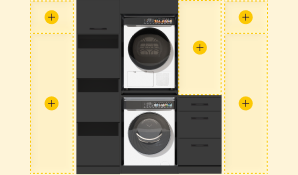
- Stacking with spacer: use a suitable coupling piece between washing machine and dryer for stability.
- Optimize loading: mix large and small items, avoid too little or too heavy load in one corner.
- Elevator with adjustable feet: a sturdy pedestal with leveling feet helps level exactly and dampens vibrations. Check available washing machine risers.
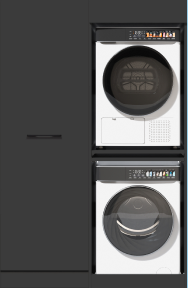
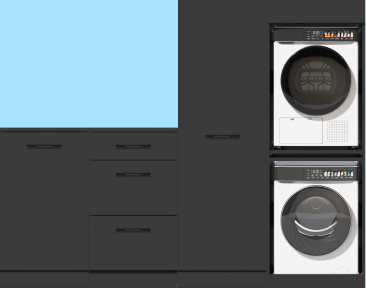
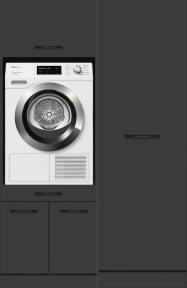
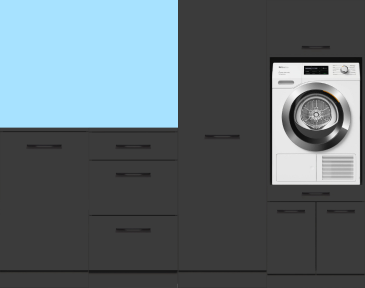
- Washing machine cabinet or pedestal: a rigid, vibration-absorbing cabinet with high load capacity helps keep the setup stable. Preferably choose sturdy washing machine base cabinets. Wasdroom cabinets are designed with stability in mind.
Frequently Asked Questions
How level should a washing machine be?
As level as possible in both directions. The bubble in the level should be centered front-to-back and left-to-right. Minimal wobbling and all feet fully contacting the floor is crucial.
What to do about a walking washing machine?
First check the load and remove any transport bolts. Level the machine, lock the leveling feet, and place vibration dampers or an anti-slip mat. If that doesn’t help, choose a stiffer base or move to concrete. Using a drip tray? Then first read: drip tray under washing machine: yes or no?
Can I stabilize a washing machine on a wooden floor?
Yes, but ensure maximum stiffness. Use vibration dampers or an anti-slip mat, tighten the feet with locknuts, and spread the load. Reinforcing the floor or moving to a load-bearing area helps additionally.

