


A washing machine often weighs between 65 and 80 kilos. With the right preparation, two pairs of strong hands, and smart tools, you can safely carry a washing machine up or down stairs without damage or injury. Below you’ll find practical, immediately applicable steps to move your appliance carefully and place it neatly in its spot.
Preparing for transport: make your washing machine stair-ready
Turn off the washing machine, unplug it, and close the tap. Disconnect the inlet and drain hoses and let any remaining water drain through the filter or drain hose into a low bucket. Dry the hoses and tape them securely to the cabinet so they don’t swing around.
Replace the transport bolts if you still have them. These lock the drum and prevent internal damage. Check the top panel and tighten screws if necessary. Tape the door shut with painter’s tape and protect corners and front with blankets or cardboard.
Measure the route: doors, corners, and the widest step. Remove loose rugs, clutter, and ensure sufficient lighting. Wear sturdy shoes with grip and anti-slip work gloves. Choose your tools in advance, such as lifting straps or a stair-friendly hand truck, and agree on a clear plan and commands with your lifting partner. Going to the attic? First check the floor’s load capacity and read more about reinforcing the floor for a washing machine in the attic.
Safe lifting with two people: posture, communication, and tools
Always lift with two people. Keep the washing machine close to your body, bend your knees, and keep your back as straight as possible. First do a short test lift to feel the balance and weight. Agree on simple commands like stop, up, down, and turn.
Tilt the appliance only briefly when necessary and always with the door facing up. Never lift by the door, control panel, or hoses. Use lifting straps or carrying handles to distribute the weight and improve your grip. For techniques and tools for stair climbing: How to safely lift a washing machine. On straight, sturdy stairs, a stair-climbing hand truck can be helpful, provided you have enough space and control. Don’t force anything and take breaks as needed.
Up or down the stairs: step-by-step and corners
Going up, the person at the bottom sets the pace and carries most of the weight, while the person at the top guides and balances. Take it step by step, with short stops if needed. Keep the appliance slightly tilted toward the stair side for control, never leaning forward.
Going down, the person at the top sets the pace. Keep the machine slightly tilted toward you for stability. Turn corners in two short movements and communicate every step. Use a handrail only for extra support, not as a lever. If in doubt or with very steep stairs, hire a professional.
Placing and securing at the final location
Carefully slide the washing machine into place and keep fingers clear. Set the washing machine stable and level. If desired, place a vibration mat for extra damping. Placing it in a (upper) cabinet? Washing machine in (upper) cabinet: step-by-step plan. Want to reduce resonance and noise on an upper floor? Reducing vibrations and noise on an upper floor. Reattach hoses, open the tap, and check for leaks. Remove any transport bolts before starting to wash.
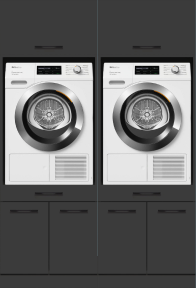
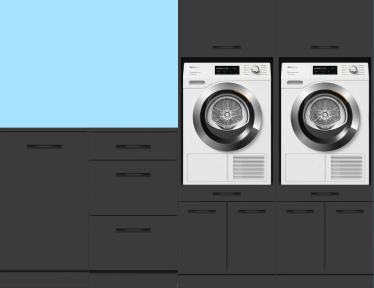
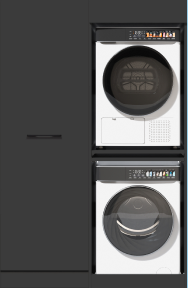
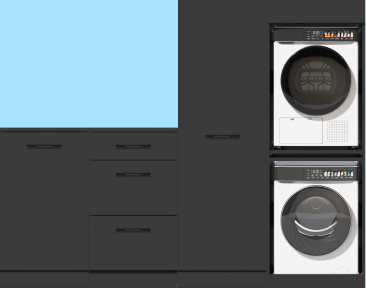
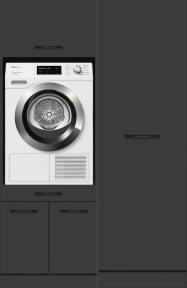
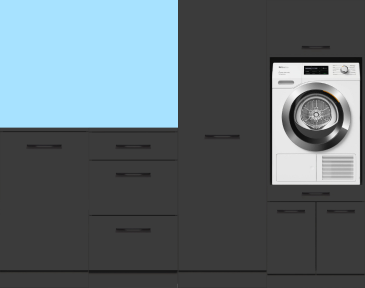
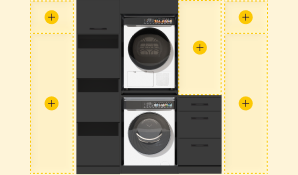
If you want to place the machine stably and ergonomically, for example under or next to the dryer, consider a washing machine cabinet from Wasdroom. These cabinets support up to 240 kg (Double) or 120 kg (Single and Stack) and have a special anti-tip lock for safe, low-vibration washing at working height.
Frequently Asked Questions
Is it safe to lay a washing machine on its side?
Preferably keep a washing machine upright. If you must, lay it briefly on its side with the door facing up and then immediately set it upright again. Using transport bolts reduces damage. Never lay it on the front or back.
How can I secure my washing machine to the floor?
Do not drill into the floor. Level the machine using the adjustable feet and check for play at each corner. Optionally use a vibration mat and ensure a sturdy, flat floor. After the first wash, check stability again. This helps prevent the machine from “walking.”
Is it safe to place a washing machine under the stairs?
It can be, provided the floor is flat and sturdy, there is sufficient ventilation and workspace, and pipes are not pinched. Be aware of possible extra resonance. A stable washing machine cabinet or vibration mat can help dampen vibrations.

