

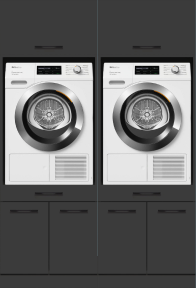
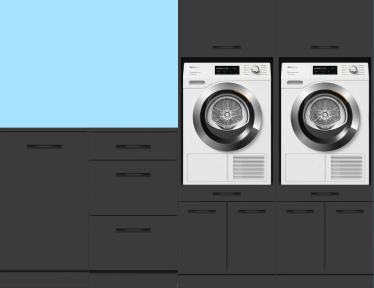
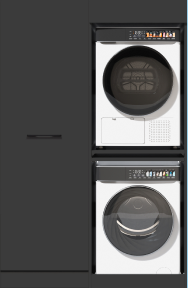
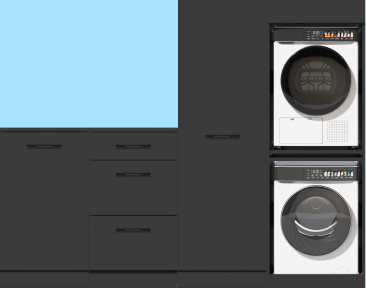
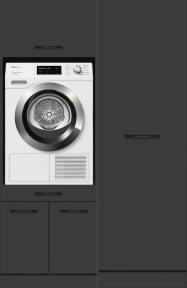
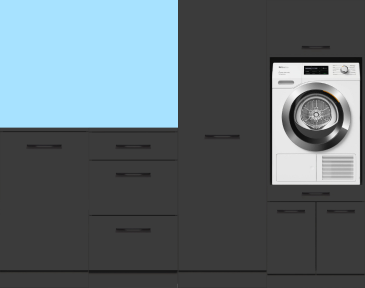
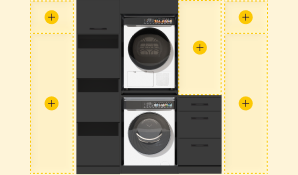

A washing machine riser prevents bending, speeds up your laundry routine, and provides extra safety and peace of mind at home. Especially if you do laundry often, have back or knee problems, or live in an upstairs apartment, a riser can make an immediate difference and be easier on your back while doing laundry. At wasdroom.com, you won’t find loose risers but thoughtfully designed washing machine cabinets that bring your appliance to an ergonomic working height while adding storage space and stability. Want to compare models, heights, and options right away? Check out the washing machine risers.
The short checklist: is a riser right for you?
Choose a washing machine riser if one or more of these points apply to you:
- You want to bend and lift less when loading and unloading.
- You have limited space and are looking for extra storage near the washing machine.
- You experience vibrations or a moving washing machine, especially on a wooden floor or in an apartment.
- You want to safely stack a dryer without wobbling or sliding.
- You are renovating your laundry area and want a neat and practical finish.
How high should a washing machine riser be?
The ideal height depends on your height and the position of the loading door. Guideline: position the bottom edge of the drum opening roughly at hip height. In practice, a riser of 40 to 60 cm often works best. Too low remains inconvenient, too high makes the drum hard to reach and increases the risk of bumping into countertops or taps above. Want to determine this precisely? Read more about the ideal height for your washing machine in a cabinet.
- Measure your hip height and the height of the current drum opening from the floor.
- Calculate the difference between the two as the desired riser height.
- Check the space above the machine for doors, taps, and connections, and the correct height of the washing machine connection.
- Always place the machine level and secure the adjustable feet.
Wasdroom’s washing machine cabinets bring your machine to an ergonomic height and are TÜV-certified with a load capacity of up to 240 kg (Double) or 120 kg (Single and Stack). This way, you combine comfort with proven safety at working height.
Why a cabinet solution is often smarter than a loose riser
A simple pedestal raises your machine, but a cabinet solution adds functionality and stability you notice daily. Wasdroom designs washing machine cabinets that combine elevation, storage capacity, and safety in one, matching your interior. Read more about the advantages of a washing machine base cabinet.
- Stable and quiet: vibration-absorbing construction limits resonance and movement.
- Safety first: TÜV-certified and suitable for up to 240 kg (Double) or 120 kg (Single and Stack) load capacity.
- Durable: moisture-resistant materials stay pristine in a damp environment.
- Safe stacking: place the dryer firmly and centered above the washing machine.
- Neatly finished: pipes and accessories out of sight, creating more calm in the space.
- Reliability: 10-year warranty and easy installation with clear instructions.
Models like the Wasdroom Enkel 4.0 and Enkel 5.0 offer different layouts and finishes, so you can always choose a solution that fits your space and style.
Smart storage and faster work
A riser with integrated storage saves time and keeps your laundry area tidy. Think of a pull-out shelf for your laundry basket, a drawer for detergents, and a closed compartment for cleaning supplies. This way, everything is within reach without bending or stretching.
- Store detergents and descalers dust-free directly under the machine.
- Use a pull-out shelf to sort laundry and support baskets.
- Reserve a compartment for small textiles, laundry nets, and maintenance supplies.
Vibrations, safety, and a moving washing machine
Vibrations and “walking” often occur due to drum imbalance, an uneven floor, or poorly adjusted feet. A stable riser or cabinet reduces movement and noise. Want to know more? Read Washing machine on riser: reducing vibrations.
- Level the machine and secure the adjustable feet.
- Check that transport bolts are removed after installation.
- Use vibration dampers if the floor is springy or uneven.
- Distribute laundry evenly and avoid overloading.
- Choose a cabinet with vibration-absorbing properties for extra peace.
Installing yourself? Washing machine on a riser in a cabinet: how to do it.
Frequently Asked Questions
How high should a washing machine riser be?
Aim for hip height for the drum opening. Usually, this means a riser of 40 to 60 cm. Check the free space above the machine and ensure you can comfortably reach the drum and detergent drawer.
What to do about a moving washing machine?
Level the machine, tighten the adjustable feet, remove transport bolts, dampen vibrations with suitable supports, and distribute the laundry evenly. A stable cabinet solution with vibration absorption effectively limits movement.
How do you most easily lift a washing machine up?
Do this with 2 people, empty the machine and drain water, lock the drum with transport bolts, use lifting or carrying straps and a stair climber. Lift close to your body and take breaks. Place it level immediately at the top.
Ready to make your laundry area more ergonomic, quieter, and smarter? With Wasdroom’s washing machine base cabinets with drawers, you combine working height, safety, and storage in one thoughtful solution that lasts for years.

