

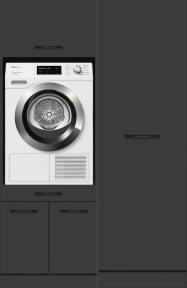
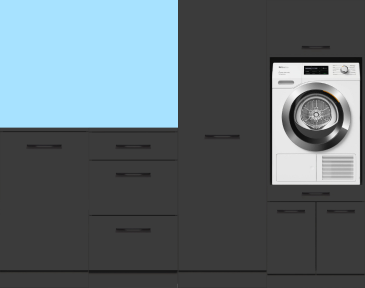
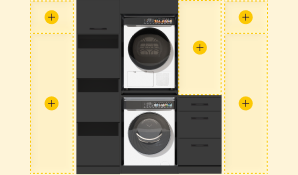

Bending down a lot to load the drum, scattered bottles, and a machine that “walks” during spinning – familiar? A washing machine pedestal can solve this by raising your appliance to working height and providing extra storage space. But not every situation calls for the same solution. In this guide, you’ll discover when a pedestal is truly useful, how to choose the best option, and how a washing machine cabinet can be a more stable and attractive alternative. You’ll also get practical tips against a moving washing machine and clear answers to frequently asked questions.
When is a washing machine pedestal really useful?
A washing machine pedestal is especially useful if your front loader sits low on the floor and you have to bend down regularly. By gaining 30-50 cm in height, you bring the door opening to about elbow height, which spares your back and knees. If you wash often or lift a lot of wet laundry, you’ll immediately notice the ergonomic benefit. Unsure about the ideal height? Read more about the ideal working height for your washing machine.
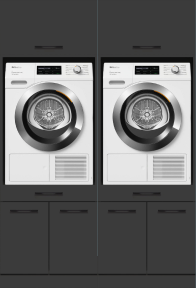
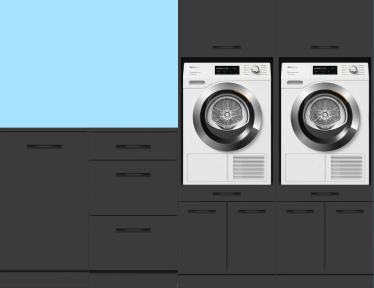
If you have limited space in your laundry room or bathroom, choose a pedestal with a drawer or pull-out shelf. This makes better use of the square meters and keeps detergents within reach. Also, if your dryer stands next to the washing machine instead of on top, a pedestal for both appliances can create a neat, even working height. Also read the advantages of a washing machine base cabinet.
A pedestal is less useful for a top loader, if your machine is already placed in a niche at height, or when the floor is not stable enough. In those cases, raising it offers little benefit or increases the risk of vibrations. If you doubt the floor’s load capacity or flatness, fix that first – stability comes before height.
Pedestal or washing machine cabinet – what’s the difference?
A separate washing machine pedestal is usually a plinth or universal base – sometimes with a drawer – that you place under your appliance. It’s a quick, affordable way to add height and sometimes extra storage space. Downside: cheaper models can transmit vibrations and look less sleek.
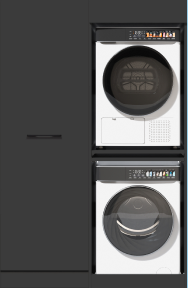
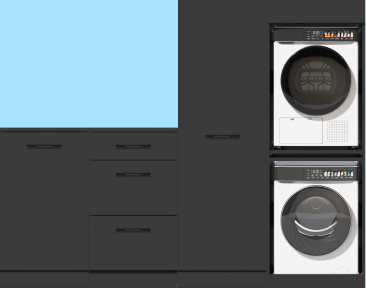
A washing machine cabinet integrates the pedestal into a piece of furniture. At Wasdroom, ergonomics, stability, and aesthetics are central: the cabinets are made from moisture-resistant materials, have vibration-absorbing properties, and are TÜV-certified with a load capacity up to 240 kg (Double) or 120 kg (Single and Stack). This way, you combine a safe working height with generous storage space and a tidy look. Looking for a durable, quiet, and neat solution? A washing machine cabinet is often the best choice. Check out our washing machine base cabinet range.
Important points to consider when choosing
- Load capacity – Check the maximum weight. Modern washing machines weigh 60-90 kg empty; with wet laundry and dynamic forces, you want a wide margin.
- Stability and anti-slip – Choose anti-slip feet, a rigid frame, and vibration dampers. The stiffer the construction, the less “walking.”
- Dimensions – Match width and depth to your machine. Universal pedestals are often 60x60 cm; always measure the leg spacing and feet.
- Height/working height – 30-40 cm is common. Test with a tape measure where the door opening is most comfortable.
- Storage space – A drawer or pull-out shelf keeps detergents and laundry baskets within reach and saves space.
- Floor and placement – Preferably place on a flat, hard floor. Soft floors amplify vibrations. Also check the correct height of the washing machine drain when raising, to prevent backflow and error codes.
- Dryer combination – Stacking kit vs pedestal: if you want the dryer on top of the washing machine, use a suitable stacking kit. With a cabinet, there is often a separate spot for the dryer.
- Assembly and safety – Follow the manual, level the unit, and secure the furniture if prescribed. How to place a washing machine on a pedestal (step-by-step).
Tips against a moving or vibrating washing machine
A “walking” machine is rarely solved with one trick – tackle the cause at the source:
- Check transport bolts – Were they removed after delivery? If not, the drum vibrates excessively.
- Make the washing machine stable and level – Adjust all feet precisely and fix them. Use a level on the edge of the drum.
- Distribute the laundry – Uneven loads cause imbalance. Mix large and small items.
- Improve the surface – A hard, flat surface works best. Consider vibration dampers or a stable washing machine cabinet.
- Spin speed and program – A slightly lower spin speed reduces vibration, often without much longer drying time.
Frequently asked questions
Why a washing machine pedestal?
The biggest advantage is ergonomics: you have to bend less when loading and unloading, which spares your back and knees. Additionally, you save space with a model that has a drawer or pull-out shelf and keep your laundry area tidy. Pay attention to stability – a stiff construction with anti-slip and damping prevents vibrations. If you want not only height but also a quieter, safer setup and extra storage, a washing machine cabinet offers the same ergonomic benefits with more stability and a neat finish.
Can a washing machine be damaged by moving it?
Yes, if you are careless. Always remove or install the transport bolts as prescribed, preferably lift with two people, and avoid tilting on vulnerable parts like the door or knobs. Use a dolly or lifting straps, and secure the drum according to the manual if you need to transport it further. After moving, level the machine, check hoses and connectors for leaks, and run a short test program. This prevents damage to the drum suspension and electronics.
How much weight can a washing machine pedestal support?
That varies per model. Universal pedestals often start around 100-150 kg load capacity, heavier furniture and cabinets go up to 200-240 kg. Always check the rating plate or manual of the pedestal and add the machine’s own weight plus water, wet laundry, and dynamic forces during spinning. Wasdroom washing machine cabinets are TÜV-certified and designed for high loads up to 240 kg (Double) or 120 kg (Single and Stack), so you stay well within safe margins.

