

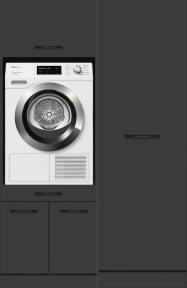
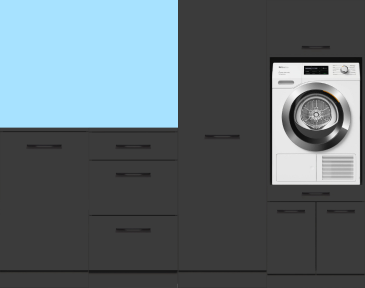
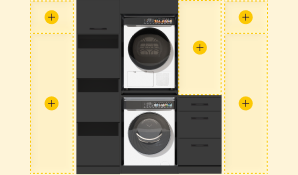

A washing machine cabinet in the bathroom saves space, keeps your laundry area tidy, and dampens noise. Safe placement requires attention to rules, zones, ventilation, and stability. This guide includes a clear zones table, practical installation tips, and a step-by-step plan to safely stack and hide your washing machine and dryer. Where relevant, we refer to NEN 1010 and share product tips that fit Wasdroom cabinets.
What is allowed and not allowed in the bathroom? Rules and zones (NEN 1010)
Electrical appliances in the bathroom fall under NEN 1010. The space is divided into zones based on splash water risk. The rule of thumb: place a washing machine and socket outside the wet zones. Have a certified installer assess your situation and install the circuit, RCD, and connection points according to the standard.
Overview of bathroom zones and IP requirements
| Zone | Where | Minimum protection | Suitable for |
|---|---|---|---|
| Zone 0 | In bath or shower tray | SELV, very high IP rating | No 230V equipment |
| Zone 1 | Directly above bath/shower up to 225 cm high | Min. IPX4, RCD 30 mA | No washing machine or socket |
| Zone 2 | Up to 60 cm around bath or shower | Min. IPX4, RCD 30 mA | Preferably avoid for sockets/devices |
| Outside zones | More than 60 cm from wet areas | RCD 30 mA | Washing machine cabinet and socket allowed |
Always ensure a 30 mA residual current device, a separate circuit for washing machine and dryer, and splash-proof switches where needed. Place sockets and cables within reach but protected from splashes and condensation. Also read how to set up a laundry area in the bathroom (ventilation, moisture, and electricity).
Safe stacking and hiding away: washing machine cabinet or spacer?
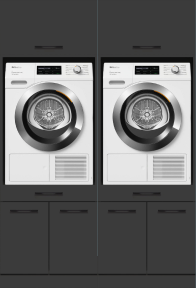
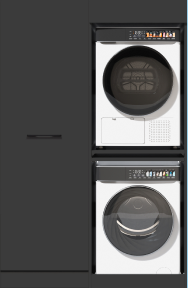
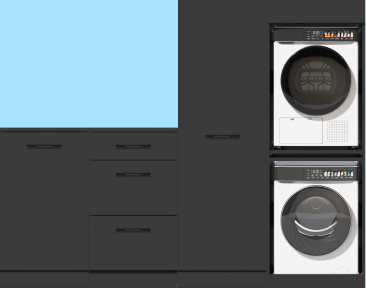
If you have limited space, stacking is ideal. The safest way is with a suitable washing machine cabinet or a manufacturer-approved spacer. A cabinet offers extra storage space and neatly hides pipes, while a spacer mainly provides stability between the washing machine and dryer.
Pay attention to the order and weight: the washing machine should be at the bottom and the dryer on top. Check the total weight and the load capacity of the cabinet. Wasdroom cabinets are designed for heavy loads up to 240 kg (Double) or 120 kg (Single and Stack) and have a base plate that absorbs vibrations. This limits resonance in the bathroom and keeps the set stable, even at higher speeds.
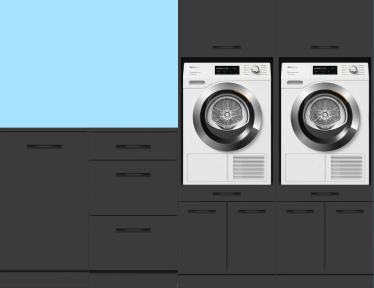
If you place your appliances side by side, a low cabinet or countertop keeps everything at an ergonomic height and creates extra space for detergents. In narrow bathrooms, a vertical cabinet setup often wins over horizontal placement. Leave a few centimeters free on the left and right for air circulation. Check out our stackable washing machine cabinets for small bathrooms for a sturdy and space-saving solution.
The washing machine cabinet itself: safety requirements in the bathroom
Vibrations, load capacity, and stability
A safe bathroom setup starts with a sturdy cabinet. Choose a model with sufficient load capacity for your machines. Wasdroom cabinets support up to 240 kg (Double) or 120 kg (Single and Stack) and feature a vibration-absorbing base plate. This reduces noise and vibration transmission to the floor. Check that the cabinet is level and use adjustable feet where necessary. Anchor the cabinet to the wall and use a tilt lock to prevent appliances from shifting or vibrating out of the cabinet. For maximum stability and load capacity, you can choose double washing machine cabinets with extra stability.
Ventilation and moisture resistance
Heat and moisture are the biggest enemies of electronics and woodwork. Choose cabinets with ventilation openings and leave space behind the machines for airflow. Connect a heat pump dryer or condenser dryer according to the instructions and ensure sufficient mechanical ventilation in the bathroom. Wasdroom uses panel material with a durable melamine coating. This is easy to clean and more resistant to splashing water than untreated wood. Dry condensation immediately and keep ventilation openings clear.
Mounting, floor load, and water protection
Mount the cabinet using the supplied wall brackets on a load-bearing wall or use suitable hollow wall anchors. Check if your floor can support the point loads, especially with wooden floors. A vibration mat can help but does not replace level adjustment. For water safety, place a drip tray under the washing machine, use a sturdy hose with aquastop, and connect the drain leak-free to a siphon. Do not pinch cables and hoses behind panels and keep plugs and wall sockets accessible but outside splash zones. This minimizes short circuits and water damage.
Convenient setup: storage, ergonomics, and accessibility
A well-thought-out washing machine cabinet makes your routine faster and calmer. Place frequently used items like detergent, fabric softener, and laundry nets in drawers at hip height. Reserve a separate, ventilated space for the dryer to release warm air. Wall cabinets are ideal for stock and cleaning products out of children’s reach. In narrow bathrooms, pull-out shelves or baskets on rails are handy to access the back of the machines.
Consider ergonomics: ideally, the washing machine drum opening should be between knee and hip height so you don’t have to bend over. See also our tips for ergonomic placement at work height (less bending). Position pipes and outlets so you can reach the plug without dismantling the entire cabinet. At Wasdroom you’ll find compact washing machine cabinets for narrow bathrooms and matching storage modules suitable for small and larger bathrooms.
- Setup checklist:
- Free space behind and beside appliances for ventilation
- Pull-out drawer or shelf for laundry baskets
- Safe, childproof storage of cleaning products
- Accessible tap, siphon, plug, and switches
Step-by-step plan: safely install in 7 steps
- Measure zones and distances: place the setup outside zone 1 and preferably outside zone 2.
- Check electrical: separate circuit, 30 mA residual current device, splash-proof switches where needed. Have this done by a professional installer.
- Prepare water and drainage: tap, hose with aquastop, drip tray, and a good siphon connection.
- Assemble the cabinet: level it, anchor with wall brackets, and activate the tilt lock.
- Place machines: washing machine below, dryer above. Leave a few millimeters of clearance around and keep ventilation openings free.
- Test vibration and stability: start a short spin cycle, adjust with feet or vibration mat if needed.
- Finish and inspect: check for leaks, cable slack, accessibility of plug and taps.
Want to follow it step-by-step? Check the washing machine cabinet assembly manual (step-by-step safe installation) for extra explanation per step.
Frequently Asked Questions
Is it allowed to place a washing machine in the bathroom?
Yes, that is allowed if you stay outside the wet zones and the electrical installation complies with NEN 1010. Place outlets and the washing machine outside zone 1 and preferably outside zone 2, protect with a 30 mA residual current device, and use splash-proof switches where necessary.
How far should the washing machine be from the shower or bath?
Keep at least 60 cm distance from the edge of the bath or shower to stay outside zone 2. More distance is better due to splashes and condensation. Protect the setup from direct spray water and ensure good ventilation.
Do you need a pull switch in the bathroom?
Whether a work switch or pull switch is needed depends on your situation. NEN 1010 mainly requires correct protection with a residual current device and proper placement. An installer can determine if additional switching is desired or required and where it should be located.
Can a dryer also be placed in the bathroom?
Yes, provided it is outside the zones and with sufficient ventilation. A heat pump dryer emits less heat but still requires air circulation. Connect a condenser or vented dryer according to the instructions and ensure a separate circuit if the load requires it.
How do you prevent mold and rust in the cabinet?
Ventilate the bathroom, keep the cabinet’s ventilation openings clear, and dry splashes immediately. Choose a moisture-resistant cabinet finish, such as melamine. Leave the washing machine door slightly open after use and regularly clean the rubber seal and drawer.
What if the floor is not completely flat?
Level the cabinet and appliance feet. If necessary, use a vibration mat for extra damping, but first fix the height difference with the adjustable feet. After leveling, check the wall anchoring and run a test wash with spin cycle.
Do you want to get started right away with a safe and sleek solution in your bathroom? Check out the single and double washing machine cabinets from Wasdroom with vibration-absorbing base plate, tilt lock, and moisture-resistant finish. You get a 10-year warranty and 30 days to reconsider.

