

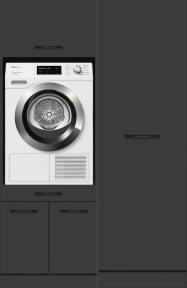
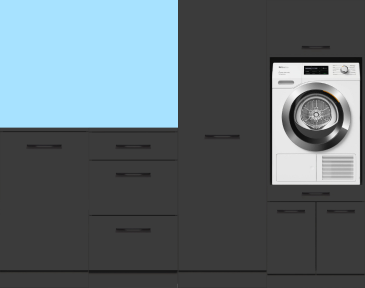
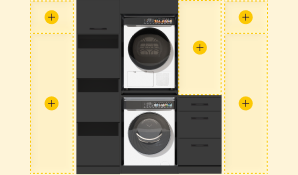

Do you want to transform the attic or space under a sloped roof into a practical laundry room? With a well-thought-out layout and a suitable washing machine cabinet, you can make smart use of every centimeter. In this guide, you’ll learn where to best place the cabinet, how to measure accurately, what’s important for ventilation, and how to reduce noise and vibrations. You’ll also discover when a standard Wasdroom cabinet fits and what to consider when choosing between side-by-side or stacked setups. Also, check out our practical tips for a washing machine cabinet under a sloped roof.
Smart layout under a sloped roof
Start at the highest straight wall or at a dormer: that’s usually where a washing machine cabinet fits comfortably and you retain enough working height. If stacking isn’t possible due to the roof slope, choose a setup with the washing machine and dryer side by side in one cabinet. Preferably place the cabinet against a sturdy, flat wall and ensure the cabinet doors and appliance doors can open fully without hitting the sloped roof or knee wall.
Plan the route for water, drainage, and electricity in advance. Short, neatly concealed pipes and easily accessible outlets prevent malfunctions and make maintenance simple. Allow enough space for loading and unloading, and think of a fixed spot for laundry baskets, detergents, and ironing supplies. Finally, leave service access free: you want to be able to slide an appliance forward for maintenance or replacement without dismantling the entire setup. Also determine the correct height of the drainage in the washing machine cabinet.
Measuring and minimum dimensions
Measure three things: the knee wall height, the depth to the sloped roof, and the free height directly in front of the cabinet. Then check the dimensions of your washing machine and dryer, including hoses and plugs. Allow extra space for ventilation and vibration-free operation. The guideline dimensions below help you quickly determine which setup fits. Consider them as indications—always verify the specifications of your appliances and the chosen cabinet.
| Setup | Min. front height | Min. depth | Min. width |
|---|---|---|---|
| Side by side (2 appliances) | 95 - 100 cm to top of work surface | 70 cm (incl. hoses/clearance) | 130 - 140 cm |
| Stacked (laundry tower) | 210 - 220 cm to ceiling | 70 cm (incl. hoses/clearance) | 70 - 80 cm |
Leave 5 - 10 cm space behind the appliances for hoses and air circulation and keep at least 60 cm free workspace in front. If the height just doesn’t fit under the sloped roof, place the cabinet slightly further from the knee wall line or choose a side-by-side setup. Also pay attention to the depth of the washing machine cabinet and the fit.
Ventilation and moisture control
A sloped roof is more sensitive to heat and condensation. Make sure the washing machine cabinet can breathe: avoid completely sealed enclosures, allow air to enter and exit at the back or at the bottom and top, or use a discreet air vent in a door. For heat pump or condenser dryers, extra airflow is important to keep drying time short and energy consumption low. See additional tips for ventilation in a compact laundry space.
Route hoses tightly but not pinched and check traps and drains for sufficient flow. Place a drip tray under the washing machine and keep the drain and tap accessible. Choose moisture-resistant finishes around the setup and ventilate the room itself with a window, vent, or mechanical ventilation. Regular airing prevents mold and unpleasant odors.
Reducing noise and vibrations in the attic
Vibrations easily carry through light attic floors and drywall. Start by leveling the washing machine on a stable, flat surface and securely tighten the adjustable feet. A rubber vibration damper or mat under the washing machine reduces resonance and protects the floor. Secure inlet and outlet hoses so they don’t rattle against the cabinet during spinning.
Leave a few centimeters of clearance around the appliances so they don’t touch the cabinet. Don’t place the machine tightly in the corner where the roof is lowest, but slightly forward on the sturdiest part of the floor. Consider a lower spin speed for heavy loads to reduce peak vibrations. If you still hear resonance, recheck the leveling, load, and cabinet attachments. If the attic floor is lightweight, read how to reinforce the floor for a washing machine in the attic.
Does a standard Wasdroom cabinet fit under your sloped roof?
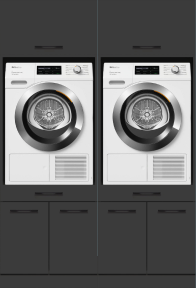
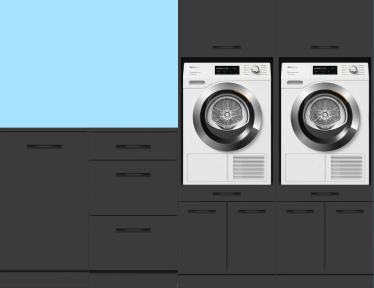
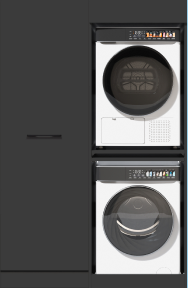
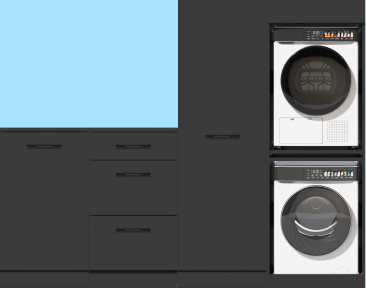
Wasdroom supplies standard, plug-and-play washing machine cabinets for side-by-side setups (Wasdroom Double 1.0) or stacked (Wasdroom Single 2.0). These cabinets are designed for placement against a straight wall. In a space with a sloped roof, this usually works well under a dormer or along the high side next to the knee wall. If height is limited, the side-by-side setup is often the best choice. Check out our built-in cabinets for washing machines and dryers.
Always check the free height and depth on site and compare them with the dimensions of your appliances and the cabinet. Wasdroom does not offer custom solutions for sloped walls, but you can easily finish the space above or beside the cabinet with a custom board, a niche shelf, or a curtain for a neat look. The sturdy cabinets are TÜV-certified, have a load capacity up to 240 kg (Double) or 120 kg (Single and Stack), and come with a 10-year warranty and clear assembly instructions.
Frequently Asked Questions
Can a washing machine be placed in a closed cabinet under a sloped roof?
Only if you ensure sufficient ventilation. Preferably leave the back or part of the top and bottom open for airflow, or create an air vent in the door. Combine this with 5 - 10 cm space behind the machine and pay extra attention to airflow for heat pump or condenser dryers. Also check the required free space above the washing machine.
What is more practical under a sloped roof: side by side or stacked?
With limited height, side-by-side wins because you only need about 100 cm of working height. If you can achieve 210 - 220 cm directly in front of the cabinet, stacking is space-efficient. Also check the clearance for the doors and choose the setup that best fits your height and usage.
How do I prevent water damage in the attic laundry room?
Place a drip tray under the washing machine, check hoses and connectors annually, and keep the tap and drain accessible. Finish the floor around the setup with water-resistant materials and ensure sufficient ventilation to prevent condensation and mold. Consider an aquastop hose for extra safety.
Want to be sure your space is suitable for a standard setup? Measure using the guideline dimensions above, compare with your appliances and the dimensions of the Wasdroom cabinet you have in mind, and contact our customer service if in doubt. This way, you can turn any attic into an efficient, quiet, and safe laundry room under a sloped roof.

