

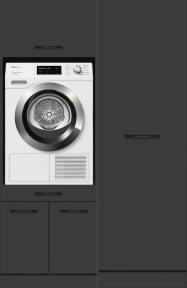
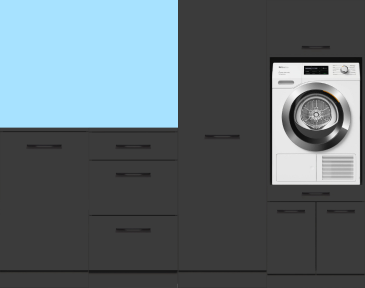

Most washing machines have a cabinet depth of around 60 cm, but for the built-in depth you need, you should allow more space. Due to hoses, plugs, and vibration-free placement, you often need an extra 5 to 10 cm of space behind the machine. Especially with larger drums, the cabinet depth can increase to 67 to 70 cm. Looking for a suitable cabinet? Check All washing machine cabinets for a quick overview and to compare specifications per model. In this article, you will find the standard dimensions, a handy depth vs. load capacity table, and practical measuring tips so that your washing machine fits seamlessly into the niche or under the countertop.
In short: what is the standard built-in depth?
As a rule of thumb: the standard depth of a washing machine cabinet is about 60 cm. That is the bare cabinet, excluding protruding parts. For the actual built-in depth, add 5 to 10 cm for water hoses, drainage, and the clearance needed to prevent vibrations from transferring to the wall. If you end up with a total niche depth of 65 to 70 cm, an average front loader fits comfortably. If you choose a large load capacity of 9 to 12 kg, the cabinet depth of the appliance itself can already be 63 to 70 cm. Always check the product specifications per model and include extra margin in your niche size.
Dimensions per type of washing machine (front loader vs top loader)
Front loaders are the standard in the Netherlands. They are typically 60 cm wide, about 85 cm high, and have a cabinet depth of 55 to 70 cm, depending on the drum capacity. Top loaders are slimmer in width: often about 40 cm wide and 85 to 90 cm high, with a depth of approximately 60 cm. If you have limited width space, a top loader is a compact solution. If the machine needs to fit under a countertop, pay attention to the height of the niche and the countertop: a standard countertop is 60 cm deep and 90 cm high, while the space under the countertop is often 82 to 85 cm. Check whether the machine fits under the countertop without the top panel and whether the door can fully open. With limited niche/built-in depth, a cabinet for a single appliance is a safe choice: see Single-series (cabinet for one washing machine).
Depth and load capacity: which drum fits in your niche?
The larger the load capacity, the deeper the machine usually is. This is due to a larger drum and more counterweight. For example, a 6 or 7 kg front loader can still be relatively shallow, while 9 to 12 kg models are often deeper than 60 cm. Use the guideline below to quickly see approximately what built-in depth you need. Note: these are average values; each brand and model may vary.
| Load capacity | Avg. cabinet depth of appliance | Required built-in depth |
|---|---|---|
| 6 - 7 kg | 45 - 55 cm | 55 - 65 cm |
| 8 kg | 55 - 60 cm | 62 - 68 cm |
| 9 - 10 kg | 60 - 67 cm | 67 - 72 cm |
| 11 - 12 kg | 67 - 70 cm | 72 - 75 cm |
If you have a tight niche depth, a more compact model with a lower load capacity is often the safest choice. If you still want a large drum, allow extra margin and check the depth including door and front panel.
How to measure the niche size and built-in depth
- Measure the depth from the back wall to the front edge of the niche or cabinet. Also note any baseboards or pipes that protrude.
- Add 5 - 10 cm extra to the measured depth for hoses, plug, and vibration-free placement.
- Check height and width: standard 60 cm wide and 85 cm high, but measure your niche and countertop. Under-counter installation often requires 82 - 85 cm height.
- Check door clearance: can the door fully open without hitting the frame, cabinet front, or wall?
- Watch the floor and baseboard: a high baseboard or thick floor covering can reduce effective depth.
- Position water and drainage so hoses do not kink and do not consume extra depth.
Want step-by-step instructions for measuring and installation? Consult the Manuals: dimensions and installation.
Placement and surrounding space
Door opening and hinge direction
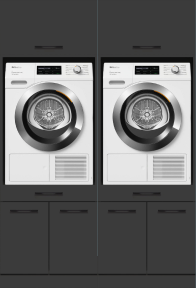
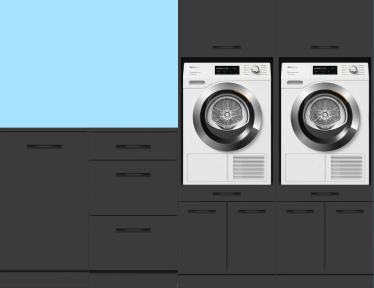
Most front loaders have a hinge on the left. If your dryer is next to it or you open a cabinet door the other way, check if it remains practical. Allow at least 40 cm of free space in front of the machine for the door opening so you can easily load and unload large laundry items. In narrow passages, a top loader can be handy because you load from above and no sideways swing is needed. Placing your appliances side by side? Compare depth and width dimensions in the Double-series (side by side).
Stacking with a dryer
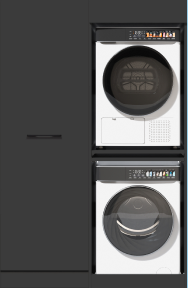
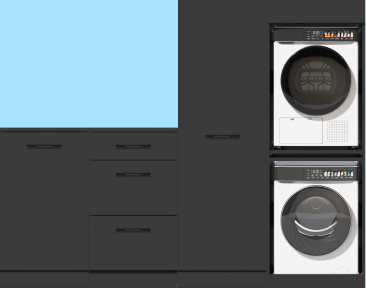
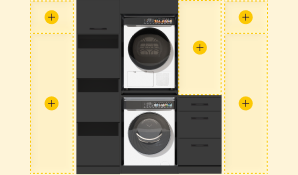
If you want a washer-dryer tower, use a suitable stacking kit and check the total depth. A dryer is often as deep or slightly less deep than the washing machine, but hoses and drainage together still require an extra 5 to 10 cm. For a stable and safe setup with a stacking kit, calculate a built-in depth of 67 to 75 cm, depending on your washing machine’s load capacity. For complete combinations and cabinets, see the Stack-series (washing machine + dryer stacked).
Working on the overall layout and want more storage or a handy countertop? Check Setting up laundry space: tips for advice on layout and required work/built-in depth.
Frequently Asked Questions
What is the standard built-in depth of a washing machine?
Expect 65 to 70 cm total built-in depth for most front loaders. The cabinet itself is often around 60 cm deep, but hoses and clearance require an extra 5 to 10 cm of space.
Does a washing machine fit under a 60 cm deep countertop?
Yes, provided you have sufficient niche depth and height. Check for a free height of 82 to 85 cm and leave 5 to 10 cm of space behind the machine for hoses and vibration clearance.
Are there shallow or narrow washing machines for small niches?
Yes. There are compact front loaders with a cabinet depth of 45 to 55 cm and top loaders about 40 cm wide. Note the lower load capacity and always check the exact model dimensions.
How much clearance should I leave behind the washing machine?
Preferably leave 5 to 10 cm free behind the machine. This prevents kinked hoses, provides space for the plug, and keeps the machine vibration-free.

