

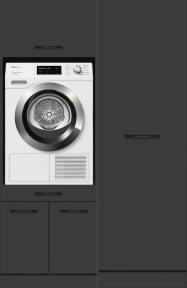
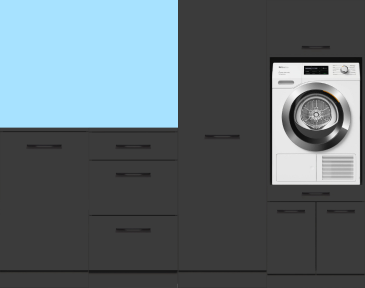
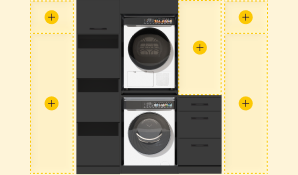

A washing machine enclosure is a cabinet or furniture construction in which your washing machine, and sometimes your dryer, is neatly placed. The goal is simple: your laundry space looks calmer, pipes and cords are less visible, and you use the available space more smartly. Depending on the situation, you choose an enclosure for one appliance, a stacked setup, or a wide solution where washing machine and dryer stand side by side.
Such an enclosure is not only a visual upgrade. A good washing machine enclosure also helps with ergonomics, extra storage space, and a logical layout of your laundry area. However, dimensions, ventilation, sturdiness, and material choice are important. These points determine whether a washing machine cabinet works comfortably and safely in practice.
What exactly is a washing machine enclosure?
When people search for what a washing machine enclosure is, they usually mean a piece of furniture or cabinet specially designed to neatly and functionally integrate a washing machine into the space. Sometimes it is an open construction with a countertop, sometimes a closed cabinet with doors, and sometimes a complete setup for both washing machine and dryer.
A washing machine enclosure differs from a standard cabinet because it must take into account weight, vibrations, connections, and air circulation. After all, a washing machine is not a decorative object but a heavy appliance that moves during spinning and needs space for hoses, plug, and ventilation. That is why a regular cabinet is not automatically suitable as a washing machine cabinet. Want to understand the difference with a built-in cabinet well? Read the difference between built-in and enclosure washing machine cabinets.
In practice, you roughly see three popular solutions:
- a single enclosure for the washing machine only;
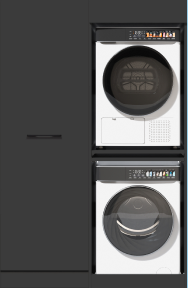
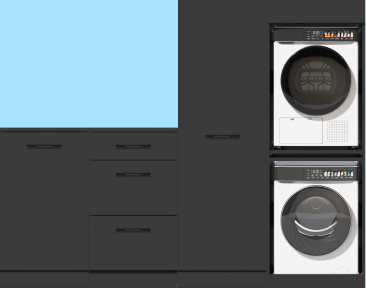
- a stacked setup with washing machine and dryer on top of each other;
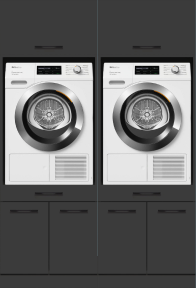
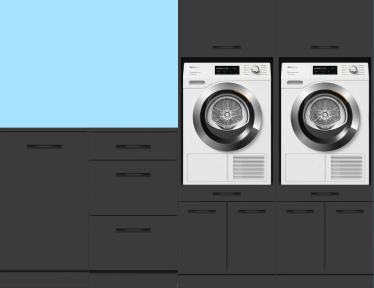
- a double setup where both appliances stand side by side.
At Wasdroom, these solutions fall under the Single Series, Stacked Series, and Double Series. This way, you choose a layout that fits your space, usage, and desired look.
Why do people choose a washing machine enclosure?
The main reason is usually a tidy appearance. In many bathrooms, utility rooms, and storage areas, the washing machine and dryer are out in the open, including hoses, drains, plugs, and detergents. With an enclosure, you turn that practical corner into a neat whole.
In addition, a good enclosure provides functional benefits. Think of extra storage space for detergent, fabric softener, towels, or laundry baskets. A countertop above the appliances is also popular, for example, to fold clothes or temporarily place a basket. Those who want to explore the advantages and application possibilities further can look at the chosen layout and materials.
Another advantage is ergonomics. When an appliance is placed a bit higher, you don’t have to bend down as far when loading and unloading. Especially if you do laundry often, you’ll notice that difference immediately in comfort. A well-designed washing machine enclosure combines form, ease of use, and space saving.
What types of washing machine enclosures are there?
Enclosure for one appliance
This is the most compact solution. Handy if you only want to hide a washing machine or if the dryer is located elsewhere. Often there is still space above the appliance for a countertop or extra cabinet space. This type is popular in smaller homes, bathrooms, and narrow niches. For example, check out the washing machine base cabinets.
Washing machine and dryer stacked
With a stacked setup, you save floor space. This makes this option suitable for compact laundry rooms. However, this setup requires extra attention to stability, load capacity, and safe placement. The construction must be suitable for the total weight and the movements during spinning.
Washing machine and dryer side by side
If you have enough width, this is often the most comfortable solution. You get a wide worktop, direct access to both appliances, and often more freedom for drawers, cabinets, or open storage space. This setup also often looks calmer and more symmetrical in the room. A washing machine cabinet wall is then a logical choice.
Can a washing machine be placed in a cabinet?
Yes, a washing machine can be placed in a cabinet or enclosure, as long as that cabinet is suitable. This means the construction must be sturdy enough, the appliance must be able to stand level, and there must be enough space for ventilation and connections.
A common mistake is thinking a washing machine can be completely enclosed without extra attention to air circulation. Heat and moisture are released during use. Especially if there is also a dryer in the same setup, the air must be able to escape well. Otherwise, you increase the chance of condensation, musty odors, and unnecessary strain on the appliance and materials.
That’s why it’s smart to pay attention to:
- free space around the appliance;
- space behind the machine for hoses and plug;
- ventilation grilles or a more open construction;
- material that can withstand a humid environment.
What should you consider when measuring?
When building an enclosure for a washing machine, accurate measurements are more important than many people think. The standard size of a washing machine is often about 60 cm wide and 85 cm high, but the total required depth is usually greater due to hoses, plugs, and protruding parts at the back. The door also needs to open properly. Practical guidelines can be found at the dimensions of a washing machine cabinet.
Therefore, measure not only the appliance itself but also the available niche or wall space. Allow extra margin for placement, ventilation, and vibration clearance. Especially in small spaces, a few centimeters can determine whether a cabinet works comfortably or becomes impractical.
When measuring, always check:
- the width, height, and depth of the machine;
- the space for water supply and drainage;
- the position of power outlets;
- the door opening angle;
- or a countertop, drawer, or door of the cabinet does not hit anything.
Ventilation and safety in a washing machine cabinet
Ventilation is one of the most important considerations in a washing machine cabinet. Moisture and heat arise during washing. Without good air circulation, this can lead to condensation, mold problems, or an unpleasant odor in the room. This is even more significant with a dryer in the same enclosure. Read more about ventilation in a washing machine cabinet.
An open niche naturally has more ventilation than a fully closed cabinet. If you choose doors or closed panels, vents, clearance space, or other ventilation openings are often necessary. There must also be enough space behind the appliance for hoses, wiring, and air circulation.
Besides ventilation, safety revolves around load-bearing capacity and stability. A washing machine is heavy and exerts extra forces on the construction during spinning. Therefore, an enclosure must be solidly built and suitable for the weight of the machine, or both appliances together. For example, the enclosure cabinets from Wasdroom are designed with a TÜV-certified construction and a load capacity of up to 240 kg (Double) or 120 kg (Single and Stack), which makes a relevant difference especially in stacked setups.
Sturdiness, vibrations, and leveling
A nice enclosure is only truly good if it also works stably in daily use. Washing machines move during spinning. If the appliance is not level or the construction is insufficiently rigid, you will more quickly experience vibrations, extra noise, and wear.
Therefore, it is wise to always level a washing machine precisely before putting the enclosure into permanent use. Check that all feet are properly adjusted and test if the machine stands stable. In some situations, an anti-vibration mat or vibration damping can help additionally, but they never replace a good basic construction.
This point is especially crucial for a stacked setup. Extra weight is concentrated on a smaller floor area. A suitable washing machine enclosure takes this load into account and helps make the setup quieter, safer, and more durable.
What material is suitable for a washing machine enclosure?
When considering which wood is suitable for a washing machine enclosure, the choice mainly revolves around strength, finish, and moisture resistance. In a laundry room, you almost always deal with temperature fluctuations, moisture, and intensive use. Not every panel material is equally suitable for that.
Common materials for DIY are plywood, underlayment, moisture-resistant MDF, and concrete plywood. Each material has its own advantages. Plywood is strong and can be finished neatly, underlayment is sturdy and popular for a more robust look, moisture-resistant MDF is smooth and easy to paint, and concrete plywood has a hard, moisture-resistant top layer.
Ready-made solutions often use materials tailored to humid spaces and daily use. For example, Wasdroom works with high-quality wood fiberboard with a melamine coating. This provides a wear-resistant surface that is more moisture-resistant and easy to maintain.
Build it yourself or choose a ready-made washing machine enclosure?
Those searching for how to make a washing machine enclosure are often weighing a practical choice: build it yourself or choose an existing solution. DIY offers freedom in sizing and appearance. You decide the material, layout, and finish. This is interesting if you are handy and have an unusual space.
At the same time, DIY requires good preparation. You need to consider exact measurements, connections, load capacity, ventilation, and how the machine remains accessible for maintenance or connection. A neat finish also takes time, especially in a humid space where edges and panel joints must be well protected.
A ready-made washing machine enclosure is especially attractive if you want speed, certainty, and a well-designed system. Factors like load capacity, stability, and installation are already included in the design. At Wasdroom, for example, this is done with fixed series, an online configurator, and a plug-in mounting system, so you can quickly arrive at a suitable setup.
Which setup suits your space best?
| Setup | Best choice for | Important advantage | Point of attention |
|---|---|---|---|
| Single | Small spaces or a single appliance | Compact and organized | Limited extra capacity |
| Stacked | Limited floor space | Space-saving | Extra focus on stability and load capacity |
| Double | Large laundry room or utility room | Countertop and comfortable access | Need more width |
Practical buying tips for a washing machine enclosure
- Measure the space and appliances accurately, including connections.
- Look not only at width and height but also at the required depth.
- Ensure the setup allows for sufficient ventilation.
- Pay attention to load capacity, especially if the washer and dryer are stacked.
- Choose a material or finish suitable for a humid environment.
- Consider storage space, countertop, and ease of use in advance.
- Check if the machine remains accessible for maintenance or replacement.
FAQ about what a washing machine enclosure is
Is a washing machine enclosure just for looks?
No, a washing machine enclosure is actually a combination of appearance and functionality. You neatly hide appliances and connections but often also add storage space, workspace, and more ergonomics.
Does every washing machine fit in a washing machine cabinet?
No, not automatically. Many standard sizes match, but you should always compare the dimensions of your appliance with the available space in the enclosure. Also pay attention to depth, hoses, plugs, and ventilation space.
Do you need ventilation for a washing machine enclosure?
Yes, ventilation is important. A washing machine produces heat and moisture during use. In a too-closed cabinet without air circulation, condensation and moisture problems can occur.
Which wood is most suitable for a washing machine enclosure?
That depends on your preferences. Plywood and underlayment are strong and popular for DIY projects. Moisture-resistant MDF is suitable for a sleek finish. The most important thing is that the material is sturdy and well protected against moisture.
How do I build a washing machine enclosure myself?
Always start by measuring carefully and making a clear drawing. Consider weight, vibrations, ventilation, connections, and door opening space. Only then choose the material and construction. Proper preparation determines whether a DIY project turns out practical and safe.
Is a drip tray necessary under a washing machine?
That depends on the space and your situation. In some homes or on certain floors, people opt for extra protection against leaks, but this is not a standard requirement for every washing machine enclosure. Make sure to check if the floor is suitable and if the connections are properly installed.
Can a washing machine enclosure also be used in a bathroom or storage room?
Yes, it is possible, provided the space is suitable for humid conditions and the enclosure allows sufficient ventilation and sturdy placement. Material choice and finishing are especially important then. Read more about washing machine cabinets in the bathroom: safety and regulations.
A washing machine enclosure makes your laundry space smarter and tidier.
A washing machine enclosure is much more than just a cabinet to hide your appliance. It’s a smart solution to make your laundry space calmer, more practical, and often more comfortable. Whether you choose a compact single setup, a space-saving stack variant, or a wide setup with a worktop, the right choice depends on your available space, your appliances, and how you use the laundry area.
Always pay attention to dimensions, ventilation, sturdiness, and material. This prevents a beautiful solution from becoming impractical in real life. Then determine which series fits your situation: the Single Series, Stack Series, or Double Series are logical starting points.

