

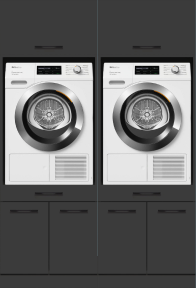
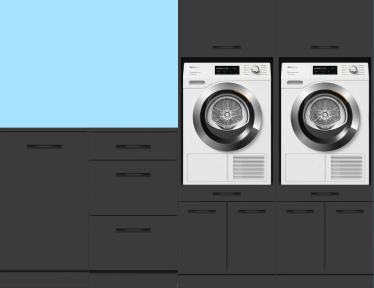
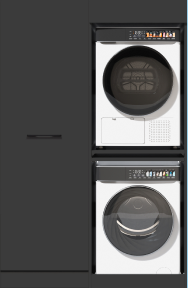
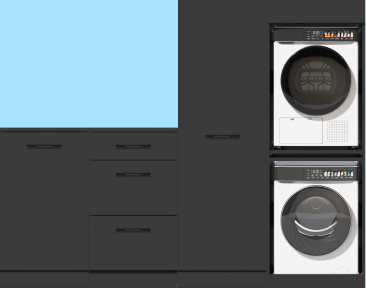
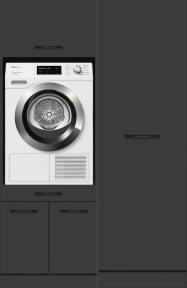
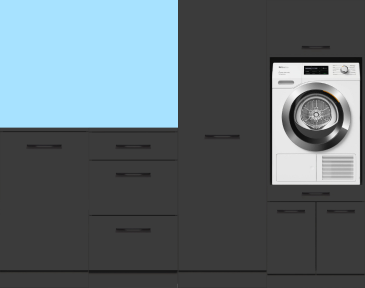
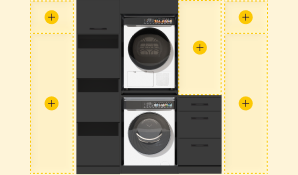

The right choice under your washing machine in a cabinet determines how quiet, safe, and leak-free your laundry area remains. Depending on your floor, cabinet, and location in the house, choose between a drip tray, anti-vibration solution, base plate, or riser. For a general explanation, see What to place under a washing machine. This article provides practical tools to make the best choice, including a comparison table, checklist, and answers to frequently asked questions. Wasdroom supplies washing machine cabinets that absorb vibrations and allow safe stacking or side-by-side placement, with plug-in mounting, TÜV certification, and up to 240 kg (Double) or 120 kg (Single and Stack) load capacity per cabinet.
The basics: stable, flat surface in the cabinet
Start with stability. The base plate or floor in the cabinet must be flat, stiff, and level. Machines usually stand best on hard floors like concrete or ceramic tiles. On resilient floors like wood, laminate, or vinyl, vibrations can increase faster and the cabinet may vibrate along. Carefully level the washing machine’s adjustable feet and check this with a full drum and during spinning. If you want to dive deeper into material choice, pay attention to stiffness, moisture resistance, and flatness of the surface.
If you use a washing machine cabinet, pay attention to load capacity and structural stiffness. Wasdroom cabinets are designed for heavy loads up to 240 kg (Double) or 120 kg (Single and Stack) and are anchored to the wall for extra safety and less resonance. Always place the machine so that cables and hoses are free and not pinched behind or under the machine.
Options under the washing machine in a cabinet - comparison
The comparison below helps you choose the right solution for your situation in a cabinet or niche.
| Option | Best before | Advantages | Points to consider | Combine with |
|---|---|---|---|---|
| Anti-vibration mat | Hard, flat floor or sturdy cabinet bottom | Dampens noise and vibrations, protects the surface underneath | Do not combine with loose caps; choose the size that fits exactly | Level adjustment, cabinet wall anchoring |
| Vibration caps | Machines that mainly vibrate on the legs | Targeted damping per leg, easy to install | Can be unstable on soft or uneven floors; do not place on a mat | Level adjustment |
| Drip tray | Floors, apartments, or when required by the homeowners' association/insurer | Signals leakage, catches first liters | Ensure drainage or water detector; check height in cabinet and door opening | Water detection sensor, shut-off valve |
| Base plate/support plate | Protects cabinet bottom, distributes load | Pressure distribution, prevents dents or damage | Choose moisture-resistant material, sufficiently rigid | Mat or pads, wall anchoring cabinet |
| Riser/base cabinet | Ergonomics and extra storage space | Working height, less bending, often pull-out shelf | Must be very stable and wall-attached for safety | Mat or base plate, wall anchoring |
For ergonomics and extra working height, Washing machine risers are a practical choice. Want to know what a base cabinet adds? Read the Base cabinet for washing machine: benefits.
When to choose a drip tray in a cabinet?
Choose a drip tray if you want to reduce the risk of water damage, for example on higher floors, in apartments, or when required by the homeowners' association, landlord, or insurer. In a closed cabinet, pay attention to height and access: the drip tray should not raise the machine so high that the door won’t close, and you want to be able to see or detect leaks. Read more about a drip tray under the washing machine in the cabinet.
If your cabinet has no drain for the drip tray, consider a water detection sensor with an acoustic alarm or a smart valve that automatically shuts off. Also, pay attention to ventilation: ensure ventilation openings in the cabinet remain clear and that a drip tray does not block airflow. Periodically check for condensation and moisture traces to catch problems early.
Reducing vibrations in a washing machine cabinet
If your washing machine vibrates in the cabinet, proceed step by step. Remove transport bolts from a new machine, carefully level the feet, and check that the drum can move freely. Ensure a secure connection of the cabinet to the wall according to the manual. A damping mat under the washing machine in the cabinet on a hard, flat surface reduces cabinet resonance. Use either a mat or pads, not both at the same time.
Reduce imbalance by distributing laundry evenly and not washing large items alone. In narrow niches, stacking with a suitable stacking kit or a stable cabinet solution is recommended. Wasdroom cabinets are designed to absorb vibrations and safely stack or place side by side, providing extra peace during spinning.
Checklist: how to safely place the washing machine in a cabinet
- Measure the niche, door swing, connections, and height with the chosen drip tray or mat.
- Check load capacity and anchor the cabinet to the wall.
- Level the machine with a filled drum at the highest spin speed.
- Choose the right underlay: mat, caps, drip tray, or base plate.
- Lay hoses and cables without tension and accessible.
- Attach a water detection sensor or use a tap with aquastop.
- Test for vibrations and shifting; adjust leveling feet if necessary.
- Keep ventilation openings free and check for moisture condensation.
FAQ
What should I put under the washing machine?
In a cabinet, choose stability and protection: on hard floors, an anti-vibration mat works well; on resilient floors, a base plate can distribute the pressure. On upper floors or if required, choose a drip tray with drainage or sensor.
What is best to place under a washing machine?
The best solution depends on your situation: mat for damping, drip tray against leaks, base plate to protect the cabinet floor. Don’t combine unnecessarily; keep it simple and effective, and always level the machine perfectly.
What to do about a vibrating washing machine?
Check transport bolts, level the feet, anchor the cabinet, use an anti-vibration mat on a flat surface, and distribute the laundry evenly. If the problem persists, reduce the spin speed or choose a cabinet solution with more rigidity.
What ends up under a washing machine?
Dust, lint, and sometimes moisture remain under the machine. With a base plate or drip tray, you keep the floor clean and visible. Clean periodically and check for moisture around hoses and connections.
Placing a washing machine in a cabinet with Wasdroom
If you want a neat and safe solution, the Single, Double, and Stack series from Wasdroom provide the answer for one appliance, side by side or stacked in narrow niches. These Washing Machine Cabinets feature a plug-in mounting system, are TÜV-certified, and support up to 240 kg (Double) or 120 kg (Single and Stack), with a 10-year factory warranty. This way, you combine a sleek look with stability and peace during washing.

