

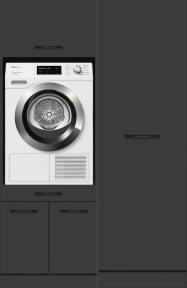
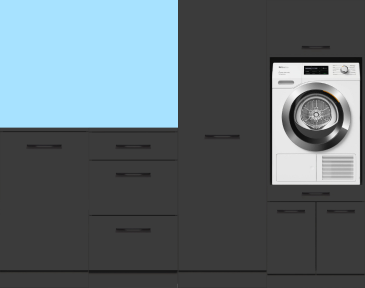
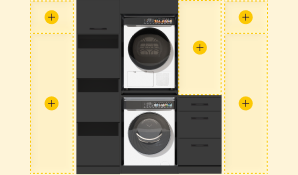

The correct height of your washing machine tap in a cabinet prevents stress on the hose, leaks, and inaccessible shut-off valves. Focus on accessibility above the appliance, a safe drain height, and neat routing of pipes behind the cabinet. Below you’ll find practical guidelines you can apply immediately, plus tips for situations with a pedestal or stacking setup. Always check your appliance’s manual. Also see our installation manuals for washing machine (cabinet): tap height & connections for step-by-step instructions.
Guidelines for the height of the washing machine tap
Position the washing machine tap so you can easily reach and close it with the door open. In practice, a height of 110 to 120 cm from the floor on which the machine stands works very well. If your washing machine is on a pedestal or in a stacking setup, add the height of the elevation. Also consider the distance to the top of the appliance: if you use an aerator tap, ideally place it at least 25 cm above the machine. If you don’t have an aerator, ensure there is a non-return valve to prevent backflow. Preferably choose an aerated tap with a built-in non-return valve for maximum safety.
Do not mount the tap directly behind the appliance where you cannot reach it, but in the side wall of the cabinet or in an accessible compartment. Let the hose’s swivel connection hang without tension and avoid sharp bends. Finally, ensure a firm attachment of the tap plate or wall plate so that turning the tap does not stress the pipe. Practical tips for ergonomics and accessibility can be found in Setting up the laundry room: optimal tap position in the cabinet.
Drain height and placement of the siphon in a washing machine cabinet
A properly set drain prevents siphoning and backflow. Aim the inlet of the standpipe at 60 to 90 cm above the floor where the machine stands. If you raise the machine, this range shifts upward proportionally. Preferably keep the vertical part of the drain pipe 50 to 60 cm long and secure the pipe firmly to prevent deformation during hot washes.
Place the siphon as low as possible to gain enough height for the standpipe, but make it accessible for maintenance. Avoid too tight bends, use a suitable ferrule or clamp fitting for the drain hose, and secure the hose so it cannot slip out of the standpipe. If your cabinet has little depth, choose a flat wall box or a shallow siphon solution that fits behind the appliance. For existing pipe heights or limited cabinet space, put together your own combination in the configurator.
Electricity and space for pipes
- Socket preferably 10 to 20 cm above the tap, not directly under a water point, and always grounded with a residual current device.
- Plan sufficient passage and slack space behind the cabinet for water, drain, and cables to prevent kinks.
- Work with neat pass-through holes and cable glands. For custom work, you can position pass-through points in advance or drill them yourself later.
Looking for a cabinet where tap and piping fit neatly? Check out our washing machine cabinets with space for tap connection for a suitable model.
Frequently Asked Questions
What if my washing machine is on a pedestal or drip tray?
Always measure from the effective floor on which the machine stands. Add the height of your pedestal or drip tray to the guideline measurement. A tap at 110 to 120 cm from this new zero line and a drain at 60 to 90 cm remains a safe choice. Is your tap higher due to a dryer setup? Then check the Stack series: cabinet solutions for higher tap positions.
Is there an official standard for the height of tap and drain?
There is no strict standard that applies to every situation. Manufacturers sometimes provide ranges. As practical guidelines, 110 to 120 cm for the tap and 60 to 90 cm for the drain work very reliably. Use an aerator or non-return valve and follow your appliance’s manual. For single setups with specific tap space next to the machine, you can look at the Single series: layout and tap space next to the machine.

