

With the right checklist, you can choose a washing machine-dryer cabinet that is safe, quiet, and practical. Pay attention to setup, dimensions, load capacity, ventilation, and connection points. This prevents vibrations, moisture problems, or a cabinet that just doesn’t fit. This guide helps you step by step in your purchase, so you can be sure your cabinet meets all requirements and your appliances perform optimally. Want to quickly find the right direction? Start with the Washing Machine Cabinet Buying Guide.
1. Choose your setup
The setup determines the required space, ergonomics, and stability. Make a choice in advance:
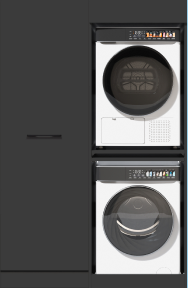
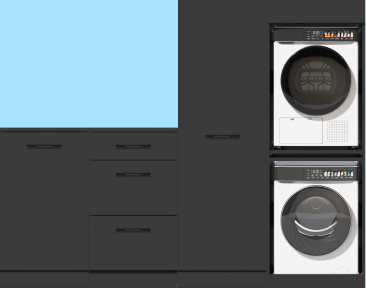
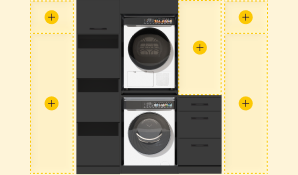
- Stacked - Saves floor space and works well at height. Pay attention to total height, load capacity per level, and mandatory use of a stacking kit or cabinet fixation.
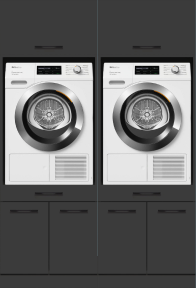
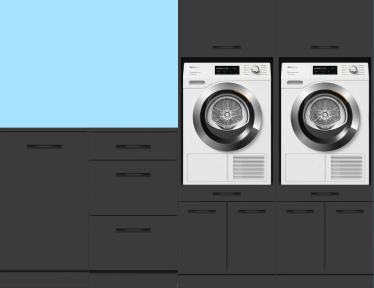
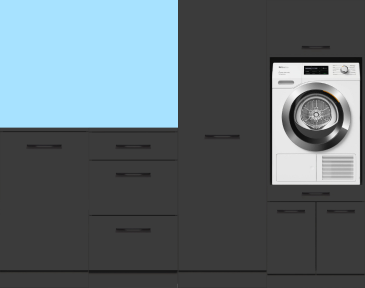
- Side by side - Low center of gravity and very stable. Convenient if you want a worktop and extra storage above. Allow enough width and door clearance.
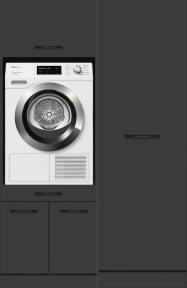
- Single appliance in cabinet - Ideal for starters or limited connections. Provide expandable space and ventilation if you want to add a dryer later.
Unsure whether to stack or place side by side? Weigh ergonomics, stability, and available space before making a final choice.
2. Safety, Ventilation, and Load Capacity
Load Capacity and Anchoring
A washing machine often weighs 60-80 kg empty and more during spinning due to dynamic forces. Choose a cabinet with reinforced shelves, a sturdy frame, and mounting points. Anchor the cabinet to the wall with suitable plugs and screws. Always use a stacking kit or brand-specific safety device if stacking appliances. Check that the floor is level and load-bearing, and level the cabinet.
Ventilation and Heat Dissipation
Good ventilation prevents condensation and overheating. Provide air intake and exhaust through vents or openings at the top and bottom of the cabinet. Heat pump and condenser dryers require extra airflow at the front and top. Leave space behind the appliances for hoses and cables, and avoid kinks in air circulation paths. Avoid fully sealed fronts without ventilation grilles. See also ventilation for a washing machine cabinet for guidelines and safety advice.
Vibrations and Stability
Minimize vibrations by leveling the machine and using anti-vibration mats or feet. Secure appliances against shifting with fixing pieces inside the cabinet. Check that the cabinet is rigidly constructed with a back panel and cross braces. Test at 1200-1400 RPM and adjust if the machine walks or resonates. Avoid floating shelves without support under heavy machines.
3. Measuring and sizing
Accurate measuring prevents surprises during delivery and installation. Measure width, depth, and height at multiple points, note plinths, pipes, outlets, and door swing direction. Account for casing and hose space behind the appliance and ventilation clearance around it. Use the Standard washing machine dimensions for cabinets as a guide for minimum internal dimensions and clearance. Also, ensure sufficient depth to allow space for hoses, plug, and door swing.
| Component | Recommended size | Why |
|---|---|---|
| Side space per appliance | 5-10 mm per side | Sliding in without scraping and maintaining air circulation |
| Rear space | 50-80 mm | Space for plug, water hose, drain hose, and vibration margin |
| Niche height stacked | Min. 195-205 cm | Depending on appliance height and ventilation above |
| Countertop height side by side | 90-95 cm | Ergonomic working and sufficient hose space under the countertop |
| Plinth/base | 5-10 cm high, 4-6 cm deep | Door swing, air intake, and water barrier |
| Door swing and walking space | 60-80 cm clearance in front of the cabinet | Fully open doors and pull out baskets |
4. Connection points: water, drainage, and electricity
- Water - A tap with aquastop near the machine, easily accessible for maintenance. Preferably not placed directly behind the appliance but in an accessible compartment.
- Drainage - Drain point at 60-100 cm height, without sharp bends. Secure the hose to the standpipe with a clamp and use a siphon to prevent odors.
- Electricity - Grounded outlet on a dedicated circuit recommended, especially when using washer and dryer simultaneously. Avoid extension cords and power strips.
- Accessibility - Provide a service hatch or removable panel so you can quickly reach taps, siphon, and plugs.
Want to be sure your connections comply? Check the requirements for electricity and water in a washing machine cabinet and include them in your checklist.
5. Cabinet material and finish
A washing machine cabinet must withstand moisture, weight, and movement. Choose moisture-resistant panel material with high-quality edge finishing to prevent swelling. Use sturdy hinges and drawer slides with high load capacity. A solid or water-resistant countertop is recommended for side-by-side setups. Finish cable passages neatly with cable grommets and rubber edges, and use adjustable feet or a stable plinth to level perfectly.
Unsure between a built-in cabinet or enclosure? Read Built-in vs enclosure: differences to determine which option best suits your situation.
6. Handy extras and accessories
- Stacking kit - Mandatory when stacking for safety and stability, often with pull-out shelf.
- Pull-out shelf or worktop - For laundry baskets, folding, or dosing detergent.
- Anti-vibration mat - Dampens noise and prevents sliding.
- Storage compartments and drawers - For detergents, laundry nets, and maintenance kit.
- Ventilation grilles - Top and bottom in the cabinet for airflow.
- Drip tray - Extra protection against water damage.
7. Quick purchase checklist
- Layout chosen: stacked, side by side, or single
- Space measured including baseboard, rear space, and door swing
- Cabinet load capacity and wall anchoring checked
- Sufficient ventilation openings provided
- Water, drainage, and electricity accessible and safely positioned
- Anti-vibration and leveling accounted for
- Moisture-resistant material, edges well finished
- Necessary accessories added: stacking kit, vents, drip tray
- Planned for the future: space for upgrade or second appliance
Frequently Asked Questions
What requirements should a washing machine cabinet meet?
A washing machine cabinet must have sufficient load capacity, be firmly anchored, provide ventilation openings, and allow space for cables and hoses. Moisture-resistant material and a level setup are essential.
Do you need a spacer for washer and dryer?
Yes, when stacking, a stacking kit or brand-compatible spacer is mandatory. It prevents sliding and falling, often provides a pull-out shelf, and ensures safe force transfer to the cabinet.
Does a 60 cm washing machine fit in a 60 cm cabinet?
Usually yes, but allow 5-10 mm clearance per side and 50-80 mm rear space for hoses and plug. Check the actual width of your appliance, including protruding parts.
What should you consider when purchasing a washing machine for a cabinet?
Look at depth including door, vibration level, location of water inlet and outlet, and energy consumption. Lower noise levels and good balancing systems are pleasant in a cabinet setup.
Which month is best to buy a washer-dryer cabinet?
Promotions often occur around spring, summer, and holidays. More important is that you have the correct dimensions and layout clear, so you can order a suitable cabinet as soon as there is a deal.
Want to see what's possible right away? Check out the built-in cabinets for washer and dryer.
Ready to choose? With the checklist above, you can quickly configure a suitable washer-dryer cabinet. If you have questions about dimensions or load capacity, feel free to contact Wasdroom.
Leave a comment
This site is protected by hCaptcha and the hCaptcha Privacy Policy and Terms of Service apply.