

A washing machine cabinet in the bathroom saves space, conceals pipes, and makes your laundry area calm and practical. In this guide, you’ll learn exactly what to watch for—from NEN 1010 zones and ventilation to load capacity, water protection, and a brief step-by-step plan—so you can install safely and confidently. Want a quick overview of do’s & don’ts? Check out the Washing Machine Cabinet in the Bathroom: Key Points.
Rules and zones in the bathroom according to NEN 1010
Electrical safety comes first. Bathrooms are divided into zones around wet areas, with stricter requirements the closer you get to the shower or bath. Place washing machines, dryers, and outlets outside wet zones and ensure a 30 mA residual current device on a separate circuit. Preferably have electrical work done or checked by a certified installer. Want exact guidelines and legal frameworks? Read Safely Installing a Washing Machine Cabinet in the Bathroom (Rules and Tips).
Guideline: avoid placing in the direct splash and spray zone around the shower or bath. Limit risks with splash-proof components where needed, choose properly grounded outlets, and keep connections accessible. If you do use an outlet near the shower, ask for advice on IP protection—usually at least IPX4 is standard in splash areas. Also consider proper cable management, equipotential bonding, and avoid extension cords in wet rooms. More details on connection points and standards can be found in Requirements for Electricity and Water in a Washing Machine Cabinet.
Safe stacking and concealment: cabinet or spacer
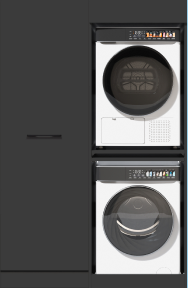
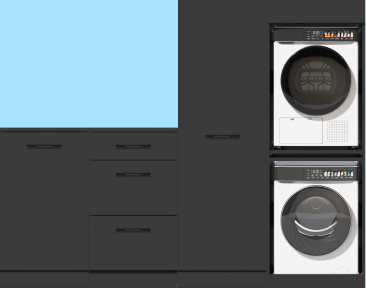
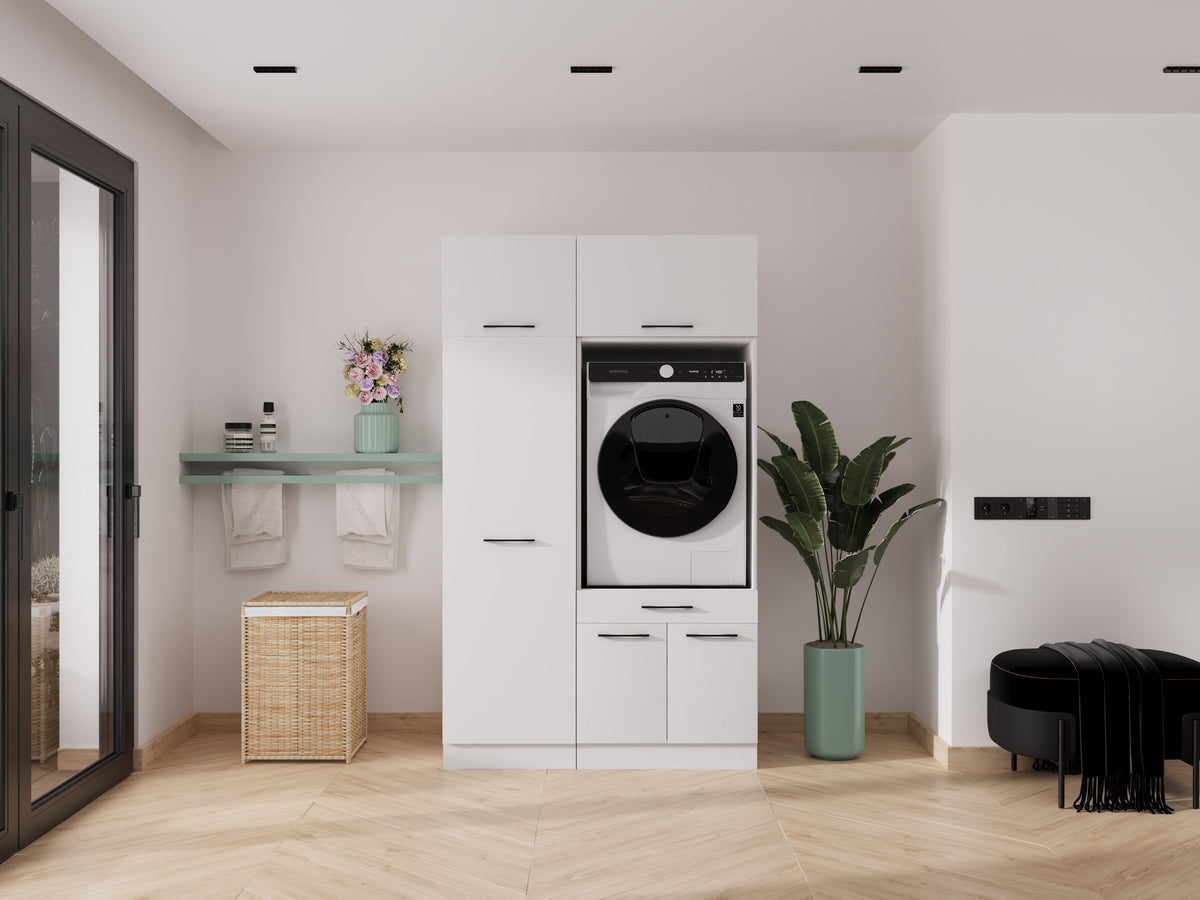
Stacking saves floor space but requires a sturdy, stable construction. A washing machine cabinet distributes weight better than a loose spacer, offers wall anchoring, and keeps appliances neatly out of sight. Ensure enough free space around for air circulation, a flat floor, and level adjustment. Also consider door opening—avoid handles or panels hitting each other.
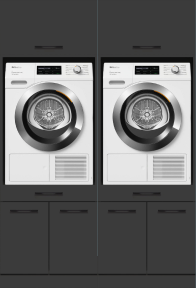
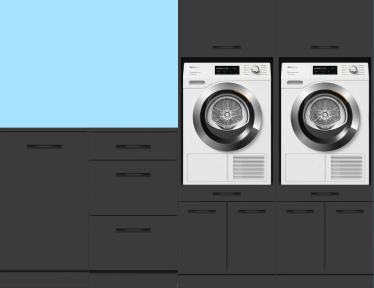
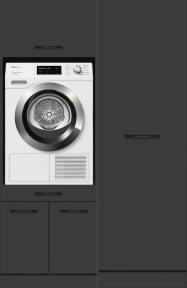
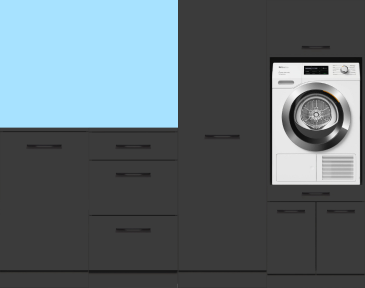
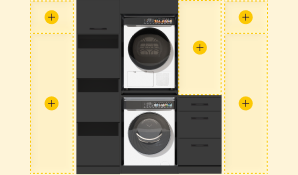
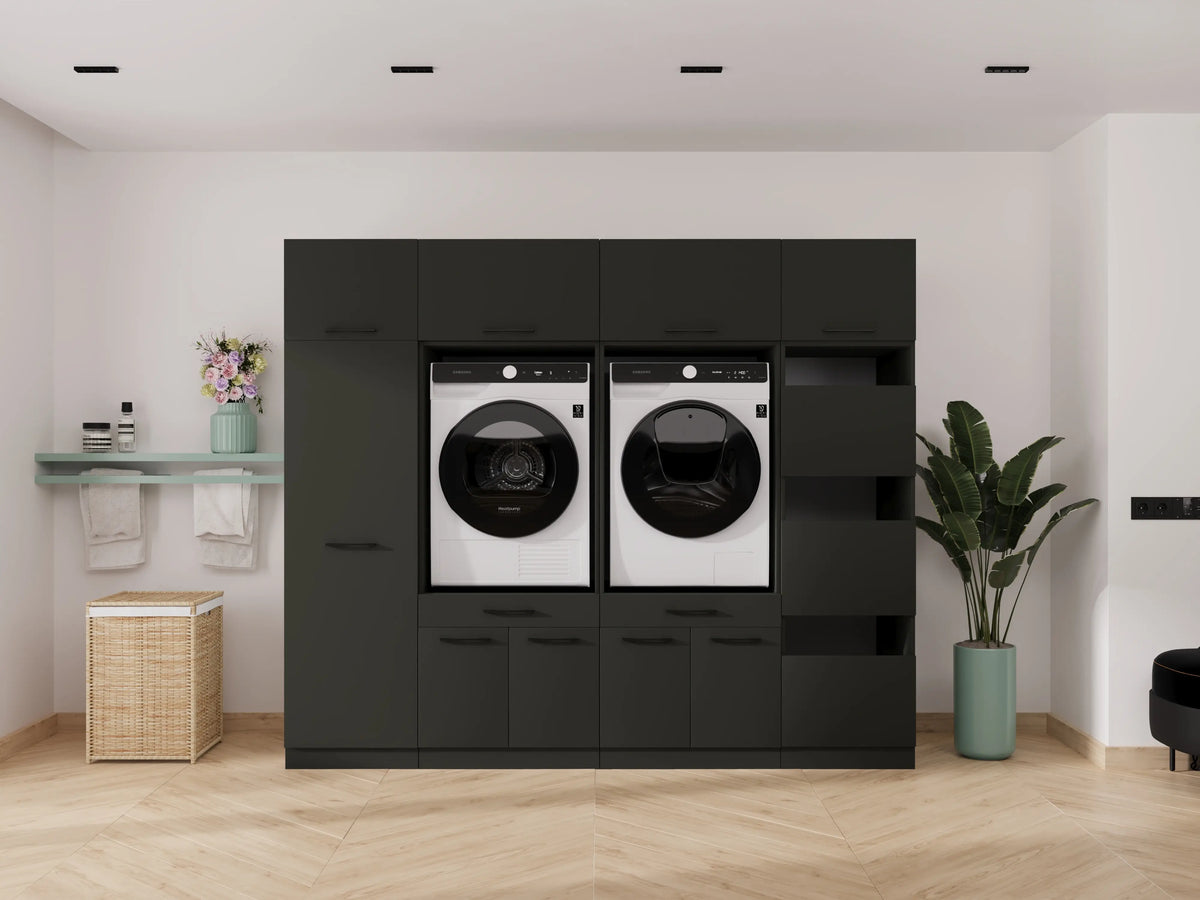
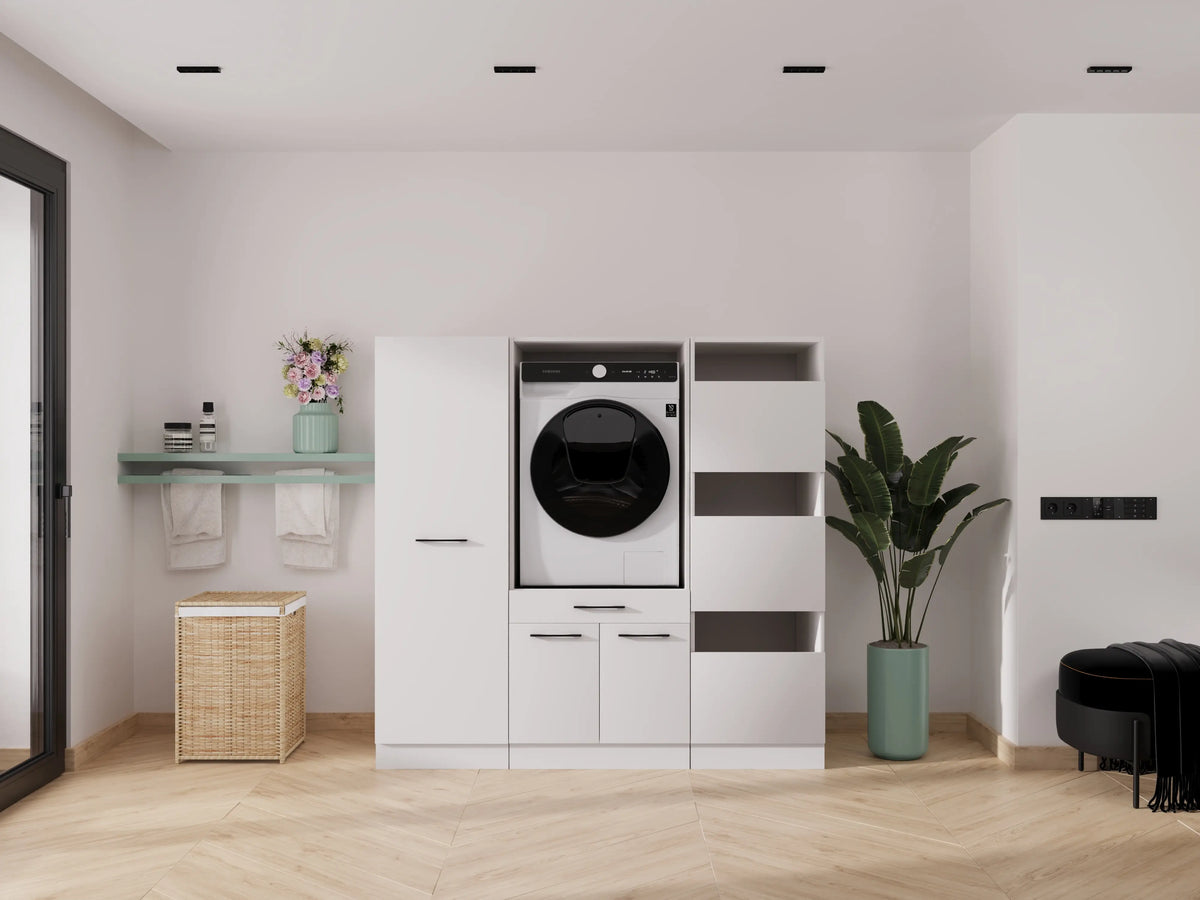
At Wasdroom, you choose a solution that fits your bathroom and appliances. The Stapel Series is ideal if you want to stack your washer and dryer. Prefer a low working height and extra countertop space side by side? Then the Dubbel Series fits. If you only want to conceal one appliance in a niche, look at the compact Enkel Series. All models have a wear-resistant and moisture-resistant melamine-coated surface and come with clear instructions and a plug-in system for assembly. Want to learn more or personalize directly? Start in the online configurator.
Vibrations, load capacity, and stability
A washing machine can generate strong forces during spinning. Therefore, use a cabinet with sufficient load capacity and anchor it to the wall with the supplied fasteners. Level the adjustable feet of both cabinet and machine and place the machine as far forward under the countertop as possible for maximum stability. Vibration-damping feet or mats help reduce resonance but do not fix a poor subfloor—check that the floor is sufficiently stiff and flat.
Ventilation and moisture resistance
Good ventilation prevents condensation, mold, and odors. Leave a few centimeters of free space at the back and sides, keep vents and air channels clear, and ensure bathroom ventilation runs long enough after showering. Wasdroom’s melamine coating is wear-resistant and moisture-resistant but not waterproof—wipe off splashes immediately and do not let a wet floor remain flooded for long. Practical tips can be found in Ventilation for a Washing Machine Cabinet.
Mounting, floor load, and water protection
Mount the cabinet according to the manual, use the correct plugs for your wall type, and check floor load: a washing machine with water can weigh over 80 kg—plus cabinet and dryer. Stop installation if in doubt and have the floor assessed. Limit water risks with a drip tray where possible, an aquastop hose, and solid connections to water and drainage. Place taps, siphon, and outlet so you can reach them for maintenance or to shut off the water supply. Avoid kinks in hoses and cords and prevent water contact with electrical components.
Ergonomics and storage space
A smart layout saves time and is easier on your back. For side-by-side setups, choose a countertop height around counter level for comfortable sorting and folding. When stacking, a pull-out shelf between appliances helps as a temporary shelf when loading and unloading. Store detergents, laundry bags, and maintenance products at grab height behind closed doors—child-safe and tidy. Conceal pipes and cables neatly and provide edges or grommets on openings so nothing rubs. With Wasdroom’s configurator, you can customize the layout to your routines—such as extra shelves for towels or a compartment for laundry baskets. For inspiration, see the Wasdroom Dubbel 1.0 or the compact Wasdroom Enkel 7.0.
Step-by-step plan: install in 7 steps
Prefer a checklist? Use the Checklist: Installing a Washing Machine Cabinet as a guide.
Step 1 – Measure and choose
Measure niche width, depth, and height; location of tap, drain, and outlet. Choose the cabinet—Enkel, Stapel, or Dubbel—that fits your space and appliances.
Step 2 – Determine location and connections
Decide on the cabinet position outside wet zones. Ensure a separate circuit with residual current device and grounded outlet at accessible height.
Step 3 – Prepare floor and wall
Check flatness, load capacity, and wall type. Remove loose parts, mark drill points according to the manual, and prepare protection.
Step 4 – Assemble cabinet
Assemble panels using the plug-in system, check squareness, and roughly level the cabinet.
Step 5 – Anchor and adjust
Attach the cabinet to the wall with appropriate plugs and screws. Precisely level all feet.
Step 6 – Place and connect appliances
Slide in the washing machine first, then the dryer. Connect water, drain, and power—without kinks or tension on hoses and cords. Also check the Correct height of the drain in a washing machine cabinet.
Step 7 – Test and finish
Run a short program, check for vibrations and leaks, and neatly finish cables and openings.
Frequently Asked Questions
What are the rules for placing a washing machine in the bathroom?
Keep machines and outlets outside wet zones, use a separate circuit with 30 mA residual current device, and ensure proper grounding. Preferably have electrical work done or checked by a certified installer and choose components with appropriate IP protection where needed.
Can you put any cabinet in the bathroom?
Not every cabinet is suitable. Choose a construction with sufficient load capacity, moisture-resistant finish, and possibility for wall anchoring. Wasdroom cabinets have a melamine coating, clear mounting, and are designed for bathroom use.
How can I hide my washing machine in the bathroom?
Use an enclosure with doors or panels and neatly route cables and hoses through grommets. With the Wasdroom configurator, you can customize layout, colors, and fronts for a calm, uniform look.
How do I connect a washing machine in the bathroom?
Place the machine level, connect the water supply and drain hose without kinks, and plug into a grounded outlet on a separate circuit with residual current device. Check for leaks and test with a short program.
Do you need a pull switch?
A pull switch is not mandatory for a washing machine but can be practical to quickly cut power. Place switches and outlets outside wet zones and have the installation inspected by a professional.
Ready to put together your own combination and install it safely? Design your solution in the Wasdroom configurator or browse all Washing Machine Cabinets for the Bathroom.

Leave a comment
This site is protected by hCaptcha and the hCaptcha Privacy Policy and Terms of Service apply.