

A washing machine that vibrates inside a cabinet can bang, resonate, and even “walk.” This causes disturbance at home and can sometimes be heard by neighbors. Good news: with the right combination of flooring, decoupling, and a suitable washing machine cabinet, you can drastically reduce vibrations and noise. In this guide, you’ll read exactly what you can do now, what to watch for during installation, and when a washing machine cabinet makes a difference. If you specifically want to prevent the machine from moving during spinning, read how to prevent your washing machine from walking.
Why does your washing machine vibrate inside the cabinet?
Vibrations are caused by the rotation of the drum. At high speeds, a small imbalance in the load can develop into significant forces. Inside a cabinet, these forces are often amplified because panels and shelves act as a resonance box. Common causes include an unstable or hollow floor, not being leveled properly, insufficient mass under the appliance, or a rigid connection to the surroundings that transmits vibrations to the floor and walls.
Installation and maintenance errors also contribute. Think of transport bolts still in the machine, loose adjustable feet, worn shock absorbers or bearings, and flimsy stacking solutions without solid coupling. Finally, usage plays a role: a single heavy item like a blanket can quickly cause imbalance. By limiting the source of vibration and decoupling your machine from the floor and cabinet, you eliminate most of the noise. Read a full diagnosis with solutions in Washing machine vibrates in cabinet: causes and solutions.
Ensure a stable base
The base determines how much vibration is transmitted. Heavier and stiffer is usually better, provided you also decouple with damping material. Always place your washing machine level, lock the adjustable feet, and avoid direct contact with walls or cabinet panels. If you’re unsure about the base, opt for extra mass (for example, a sturdy board) and decouple with rubber.
| Base | Effect on vibrations | Targeted solution |
|---|---|---|
| Concrete floor | Stable, low transmission | Level the machine and use rubber anti-vibration mats or feet |
| Wooden floor or laminate | Springs and resonates more easily | Add extra mass with a sturdy board and decouple with rubber |
| Tiled floor with unevenness | Contact points increase vibration and noise | Level tiles or use a stable board with dampers |
| Floating floor | Increased transmission to walls | Decouple with dampers and avoid rigid connections |
Tip: preferably choose compact rubber dampers under the adjustable feet or a quality anti-vibration mat. Avoid slippery, soft foam products that can sink or cause the machine to slide. After installation, test a spin cycle with a medium-weight, evenly distributed load at average speed. Unsure if a mat is useful? See whether a damping mat is needed for a washing machine in a cabinet.
Vibration dampers and the right washing machine cabinet
Decoupling is key: you don’t want to transmit the machine’s vibration to the floor or cabinet. You achieve this with rubber anti-vibration feet or a sturdy, high-density mat. Allow a few millimeters of clearance all around so panels don’t touch the housing anywhere. Keep at least 3 to 5 cm distance from the back wall for hoses and cables without pinching.
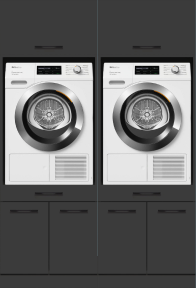
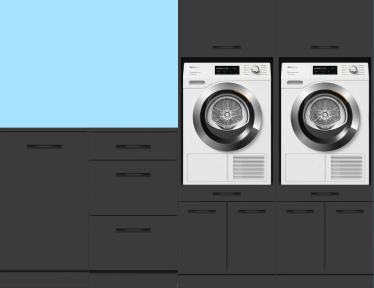
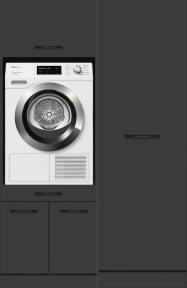
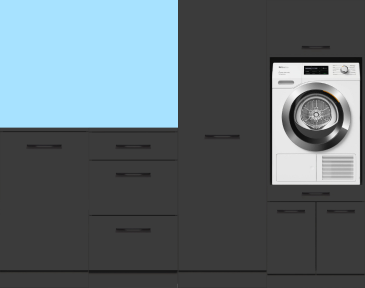
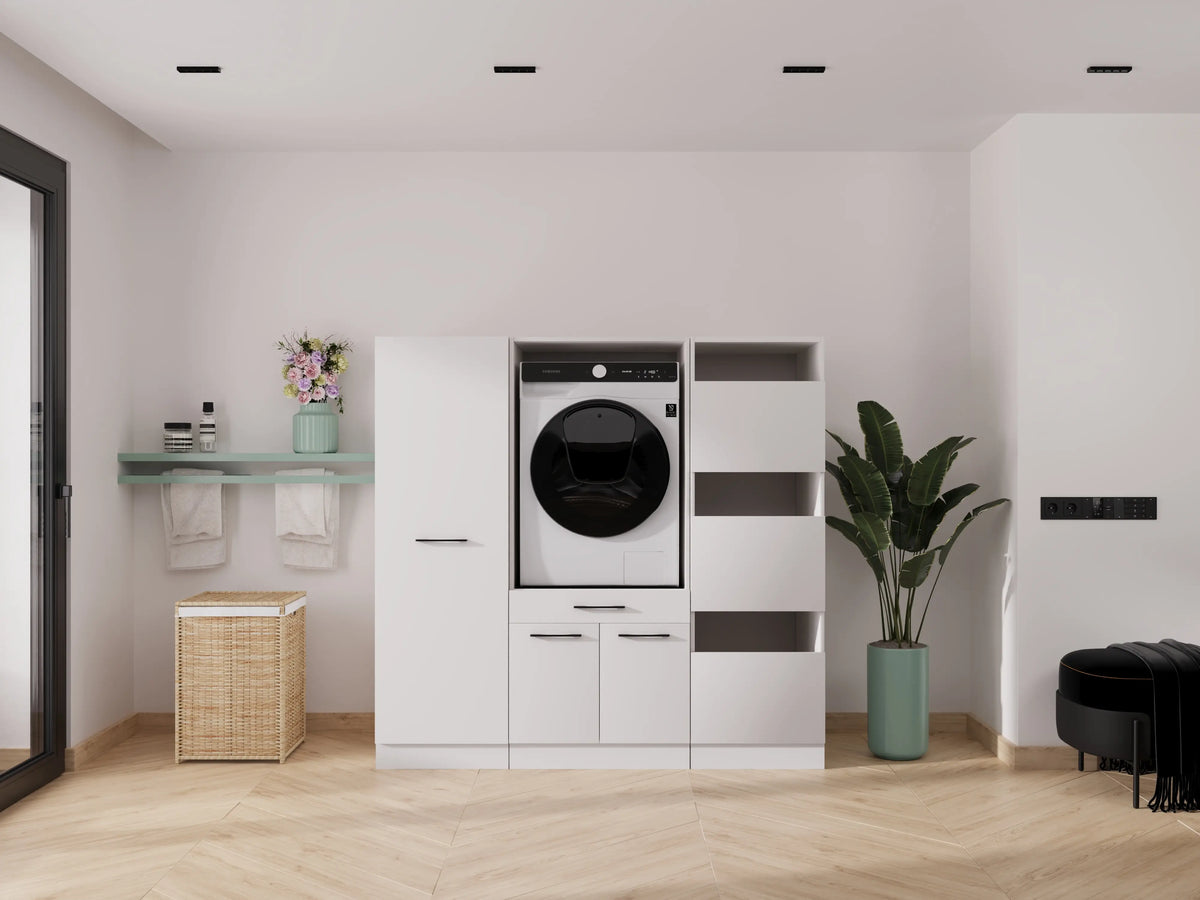
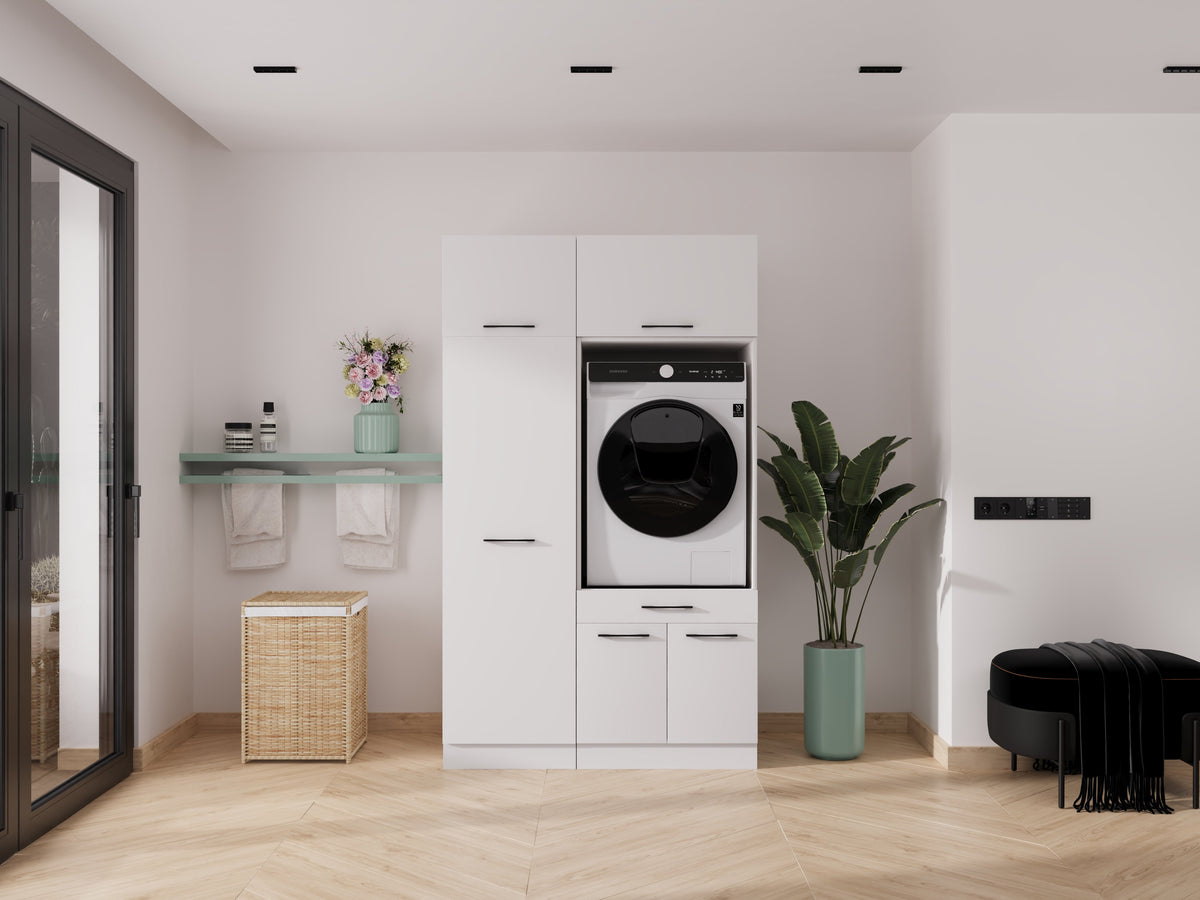
The choice of washing machine cabinet makes a big difference. Cabinets made of strong chipboard with melamine coating have slight flexibility and absorb part of the vibration without sacrificing stability. Wasdroom cabinets are designed with this principle in mind and offer extra mass, stiffness, and decoupling where it matters. Anti-vibration feet under the cabinet increase stability and reduce transmission to the floor. The high load capacity up to 240 kg (Double) or 120 kg (Single and Stack) and moisture-resistant finish ensure the construction remains sturdy and durable, even with intensive use. Soft-close hinges reduce clicking noise when closing and contribute to a quieter laundry space. For more practical materials and tips, see soundproofing for a washing machine in a cabinet.
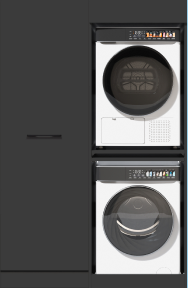
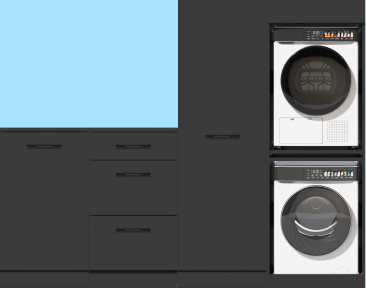
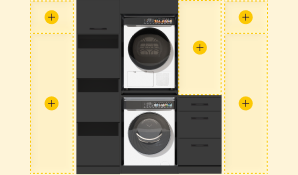
Always combine decoupling under the machine with a solid cabinet and correct installation. When stacking a dryer, use a suitable stacking kit for washing machine and dryer so the appliances don’t vibrate loosely on each other.
Installing in a cabinet – step-by-step plan
Here’s how to install your machine with minimal vibration inside the cabinet:
- Remove transport bolts, check drum play, and level the machine.
- Place rubber anti-vibration feet or a quality damping mat under the machine.
- Allow 3 to 5 cm clearance at the back and a few millimeters on the sides of the machine.
- Lock the adjustable feet and prevent direct contact with cabinet panels.
- Use a stacking kit for the dryer and secure it according to the manual.
- Keep hoses and cables free from kinks and not tight against panels.
- Test at medium-high spin speed and adjust load or leveling if needed.
Wasdroom provides clear assembly instructions, 10-year warranty, and personal support. Models like the Wasdroom Double 5.0 and Double 6.0 combine load capacity and damping with ergonomic working height for a quiet and practical laundry space. Find detailed explanations in leveling and stabilizing your washing machine.
Frequently Asked Questions
Why does my washing machine vibrate inside the cabinet?
Usually due to a combination of imbalance in the drum, a springy or wooden floor that vibrates along, and cabinet panels acting as a resonance box. Installation factors also play a role, such as not being level, loose adjustable feet, or transport bolts still present. In some cases, worn shock absorbers or bearings cause extra vibration and noise.
What to do about washing machine vibration?
Start with the basics: load evenly, level the machine, and lock the adjustable feet. Decouple the machine with rubber anti-vibration feet or a solid damping mat. Leave a few millimeters of clearance around so panels don’t touch the housing. Check the base and add mass and stiffness where needed. If banging continues, have the shock absorbers and bearings checked.
Can a drip tray reduce washing machine vibrations?
No, a drip tray usually does not dampen vibrations and can even resonate or cause the machine to slide. Use a drip tray only for water collection and combine it with rubber dampers under the adjustable feet or a high-quality damping mat with sufficient friction. Always choose decoupling material that does not sink.
How do you know if a washing machine’s shock absorbers are broken?
Typical signs are loud banging during spinning, a lot of vertical drum movement, and a metallic thudding sound. Push the drum down by hand and release it: if it bounces back slowly and uncontrollably, damping may be insufficient. If you see oil or wear marks, have the machine inspected.

Leave a comment
This site is protected by hCaptcha and the hCaptcha Privacy Policy and Terms of Service apply.