


A cabinet wall for your laundry room is a smart way to bring together washing machine, dryer, and storage space in one calm and practical setup. You make better use of the available height and width, neatly hide hoses and items, and make washing more comfortable because appliances are often at a pleasant working height. Especially in a laundry room, utility room, or mudroom, a well-built cabinet wall immediately provides more overview.
Are you looking for an explanation of what exactly a cabinet wall for the laundry room is, how to choose the right setup, and what to watch out for regarding dimensions, ventilation, and stability? Below you’ll find step-by-step what’s important, so you can better determine which solution fits your space and household.
What is a cabinet wall for the laundry room?
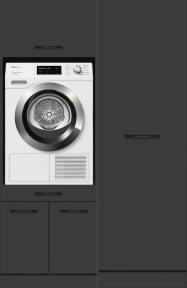
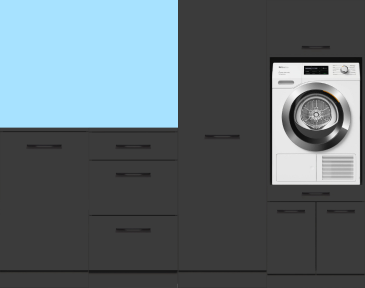
A cabinet wall for the laundry room is a combination of cabinet modules where your washing machine and dryer have a fixed place, supplemented with extra storage space for detergent, towels, linens, baskets, and cleaning supplies. Instead of separate appliances and loose cabinets, you make the space one logical whole.
The big difference with a standard setup is that a cabinet wall is not just about storage but also about ease of use. You can place appliances side by side or stack them, use the space above and beside the machines, and tailor the layout to your laundry routine. This often makes even a small laundry room feel calmer and more practical right away.
With modular systems, like the washing machine cabinets from Wasdroom, you assemble such a setup from different series and modules. Think of Single, Double, and Stack, depending on how many appliances you have and how much storage space you need.
Why choose a cabinet wall in your laundry or utility room?
The main reason is saving space, but the benefits go beyond that. A good cabinet wall helps you keep the laundry room tidier, safer, and more pleasant to use.
- You make better use of height and width than with separate appliances.
- You create extra storage space around the washing machine and dryer.
- You neatly hide cables, drainage, and supply lines.
- You can place appliances at a more ergonomic height.
- You keep floor space free, making cleaning easier.
- You give the space a calmer and more finished appearance.
For many households, the combination of functionality and calmness is decisive. A small laundry room quickly looks cluttered when everything is loose. With a cabinet wall, each function gets a fixed place. This means you have to search less and the space stays tidier more easily. For layout tips and inspiration, read Setting up a laundry room with a washing machine cabinet.
Which setup suits your laundry room?
The right setup depends on the available space, the location of water and drainage, and whether you mainly want to save floor space or create a spacious work surface.
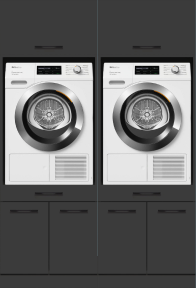
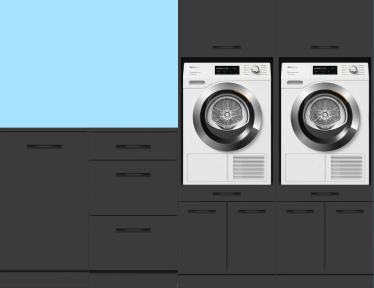
Washing machine and dryer side by side
This setup is ideal if you have enough width. You get a clear layout and can often add a logical countertop or extra storage above or next to the appliances. Side by side is also practical if you use both appliances frequently and want everything on one level.
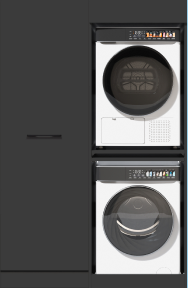
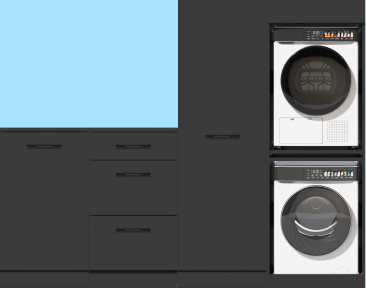
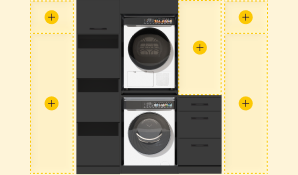
Washing machine and dryer stacked
If you have less floor space, stacking is often the smartest choice. You use the height of the space better and keep room for extra cabinets or walking space. This is especially attractive in a compact laundry closet or narrow utility room.
Assemble a complete cabinet wall
If you want more than just a place for your appliances, a complete cabinet wall is interesting. You combine the appliance cabinet with extra modules above, below, left, or right. This creates space for detergent, towels, ironing supplies, or storage. If you want to work with this practically, read the step-by-step guide Assembling a cabinet wall for the laundry room. This type of solution is ideal if you want to turn your laundry room into a truly organized workspace.
Modular construction with Single, Double, or Stacked
At Wasdroom, you can build a cabinet wall for the laundry room from different series. A Single setup is suitable for one appliance or a more compact niche. A Double setup works well when you want to place the washing machine and dryer side by side. A Stacked setup is especially useful if you want to make use of height. By combining modules, you can tailor the cabinet wall to both small and larger laundry rooms.
How do you design a custom laundry room?
A custom laundry room doesn’t start with color or finish, but with daily use. First think about how you use the space. Do you wash a lot in a row, do you also fold laundry there, do you want to store cleaning products out of sight, and do you need extra space for baskets or linens? Answering these questions first helps you make the right layout choices faster.
Then consider how many appliances you want to place, whether you want a countertop, and how much closed storage is useful. In a small laundry room, a compact stacked setup often works well, while a wider space benefits from appliances side by side with extra cabinet space around them.
Practical ideas for a small laundry room include:
- place the dryer above the washing machine;
- make use of height with upper cabinets;
- opt for closed storage for a tidier look;
- store baskets, detergent, and accessories directly next to the appliances;
- Allow enough free space to open doors properly.
Measuring and planning: what to watch out for beforehand
Before choosing a cabinet wall, measure the space carefully. This prevents doors from not opening properly, connections being in the way, or insufficient ventilation.
- Measure the total height, width, and depth of the niche or wall.
- Check where water, drainage, outlets, and any air vents are located. See also Electricity and outlets for the cabinet wall.
- Take into account baseboards, protruding pipes, and uneven walls.
- Check the required space around the washing machine in a cabinet and note the dimensions of your washing machine and dryer including protruding parts.
- Leave space behind the appliances for hoses, cables, and ventilation.
- Check the door swing direction and the clearance in front of it.
In many cases, the depth of an appliance is around 60 cm, but you need extra space for connections and ventilation. As a result, in practice, you often end up with a deeper niche or cabinet setup than the appliance size alone suggests. Always check the specifications of your own machines. If you want to neatly hide pipes and drainage in the cabinet wall, see Hiding pipes and drainage in a washing machine cabinet.
Stability, safety, and load capacity
For a cabinet wall for washing machine and dryer, stability is not a detail but a requirement. Appliances cause vibrations, especially during spinning. Therefore, the cabinet construction must be sturdy, correctly placed, and suitable for the weight of the appliances.
Important points include level placement, good connection between modules, and secure mounting where necessary. The setup must also provide enough space for proper ventilation and follow the appliance manufacturer's instructions.
Wasdroom highlights features such as TÜV certification, moisture-resistant finish, space for ventilation, anti-vibration feet, and for certain models, a load capacity of up to 240 kg (Double) or 120 kg (Single and Stack) per cabinet. Always pay attention to the specifications of the exact model you choose, as load capacity can vary per cabinet.
Why wall mounting is often wise
For a tall or wider cabinet wall, wall mounting is often recommended for extra stability. Especially if you combine multiple modules or place appliances higher up, this helps make the setup sturdier and safer. Use suitable mounting materials for your type of wall.
How do you prevent vibrations and instability in the setup?
A stable floor, correct alignment, and proper placement of the washing machine are essential. If a machine is not level, you often notice it immediately during spinning. Anti-vibration solutions can also help reduce movement and noise. A solid cabinet construction supports this extra.
Materials and finishes in a humid laundry room
A laundry room requires materials suitable for daily use, changing humidity, and regular cleaning. Therefore, it’s smart to choose a finish that resists moisture and splashes and is easy to keep clean.
At Wasdroom, for example, melamine-coated board material is used. Such a finish helps make the cabinet suitable for use in a laundry room, as long as the cabinet is also correctly placed and used. Also consider neat edges, sturdy fittings, and a finish that withstands frequent opening and closing.
Visually, the finish also makes a difference. Calm fronts and a continuous line ensure that a wall of cabinets looks less bulky. In smaller spaces, light colors often create a spacious feel, while darker shades can give a sleeker and more modern effect.
Which cabinet fits a washing machine?
The right cabinet for a washing machine is one that not only fits in size but is also made for the weight, vibrations, and ventilation that come with a washing machine. A regular storage cabinet is usually not suitable for this. You need a solution that considers load capacity, connections, and safe placement.
So pay attention to these points:
- sufficient width, height, and depth for your appliance;
- space behind the machine for hoses and plugs;
- ventilation options according to regulations;
- a construction that can support the machine's weight;
- a stable setup that helps absorb vibrations.
If you also want to fit a dryer, choose a double or stacked setup depending on the space. This way, you turn a separate appliance spot into a full-fledged washing machine cabinet wall for your laundry room. To see all options right away, check out Washing machine cabinet wall: all models.
Handy storage layout
A wall of cabinets works best when the storage space matches what you actually use. So, think not only about the number of cabinets but also their placement. Items you need often should be within easy reach. Less frequently used items can be stored higher or lower.
- Upper cabinets for stock, towels, and linens.
- Side cabinets for cleaning supplies, ironing items, or accessories.
- Drawers or pull-out shelves for small items and daily use.
- Space under or next to the appliances for baskets or supplies.
This not only makes the space feel tidier but also helps you work faster. Especially in a family home, a fixed layout makes a big difference in daily convenience.
Frequently asked questions about a wall of cabinets for the laundry room
Can I assemble a wall of cabinets for the laundry room myself?
Yes, that is actually one of the advantages of a modular system. You start with the space for your washing machine and dryer and then add extra modules for storage. This way, you tailor the setup to your space, your appliances, and your way of doing laundry.
Is stacking or placing side by side better?
That depends on your space and preference. Stacking saves floor space and is handy in a small laundry room. Placing appliances side by side gives more overview and makes it easier to add extra work or storage space.
Do the walls of the laundry room need to be tiled?
No, that’s not always necessary. However, it is important that materials in the space are suitable for moisture and easy to clean. Tiles can be practical, but a good laundry room can also function well with other appropriate wall finishes.
How much depth do I need for a washing machine cabinet?
Just looking at the appliance depth is not enough. You also need space for plugs, hoses, and ventilation. As a result, you usually need more depth in practice than the bare measurement of the washing machine or dryer. Always check the product specifications of your appliances and the cabinet.
Does a wall of cabinets affect ventilation?
Yes, that’s why ventilation must always be included in the design. Appliances need space to function safely and properly. Always follow the manufacturer’s instructions and choose a setup that takes this into account.
Can a wall of cabinets also fit in a small laundry room?
Yes, that’s exactly where a good wall of cabinets can really pay off. By stacking smartly and using the height of the space, you can often turn a small laundry room into a much more practical place. A compact modular setup is usually the best choice then.
This is how you make the right choice
A good wall of cabinets for your laundry room starts with three questions: how much space do you have, how do you want to place your appliances, and what items do you want to store neatly? Once you have that clear, you can choose more specifically between a compact stacked setup, a double setup, or a complete wall of cabinets with extra modules.
If you want to design a custom laundry room, it pays to measure carefully first and then consider the layout of your washing machine cabinet as the next step, tailored to your situation. With the Wasdroom configurator, you can explore different options for your laundry area or room and see which layout fits your available space and usage.

