


Want to save space and safely place your dryer on top of your washing machine without hassle or risk of vibrations and slipping? With the right order, a suitable spacer, or a stable washing machine cabinet, you can create a safe, ergonomic laundry setup in an hour. Below you’ll find practical steps, plus a smart alternative with a washing machine cabinet from Wasdroom.
Safe stacking starts with the right order
Always place the washing machine at the bottom and the dryer on top. The washing machine is heavier, spins, and causes most vibrations. It is most stable at the bottom, while the dryer is lighter and does not pump out water during use. Placing the dryer at the bottom increases the chance of instability and damage. Also, leave at least a few centimeters of space at the back for hoses and ventilation. Read more about the Required ventilation space behind appliances in a cabinet.
Level the washing machine
A level washing machine is the foundation for stable stacking. Check with a spirit level both left to right and front to back. Adjust the feet by turning them clockwise or counterclockwise at each corner and lock the nuts so they don’t loosen. Test with a short program to ensure the machine doesn’t wobble or walk. The flatter the machine stands, the less vibration is transmitted to the spacer or dryer.
Install spacer or stacking kit
Use a stacking kit that fits the dimensions of your washing machine and dryer. See also Stacking solutions for washing machine and dryer for suitable kits. Prepare the top of the washing machine clean and grease-free. Place the base of the stacking kit according to the markings and use anti-slip strips if provided. Attach the kit with the supplied clamps or screw mechanisms and check that all guides and raised edges click correctly. Make sure cables, water drainage, and ventilation openings remain free. A well-mounted kit ensures the dryer’s feet fit into cups or recesses and prevents shifting during use.
Place and secure the dryer
Always lift the dryer with two people. Keep your back straight, lift from your legs, and carefully set the dryer down so the feet land in the recesses of the stacking kit. If it’s not immediately positioned correctly, lift it a few centimeters and adjust. Then thread the supplied tension strap through the guides of the kit and pull the strap tight. The dryer must not be able to move forward or sideways, but the casing should not dent. Leave two to three centimeters of space at the back for the plug, drain hose, and airflow, and check that the door can fully open without obstruction. Connect the dryer, run an empty test program, and listen for resonances or ticking sounds. If necessary, tighten the strap slightly or adjust the washing machine’s front feet for optimal stability.
Alternative with extra stability and storage: a washing machine cabinet
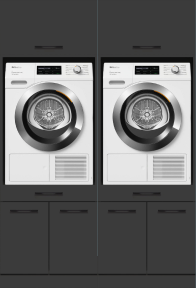
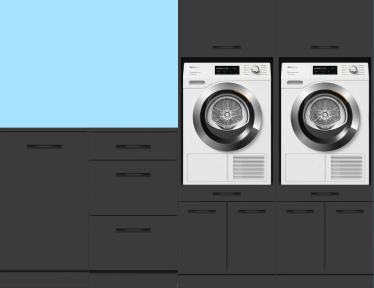
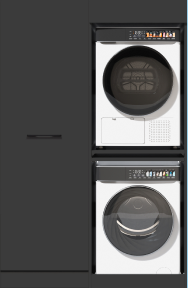
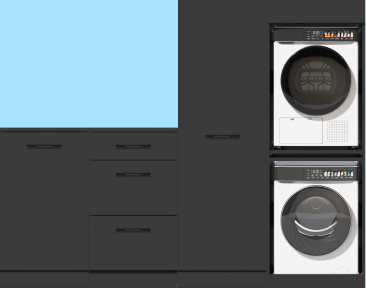
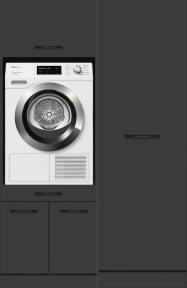
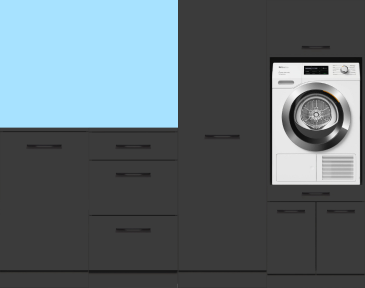
If you want maximum stability, noise reduction, and extra storage space, choose a washing machine cabinet. Check out the Built-in cabinets for washing machine and dryer for neat, stacked duo setups. Wasdroom’s cabinets are made from strong fiberboard with melamine coating, TÜV-certified, and designed to absorb vibrations. With a load capacity of up to 240 kg (Double) or 120 kg (Single and Stack), they are suitable for heavy machines and intensive use. Soft-close doors and drawers keep your laundry area quiet and tidy, while the plug-and-play assembly system makes self-installation easy. Thanks to the open back, you can easily route hoses and cables and maintain sufficient ventilation around your appliances. Models like Wasdroom Double 1.0 and Double 2.0 safely stack washing machine and dryer and offer practical storage compartments for detergents and accessories. You benefit from a 10-year factory warranty and 30 days to reconsider. Tip for choosing: measure the width, depth, and height of your laundry space, check the door swing direction, and plan an ergonomic working height where your dryer door opens comfortably. Planning to build in? Follow the Step-by-step plan: placing a washing machine in a cabinet.
Washer-dryer combo: when to use and when not
A washer-dryer combo can be handy if you have very little space and mostly do smaller loads. You don’t need a stacking kit or washing machine cabinet and save floor space. However, note that the nominal dry load is often lower than the wash load, the program duration is longer, and energy consumption per drying cycle is usually higher. If you want to wash quickly, often do larger loads, or want the quietest solution, a separate washing machine with a dryer on top or a stable washing machine cabinet is usually the better choice.
Frequently asked questions
How can I safely place a washing machine and dryer on top of each other?
Level the washing machine perfectly, install a suitable stacking kit as a spacer, and place the dryer with two people so the feet fit into the recesses. Secure the dryer with the tension strap, leave space at the back for cables and ventilation, and run a test program. Check for slipping and resonance and adjust if necessary.
How do I install a spacer between my washing machine and dryer?
Clean the top of the washing machine, position the spacer according to the markings, and lock the attachment points. Apply anti-slip material if provided. Check that the cups align exactly under the dryer feet and that cables and hoses remain free. Then place the dryer and tighten the supplied strap until the set cannot move.
Can I place a dryer on a washing machine without a spacer?
This is not recommended. Without a stacking kit or washing machine cabinet, the risk of slipping, damage, and unsafe situations increases. Moreover, some manufacturers require an approved spacer. For maximum stability and extra storage, choose a TÜV-certified washing machine cabinet like those from Wasdroom. If you choose a cabinet, check all points with the Checklist for installing a washing machine cabinet.
What are the disadvantages of a washer-dryer combo?
The nominal dry weight is often lower than the wash weight, programs take longer, and energy consumption per drying cycle is usually higher. Also, you cannot wash and dry simultaneously. If you often have large loads or want the quietest, fastest workflow, a separate set with a stacking kit or washing machine cabinet is more practical.
Leave a comment
This site is protected by hCaptcha and the hCaptcha Privacy Policy and Terms of Service apply.