

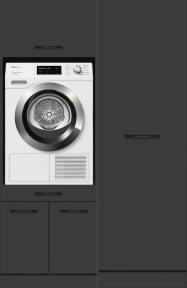
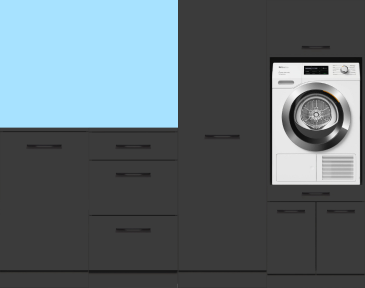
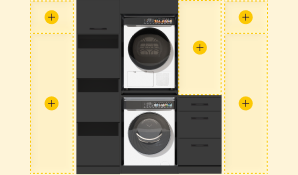
A stable washing machine cabinet prevents vibrations, noise, and damage. At Wasdroom, all cabinets stand on the floor and are anchored to the wall for extra safety. With the right preparation and mounting, your setup will be perfectly level, pipes remain accessible, and your washing machine runs quieter. In this guide, you’ll learn exactly what to watch for and how to securely fasten the cabinet to the wall.
Start your project with the Washing Machine Cabinet Installation Checklist so you don’t forget any steps or materials.
Preparation: check water, drain, electricity, and wall
Begin with the technical checks so you won’t have to improvise later.
- Water connection: ensure the tap is accessible next to or behind the cabinet. Install a shut-off valve and check for leaks.
- Drain: maintain a height of about 60-90 cm for the drain hose. Secure the hose in the siphon or pipe so it doesn’t come loose.
- Electricity: use a grounded wall socket on a separate circuit per appliance. Avoid extension cords and power strips behind the cabinet. See Washing Machine Cabinet Socket: Safety for positioning and safety.
- Space behind the cabinet: leave 3-5 cm clearance for hoses and cables without kinks. Test if the cabinet can still be pulled forward for maintenance. Guidelines for distance and airflow can be found in Ventilation for a Washing Machine Cabinet.
- Floor: place a drip tray where needed and make the floor level and clean. Adjustable feet compensate for unevenness.
- Wall type: determine if your wall is solid (concrete, brick) or hollow (plaster, metal stud). Choose plugs and screws that match the wall material.
- Safety: use a stud finder to check for hidden pipes and cables before drilling.
- Ventilation: prevent heat buildup and moisture by ensuring sufficient airflow around the equipment and keeping vents clear.
Prepare connection points for water, drain, and electricity smartly. Practical tips are available in How to Connect a Washing Machine in a Cabinet.
Step-by-step: securely anchoring your washing machine cabinet to the wall
Preferably use the supplied wall brackets and mounting materials from your Wasdroom cabinet. Work with two people for lifting and positioning.
- Place and level: set the cabinet in place with enough distance from pipes. Adjust all feet individually so the cabinet is level widthwise and depthwise. Check with a long spirit level or laser line.
- Position brackets: mark mounting points high on the cabinet or top rail. Attach at least two points, more for stacked setups. Consider joints and tile edges to avoid cracking.
- Pre-drill and insert plugs: drill with the correct diameter and depth. For concrete or brick, typically use nylon or chemical anchors; for plaster walls, choose hollow wall anchors and preferably anchor into studs.
- Anchor cabinet: screw the wall brackets tight and evenly until the cabinet sits firmly against the wall without deforming it. Use washers so screw heads don’t damage the brackets.
- Place machine and fine-tune: carefully slide the washing machine into the cabinet, adjust the machine feet so the drum is horizontal and the cabinet doesn’t vibrate along. Check clearance for hoses and cables.
- Check and follow-up: turn on the water, check connections for leaks, plug directly into the socket, and run a short program. Listen for resonance and adjust feet or brackets if needed.
Reducing vibrations and noise
Want to minimize resonance and reduce wall load? See the tips in Preventing Vibrations and Noise in a Washing Machine Cabinet.
- Adjustable feet: level both cabinet and machine tightly. Small deviations increase vibrations. See also Setting Washing Machine Stable and Level.
- Dampers: use rubber vibration dampers under the machine or a non-slip mat that doesn’t obstruct water drainage.
- Weight distribution: place the washing machine below and dryer above in stacked setups for a low center of gravity.
- Free space: prevent side walls or pipes from touching the cabinet or machine.
Choosing the right Wasdroom washing machine cabinet
A suitable cabinet makes mounting easier and safer. Wasdroom offers three main series for the Netherlands and Belgium:
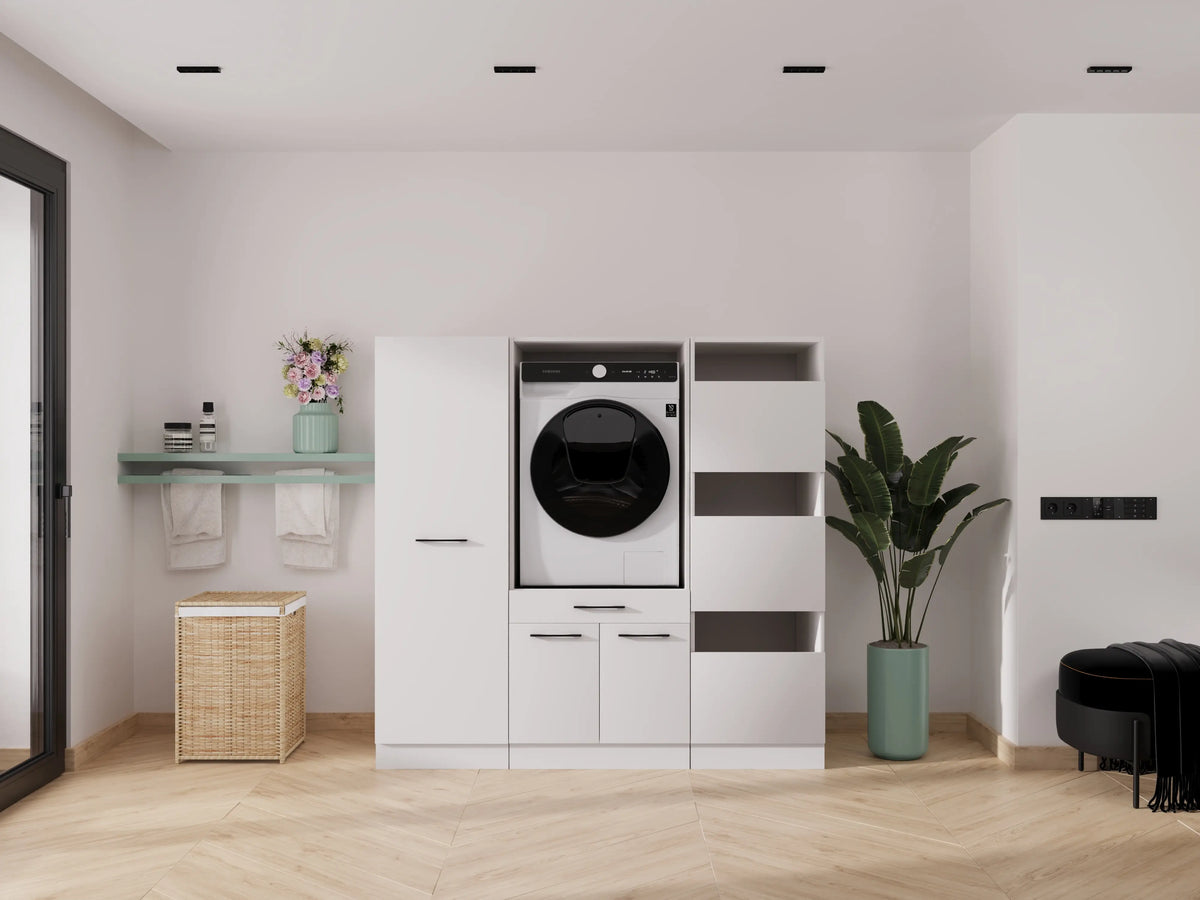
- Single: compact enclosure for one appliance with storage space. Ideal for small laundry rooms.
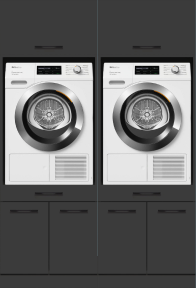
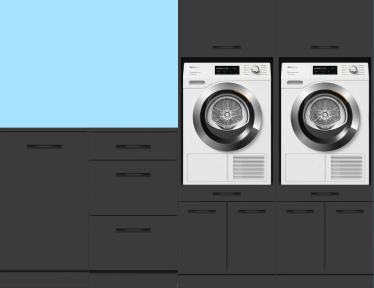
- Double: two appliances side by side, plenty of countertop space, and optimal access to connections.
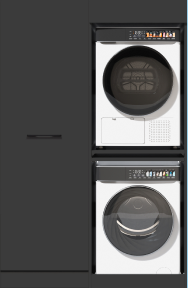
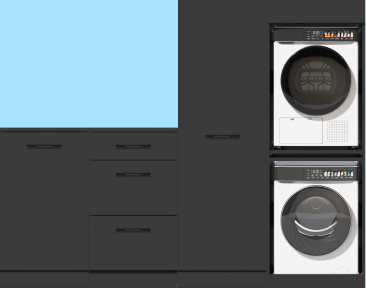
- Stacked: washing machine below, dryer above for maximum space saving and stable weight distribution.
All cabinets stand solidly on adjustable feet, are TÜV-certified, support up to 240 kg (Double) or 120 kg (Single and Stack) per cabinet, and have a durable, moisture-resistant melamine finish. Thanks to the plug-in assembly system, setup is simple, after which you anchor the cabinet to the wall for extra stability. You configure your setup with the online configurator and receive 10 years warranty and support.
Frequently Asked Questions
Do I need to anchor my washing machine cabinet to the wall?
Yes, anchoring prevents tipping and dampens vibrations. At Wasdroom, the cabinet stands on the floor and you additionally secure it to the wall with brackets at multiple points, tailored to the wall material.
Can you mount a washing machine on the wall?
You do not hang the machine itself on the wall. You place the washing machine in or under the cabinet and anchor the cabinet to the wall. This keeps everything stable without loading the wall with the machine’s weight.
How do I fasten a cabinet to the wall?
Use wall brackets, drill with the correct diameter, insert suitable plugs, and screw into solid material or studs. Work level and check after fastening that the cabinet is free of play.
What do you put under a washing machine?
Use rubber vibration dampers or a non-slip mat and, where needed, a drip tray. Ensure the surface is level and adjust the machine feet precisely for minimal vibration.
Get started with your laundry space
Ready to safely place your washing machine cabinet and secure it to the wall? Choose the right Wasdroom model, follow the steps above, and enjoy a quiet, neat setup. Need help with the best choice or installation? Our support team is happy to assist you.
Leave a comment
This site is protected by hCaptcha and the hCaptcha Privacy Policy and Terms of Service apply.