

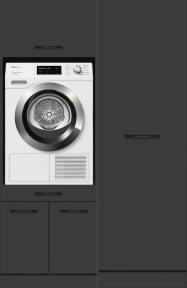

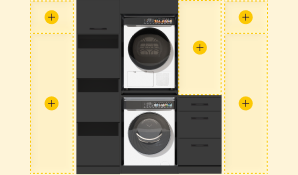

Lifting a washing machine into a cabinet requires a plan. The weight, limited space, and vibrations mean you need to work carefully. In this guide, you’ll find a Step-by-step plan for placing a washing machine in a cabinet, requirements for the washing machine cabinet, and common mistakes to avoid. This way, you can safely and quietly place your washing machine in a neat, well-ventilated cabinet.
What is needed to place a washing machine in a cabinet?
Safe placement starts with the right cabinet and enough space for ventilation, cables, and hoses. Always check the load capacity and stability of the structure.
| Component | Guideline |
|---|---|
| Cabinet load capacity | At least the machine’s weight plus a 30 percent safety margin |
| Ventilation | Inlet and outlet openings or vents, air circulation around |
| Free space at the back | 5-10 cm for hoses, plug, and airflow |
| Free space at the sides | 1-2 cm per side to prevent resonance and scratches |
| Vibrations | Sturdy base, possibly dampers, machine leveled |
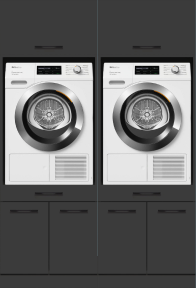
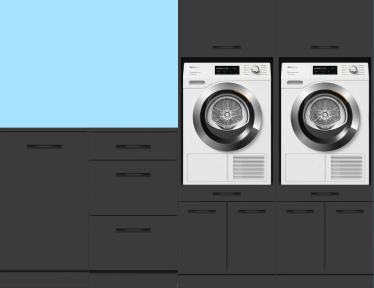
Washing machine cabinets from Wasdroom are made of sturdy, moisture-resistant melamine chipboard and are designed to absorb vibrations. Depending on the model, they support up to 240 kg (Double) or 120 kg (Single and Stack) and are easy to assemble.
Preparation: measuring, reinforcing, and planning the route
Measure the width, depth, and height of the cabinet and appliance, including plug and hoses. Unsure about clearance? Allow extra margin for plug and hoses. Reinforce the base or pedestal where needed and ensure wall anchoring if the manufacturer requires it. Plan a clear, flat route to the cabinet and place protectors for floors and doorways. Disconnect water and power, drain residual water from the filter and fill hose, and empty the machine completely. Follow the manual for any drum locking during transport. Preferably lift with two people or use a furniture dolly or lifting straps. Go through a short checklist beforehand for preparation and safety.
Step-by-step plan: safely lifting your washing machine into the cabinet
- Check the cabinet. Is the base level, is the floor flat, and is there sufficient ventilation in the cabinet door or back panel?
- Prepare the machine. Remove loose parts, protect edges with a cloth, and position it close to the cabinet with the back facing the connections.
- Lift with two people. Bend your knees, keep your back straight, and lift from the sides. Use short, controlled movements and keep the machine upright. Also see Ergonomic lifting in the laundry room.
- Place on the base or riser. Slide the machine in carefully. Do not let any weight rest on hoses or cables. Want to place the machine elevated? Read how in Washing machine on a riser in a cabinet: how to do it.
- Level the machine. Turn the adjustable feet until the machine stands stable. Check frontally and sideways with a level. See also Setting a washing machine stable in a cabinet.
- Connect. Attach inlet and outlet hoses without kinks, place a drip tray where possible, and plug into a grounded outlet with earth contact.
- Test a short program. Keep the cabinet door open or ajar during the first test to ensure airflow and listen for resonance. Apply vibration dampers if needed.
If you use a pedestal or riser, choose a model explicitly suitable for heavy appliances and capable of supporting the total weight. Unsure if a riser is useful for you? Read: Is a washing machine riser useful? Also check our Washing machine risers for ergonomic working height.
Setup and height: side-by-side, stacking, or on a riser
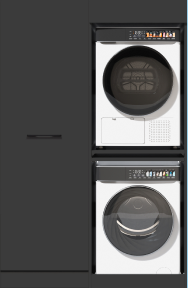
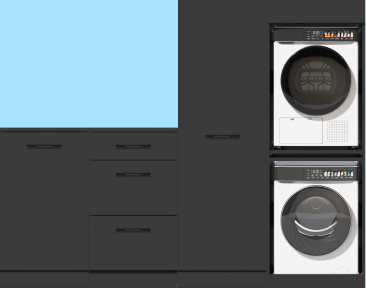
Side-by-side is the quietest and most accessible in low cabinets. Stacking saves space: place the dryer on the washing machine with an official spacer kit from the manufacturer. On a riser, you work more ergonomically and can gain drawer storage space, provided the pedestal is designed for the weight and vibrations. Ideally, position the top of the drum at hip height for comfortable loading and unloading.
Common mistakes to avoid
- Too little ventilation causing moisture and heat buildup.
- A sagging shelf or unstable pedestal without wall anchoring.
- Not leveling the machine, resulting in extra vibrations and noise complaints.
- Tight bends in inlet or outlet hoses that restrict flow.
- Always fully closing the cabinet door during operation without active ventilation.
- Lifting alone or jerking movements, which can cause damage or injury.
Frequently asked questions
How can I lift my washing machine into the cabinet?
Lift with two people, via a clear route, keeping your back straight and knees bent. Place the machine step by step, keep it upright, slide it calmly into the cabinet, and level it. Use lifting straps or a furniture dolly for short moves where possible.
Can you put a washing machine in a cabinet?
Yes, provided the cabinet offers sufficient load capacity, ventilation, and space for hoses and plug. Allow 5-10 cm of rear space and 1-2 cm per side. A specially designed washing machine cabinet, like those from Wasdroom, prevents resonance and sagging.
Can you lift a washing machine?
Preferably lift a washing machine with two people and never alone. Use proper technique, tools, and protect your floor. If in doubt about safety, seek professional help.
Can you fit a washing machine in a cabinet?
Check dimensions including door tolerance, hinges, and ventilation grilles. If the machine fits tightly, choose a cabinet with damping materials and a sturdy base or pedestal that safely supports the total weight.
Want a cabinet specially designed for washing machines and dryers, with high load capacity and smart ventilation? Check out the washing machine cabinets at wasdroom.com.

