

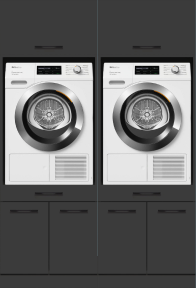
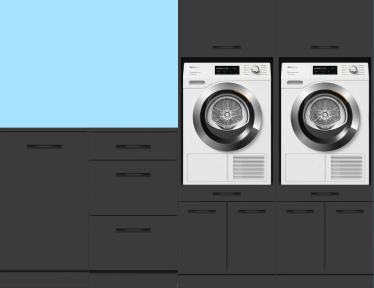
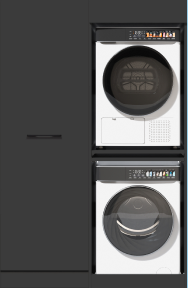
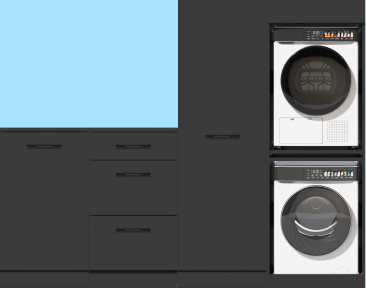

The correct height of the washing machine drain in a cabinet prevents siphoning, malfunctions, and water damage. Below you’ll find practical guidelines you can apply directly to a washing machine cabinet or laundry tower, plus clear tips for installation, hose routing, and preventing siphon issues.
What does the manufacturer say about drain height?
Manufacturers usually specify a range for the washing machine drain height: often between about 60 and 100 cm. This specification is decisive and can be found in your appliance’s manual. Deviations increase the risk of backflow or pump overload. Practical steps and examples can be found in our installation manuals for washing machine cabinets.
If you place the washing machine in a cabinet or on a riser, add the height of the riser to the usual range. This keeps the relative height between the pump outlet and the drain consistent. If raising the machine isn’t possible, you can guide the drain hose high with a bracket and have it exit through a standpipe at the correct height. More about smart positioning of connection points can be found in Setting up your laundry room: tips for connections.
Determining the correct height in a washing machine cabinet
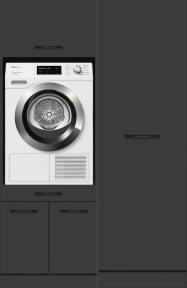
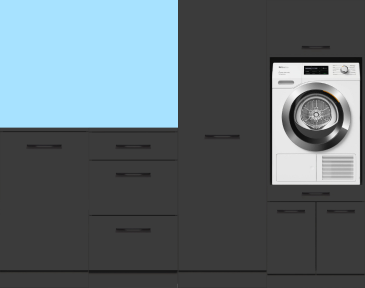
When placed in a cabinet, the machine is often 40 to 60 cm higher than on the floor. Include this elevation when determining the drain height and aim for the middle of the allowed range for universal compatibility. Unsure which cabinet solution best facilitates this? Compare models in the overview Washing machine cabinets (overview) based on clearance for pipes and siphons.
Minimum height
Use approximately 60 cm plus the cabinet elevation as a practical minimum, measured from the finished floor to the center of the standpipe or siphon. Lower increases the chance of siphoning, where the machine empties itself spontaneously during the cycle.
Maximum height
Do not exceed the factory limit. As a rule of thumb, this is about 100 cm plus the cabinet elevation. Too high means more back pressure on the pump, possible error codes, and poorer drainage. If you are close to the upper limit, choose a short, kink-free route for the drain hose.
Preventing siphoning and siphon problems
Siphoning occurs if the highest point of the drain hose is too low relative to the drum. Gravity can cause water to keep flowing out of the washing machine, causing the appliance to keep taking in water and pumping without the level stabilizing. This can lead to longer wash times, poor wash results, and unnecessary wear.
Here’s how to prevent siphoning and related siphon problems:
- Ensure the drain height falls within the manufacturer’s range, plus the cabinet elevation. In practice, aim for the middle of that range.
- Route the drain hose upward in a fixed U-bend at the correct height and secure it with a hose holder. Avoid kinks and sharp bends.
- Use a standpipe with a siphon and sufficient ventilation. Do not clamp the hose airtight in the standpipe so air can enter.
- Preferably choose a standpipe diameter of at least 40 mm for sufficient flow.
- Keep the hose as short as possible and avoid extensions unless necessary. If you must extend, use a suitable coupling and check for leaks.
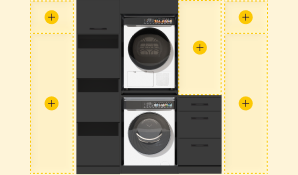
Signs of siphoning include gurgling sounds in the drain, a machine that keeps taking in water or empties too early, and odors caused by the siphon being emptied. First check the height and routing of the drain hose. If you place the washing machine and dryer stacked, see the Stack series: washing machine + dryer stacked for points to consider regarding siphon and hose routing.
Best practices and common mistakes during installation
- Do: Measure from the finished floor to the center of the standpipe or siphon and include the cabinet elevation.
- Do: Choose the middle of the allowed range for drain height. This works best when replacing appliances.
- Do: Use a standpipe with siphon and preferably ventilation, and leave 5 cm of installation space behind the cabinet for hoses and cables.
- Do: Secure the drain hose with a bracket at height and check for leaks and vibrations after installation.
- Avoid: A drain lower than the minimum height. This is the number one cause of siphoning.
- Avoid: Clamping the hose airtight in the standpipe. Without air supply, the siphon can empty and cause odors.
- Avoid: Excessive hose length or sharp bends. This hinders flow and strains the pump.
- Avoid: Installing the washing machine cabinet too tightly. You need service and vibration space.
If you only place one appliance in the cabinet and want to optimally position the openings, check out the Single series: cabinet for one appliance.
Frequently asked questions
How do I calculate the drain height in a cabinet?
Take the manufacturer’s range for drain height (e.g., 60 to 100 cm) and add the cabinet elevation. Aim for the middle of this new range for the most trouble-free drainage.
Can I extend the drain hose in a washing machine cabinet?
Yes, provided you use a suitable coupling, keep the total hose length limited, and fix the hose in a fixed U-bend at the correct height. Always check for leaks and good flow.
A well-chosen washing machine or laundry tower cabinet helps combine ergonomic working height and the correct drain height. With Wasdroom, you put together your own combination that fits your space and installation requirements; see our tips for combining separate cabinets.

