

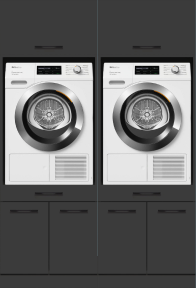
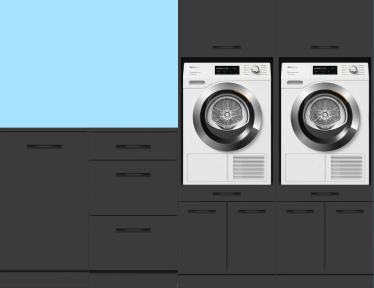
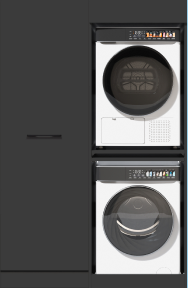
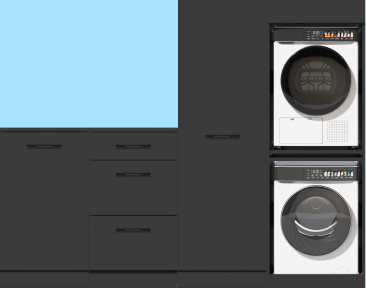
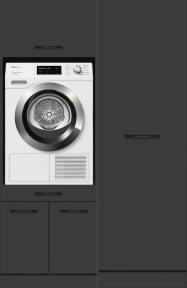
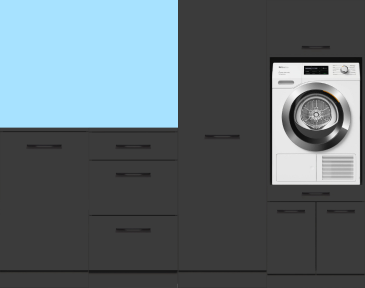
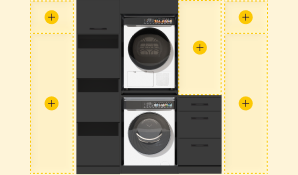

A smart washing machine cabinet keeps your laundry area neat and quiet, but only if the ventilation is right. With proper air circulation, you prevent heat buildup, moisture, and unnecessary noise. In this guide, you’ll find specific distances, ventilation points, and vibration tips to make your washing machine cabinet safe, quiet, and efficient—whether you use a single setup, a stack set, or a double cabinet. If you want to smartly arrange your entire space, also check out Setting up your laundry room.
Why ventilation in a washing machine cabinet is essential
Ventilation provides fresh air intake and a free outlet for warm, moist air. This is important for the safety, performance, and lifespan of your equipment. Without sufficient air circulation, heat can build up, causing motors and electronics to run hotter and increasing the risk of malfunctions. Moisture is also a concern: inadequate drainage increases the chance of condensation, mold, and musty odors inside the cabinet.
Manufacturers often specify minimum free space or ventilation openings around the machine. This not only helps with cooling but also controls odors and prevents corrosion. Finally, note that a well-ventilated cabinet improves sound experience: appliances don’t have to work as hard, and vibrations are less likely to transfer to panels that can act as resonating chambers.
Open or closed washing machine cabinet: how to ensure air circulation
An open niche naturally offers more air circulation. If you choose a cabinet with doors, make sure there are permanent ventilation options, such as with Closed washing machine cabinets. Consider an open back panel, slots at the bottom and top of the front, or ventilation grilles on the sides or plinth so cool air can flow in and warm air can escape. If the cabinet is in a small or enclosed space, pay extra attention to air supply and exhaust.
If you don’t have permanent openings, keep the door ajar or open during washing and especially during drying. Preferably, do not place the appliances tightly against a closed back wall and use spacers so hoses don’t kink and air can move behind the machine. Always consult the manual of your washing machine and dryer for exact requirements and adjust your cabinet configuration accordingly. See also our Manuals.
Practical guidelines: distances, ventilation points, and moisture control
- Distance from the wall – As a guideline, leave at least 2.5 cm on the sides and 5 cm at the back free, unless the manufacturer specifies otherwise. This leaves room for hoses and air.
- Free space above – Keep several centimeters free above the appliance so warm air can rise or flow away through vents.
- Ventilation grilles – Provide grilles or slots low in the cabinet for air intake and high for exhaust. Finish them with properly fitting grilles to reduce dust and lint.
- Open back panel – An open or partially open back panel behind the appliances helps dissipate heat and moisture faster.
- Moisture management – Wipe up spilled detergents and condensation immediately. A moisture-resistant bottom and raised edge in the appliance compartment are advantages.
- Cables and hoses – Prevent kinks in drain and supply hoses and keep outlets accessible and dry. Extra space makes maintenance and safety easier.
Vibrations and noise: what to place under a washing machine?
Vibration damping starts with a stable, level surface and a machine that is properly leveled. Adjust the feet precisely and check again after the first wash cycles. A quality anti-vibration mat can absorb shocks during spinning and prevents vibrations from being amplified through the floor and cabinet panels. For a neat and stable stacked setup, consider a solution from the Stack series. Do not place soft rugs under the machine—they can actually cause extra movement.
How to apply this with Wasdroom cabinets
Wasdroom washing machine cabinets are designed for safe and stylish use in the laundry room. Whether you choose Single, Double series, or Stack: with the plug-and-play assembly system, a load capacity up to 240 kg (Double) or 120 kg (Single and Stack), and soft-close doors and drawers, you can set up quickly and solidly. The cabinets are independently TÜV-certified and come with a 10-year warranty.
For optimal ventilation, you can choose an open niche, an open or partially open back panel behind the appliances, and sufficient free space around hoses and plugs in your configuration. In a closed front setup, it is wise to provide ventilation grilles in the plinth or side panels and keep the door ajar during use if there are no permanent openings. If you’re unsure about the best setup for your space, follow your appliance manuals and ask our specialists for advice when assembling your Wasdroom cabinet. Also check our advice page.
Frequently asked questions about washing machine cabinet ventilation
Does a washing machine need ventilation?
Yes. A washing machine emits heat and moisture that must be able to escape. Ensure free space around the appliance and air openings in the cabinet. If combined with a dryer, extra air circulation is necessary because the temperature increases.
How much distance should there be between the washing machine and the wall?
As a general guideline, about 5 cm at the back and at least 2.5 cm on the sides is sufficient. This prevents hose kinks and allows air circulation. Always check the minimum values in your appliance’s manual.
Can I place a washing machine inside a cabinet?
Yes, provided you consider ventilation, level placement, vibration control, and safe accessibility of water and power connections. An open back panel or ventilation grilles and sufficient free space are recommended for cooling and moisture drainage.

